We Know Alexandria From Books, but Cannot Find Its Famous Buildings
Texts describe its library, lighthouse, and royal tombs in detail, but its grand center likely fell into the sea.
 The Ancients · Egypt's Lost Cities
Alexandria is one of the best described cities of the ancient world, yet archaeologists cannot point to its library, its lighthouse, or the tombs of Alexander the Great and Cleopatra.
Egyptologist Chris Naunton calls it the best example of a city extraordinarily well known from texts whose famous buildings do not survive. The Greek geographer Strabo left the fullest account of the street plan, but for a long time scholars could not match his landmarks to the modern city, because present day Alexandria covers all of the ancient one, and more.
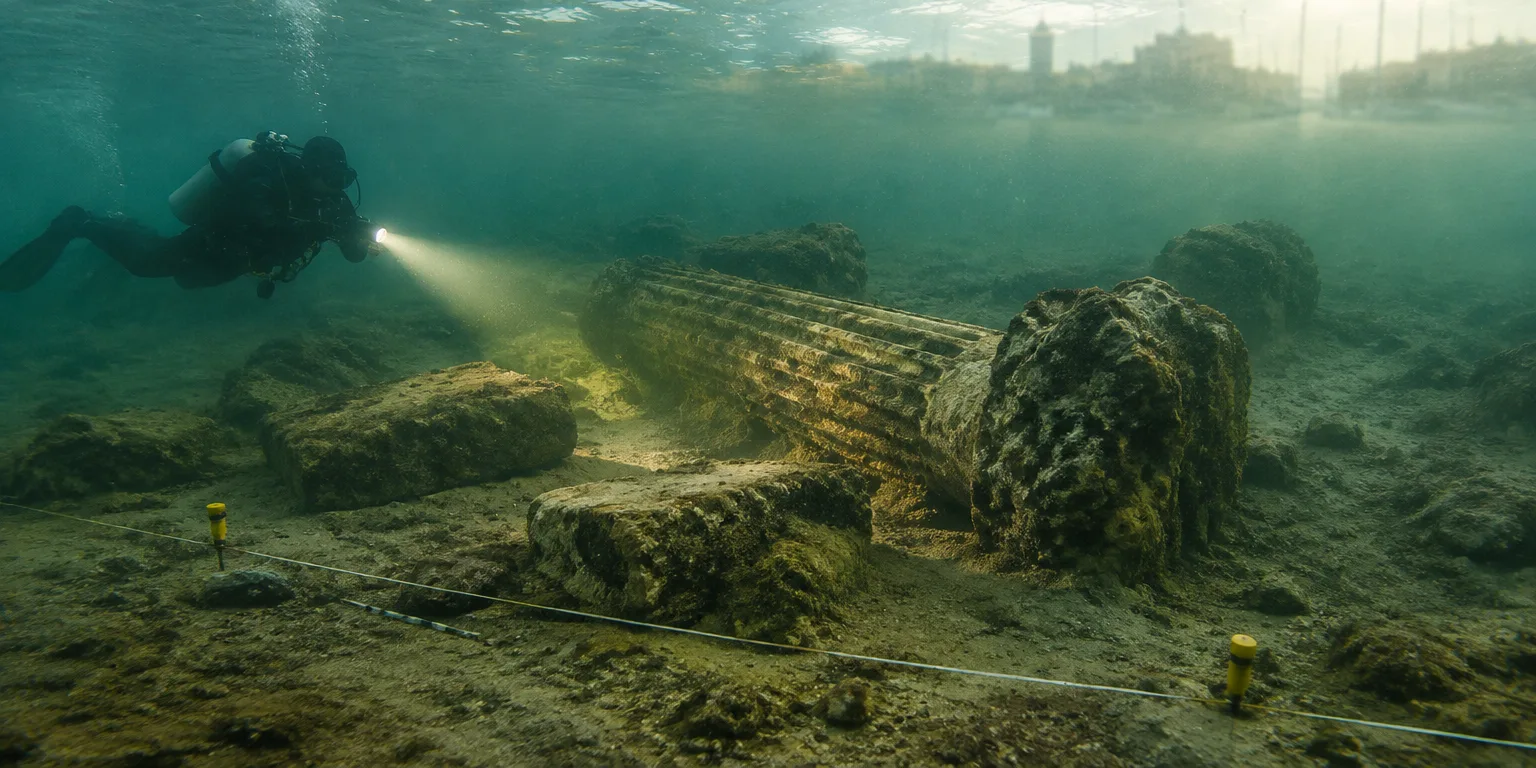
What changed in recent decades was underwater archaeology in the Great Harbour, along with the likely guess that much of the famous monumental center sat near enough to the shoreline to have been destroyed not later than a tsunami in the fourth century A.D. The work has been uncovering some monumental remains, but they are not preserved well enough to say much about their form.
The tomb of Alexander is still unaccounted for. It is possible that it lay further inland, that it might have escaped the wave, and that it might possibly still survive underneath the modern city until a future ground survey can see it.
Questions people ask
What was the Museion and the famous library?
The Museion was a royally funded research center in Alexandria, part university and part temple, where scholars lived, ate together, and studied. Its library aimed to collect every important Greek text, plus works in other languages, and ancient writers claimed it held hundreds of thousands of scrolls. It was less a public library than a court collection for scholarship.
How tall and famous was the lighthouse?
The Lighthouse of Alexandria, built on the island of Pharos, was one of the Seven Wonders of the Ancient World. Ancient accounts suggest it rose more than 100 meters, in three stacked stages, with a fire at the top to guide ships. It stood for more than 1,500 years before earthquakes finally toppled it in the Middle Ages.
Can tourists see the underwater remains?
Some large blocks, columns, and statues from the harbor have been raised and displayed in Alexandria museums. Much remains on the seabed in the eastern harbor, where visibility is poor and the site is protected. Divers can visit only under limited, supervised conditions.