What you won't eat shows you are one of the good people
Author David Zahl says grocery talk about purity and sourcing promises what religion used to promise.

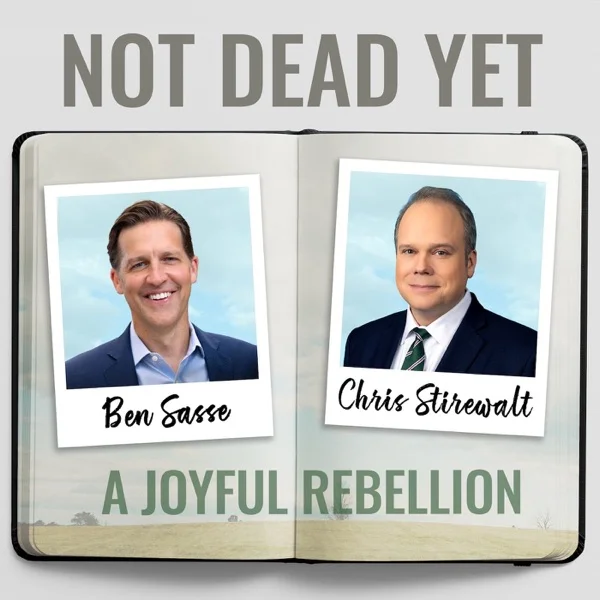 Not Dead Yet · David Zahl | NOT DEAD YET with Ben Sasse and Chris Stirewalt
The confession came from Chris Stirewalt talking with author David Zahl about his books on striving and grace. Food, Stirewalt said, was his own idol, his own false god. Then he put Zahl's argument in plain terms.
"What would be a better outward expression than being super annoying at every meal?" Stirewalt asked.
It was Zahl's idea, and Stirewalt was repeating it back to him because it had landed. Zahl argues that dietary rules in secular life now work the way dietary rules work in traditional religion. Keeping kosher or halal, the Jewish and Muslim food laws, shows obedience to God. To keep strictly to vegan, gluten free, or locally sourced only, Zahl argues, can function the same way, as proof that you are disciplined, informed, and saved.
Zahl, who works at Christ Episcopal in Charlottesville and writes for Mockingbird Ministries, said he noticed how much the word purity comes up around food. It used to be, someone told him, that you knew a person well if you knew their favorite food. Now you know them by what they cannot eat.
A trip to Whole Foods, the upscale grocery chain, sounds like church to him. He hears talk about how purely everything is sourced and how pure the ingredients are, language that reminded him of his own religious upbringing. The promise underneath, as Zahl put it, "if I can get the most purely sourced thing into my body I will sort of purify myself."
That was the joke in a comedy sketch Zahl kept thinking about while he was writing. In the Portlandia sketch, a couple ordering chicken at a restaurant asks so many questions about whether the bird was humanely raised that they are shown the chicken's papers. The bird was named Colin. They visit the farm where Colin was raised, and they accidentally join a commune, or cult, outside Portland, Oregon.
For readers of Christian scripture, Zahl said, that hope is a non-starter, quoting its teaching that "it's not what goes into a person which defiles them."
Questions people ask
What do kosher and halal actually require?
Kosher is the Jewish dietary law, and halal is the Islamic dietary law. Both set out which animals can be eaten, how they must be slaughtered, and how food must be prepared and kept separate, and observant followers keep them as a matter of obedience to God.
What was Portlandia?
It was a comedy series starring Fred Armisen and Carrie Brownstein that ran on IFC from 2011 to 2018. It made fun of progressive, do-gooder culture in Portland, Oregon, including farm-to-table restaurants, artisanal food, and earnest quests to live correctly.
Does this mean all dietary restrictions are just showing off?
No, and Zahl does not claim that. His argument is about what food rules mean socially, not about medicine. A restriction prescribed for health, allergy, or religious obedience is different from using restrictions to prove you are disciplined or morally superior.