Why Chasing Pleasure Leaves You Needing More Just to Feel Normal
After every high, the brain tips toward pain to restore balance, says addiction psychiatrist Anna Lembke.
 Andrew Huberman · Overcome Addictions and Obsessions of All Kinds | Dr. Anna Lembke
Eat chocolate while watching gossip videos, and your brain does not simply enjoy it and move on. It immediately starts pushing back.
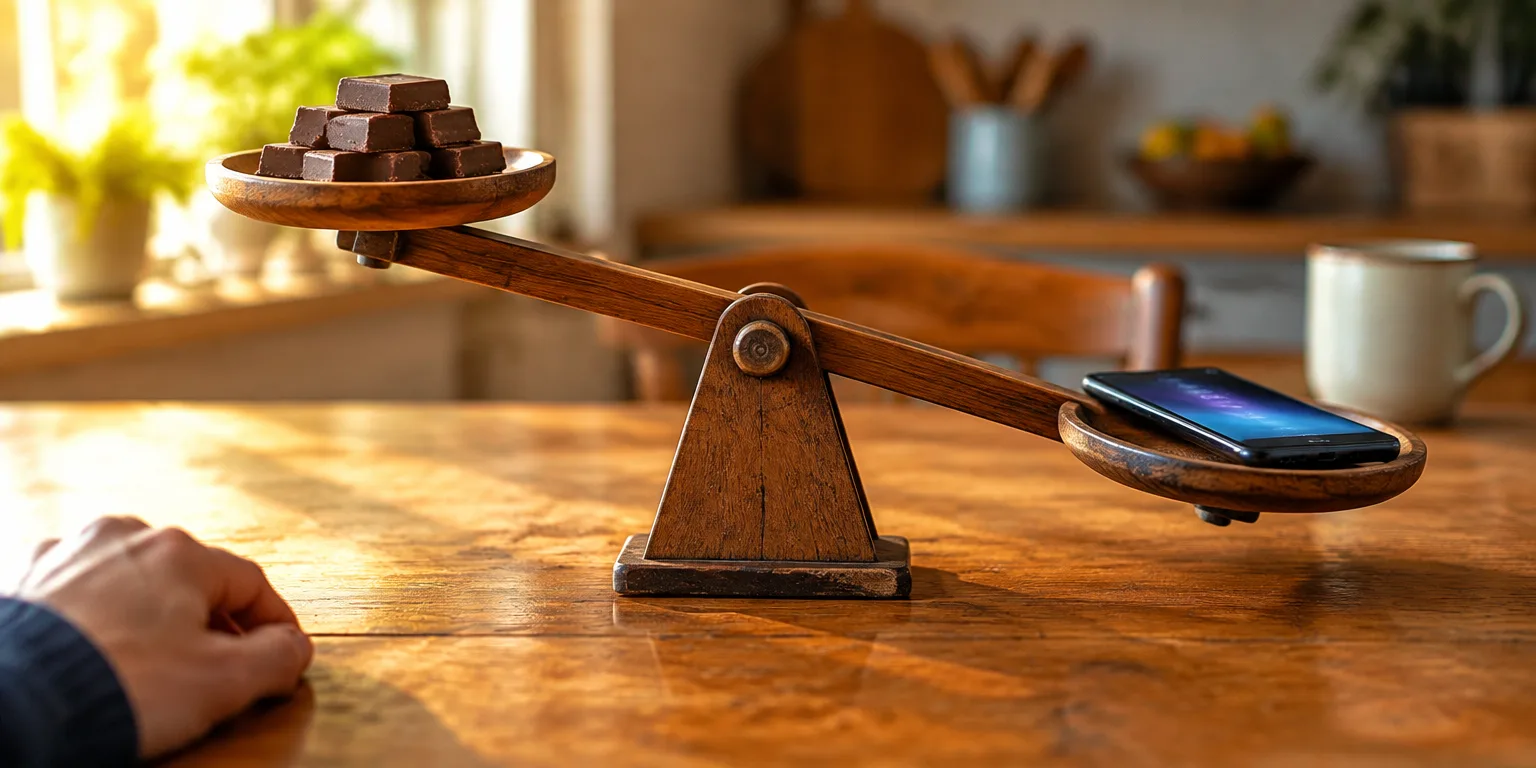
That pushback is homeostasis, the brain's effort to keep the body's key systems within narrow limits to survive. To picture it, addiction psychiatrist Anna Lembke suggests imagining a beam balanced on a central fulcrum in the brain's reward pathway, level at rest.
Pleasure tips the beam one way, and pain tips it the other. With any deviation, the brain works hard to restore level balance, and that correction is what makes people vulnerable to addiction.
Lembke pictures the correction as adaptation gremlins hopping onto the pain side to level the beam. They like being on the balance, so they do not get off when it is level. They stay on until it tilts an equal and opposite amount toward pain.
That overshoot is the comedown, the hangover, or the urge to watch one more video after promising to stop. If a person resists and stops, the gremlins get the message and hop off, and balance is restored.
If the pleasurable hit is repeated over days to months to years, the gremlins multiply, get bigger and stronger, and eventually camp out on the pain side. The level of pleasure the brain treats as normal shifts, so a person needs larger amounts in stronger forms, not to feel high, but just to feel normal.
When not using, the person walks around tilted toward pain, with a withdrawal mix of low mood, edginess, troubled sleep, irritability, and craving. That chronic reward deficit explains why people relapse even when life is clearly better without the habit, and why many describe their use as an attempt to soothe anxiety or lift depression.
Questions people ask
Does this balance apply to phones and gambling as well as drugs and alcohol?
Yes. Lembke says the same general withdrawal pattern appears with addictive drugs and behaviors. The specific high differs, but the brain's attempt to restore balance works the same way.
How long does it take for the balance to reset after quitting?
For most substances and most people, Lembke says that means 10 to 14 days of acute withdrawal when it feels as if it will never get better. Usually by week three or week four, about 80% of folks report starting to feel significantly better.
Why do people often say they use to cope with anxiety or depression?
Withdrawal itself can include anxiety and depression. Lembke says using the drug of choice feels better temporarily because it restores balance, but in the end it deepens the reward deficit.