Why Making Something More Efficient Makes Us Use More of It
Cheaper coal, cheaper cotton, and cheaper cash led to more coal burning, more cotton fields, and more bank branches.
 My First Million · The oldest trick in the book to make your first million
There is a strange rule in economics that says the better we get at using something, the more of it we use.
It is called the Jevons paradox, after James Jevons, a British economist who described it in his 1865 book, The Coal Question. The principle is simple. When technology makes a resource more efficient to use, overall use goes up, not down, because demand explodes.
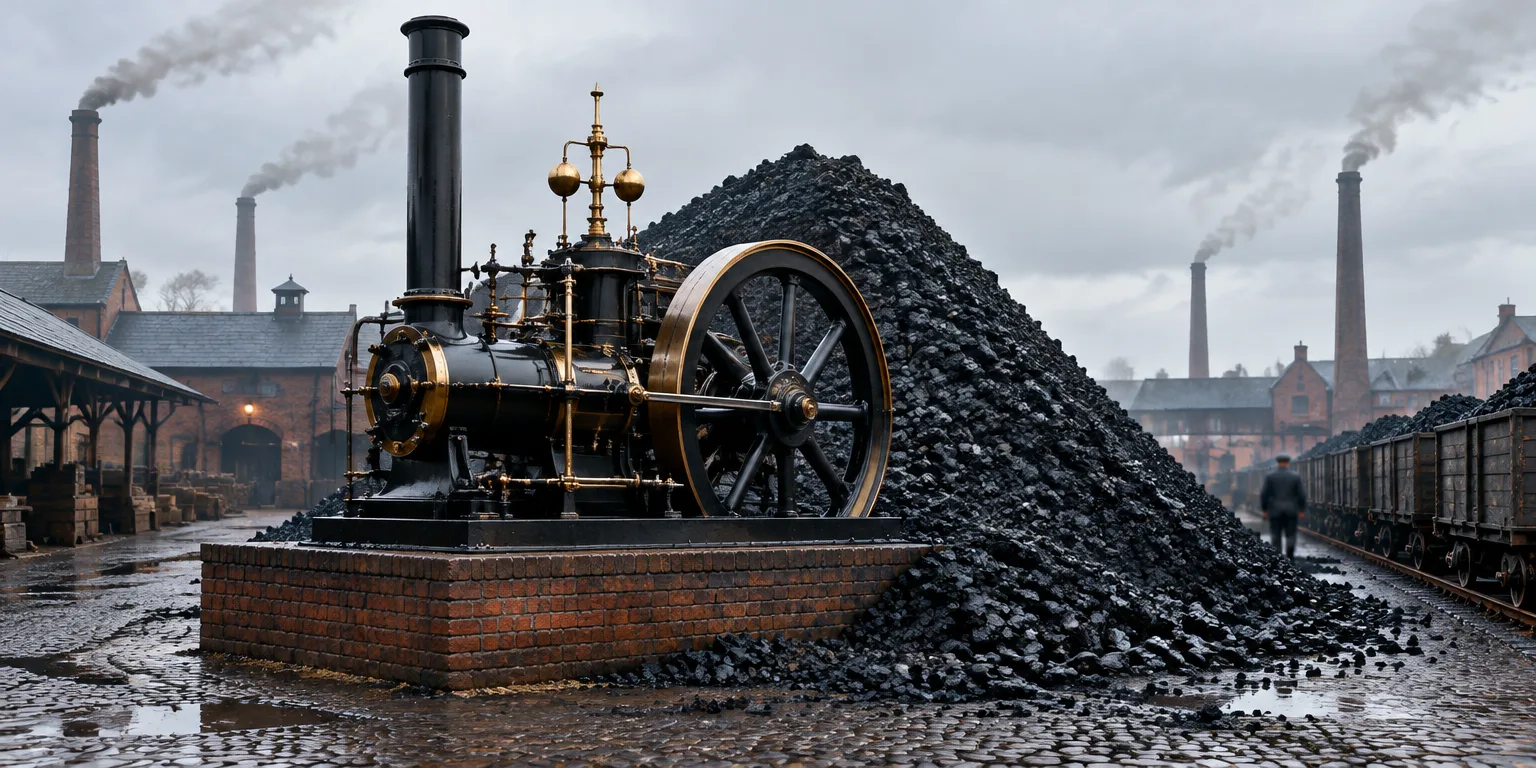
Jevons was writing about coal and the improved steam engine built by James Watt, the inventor whose design became the standard engine of industry. Other people thought the engine would save coal because it could do the same work with less fuel. Jevons predicted Britain would burn far more coal because the better engine would make steam power so useful that everyone would want one. Britain burned far more coal.
The same thing happened with cotton in the American South. Eli Whitney, a Yale graduate looking to make his fortune, invented a small hand crank device, the cotton gin, that quickly separated seeds from cotton fiber. A person who could clean about one pound of usable cotton a day by hand could suddenly produce about 50 pounds a day, 50 times as much.
Some people hoped that efficiency would slow the growth of slavery. The opposite happened. Cotton became so cheap and so profitable that the South built its economy around it, calling it King Cotton. In this telling, the South ended up with 8 to 10 times more enslaved people than before the gin, to keep up with demand for cotton, and the gin helped extend slavery by making cotton the country's economic engine.
A more recent version came with the automated teller machine, the box that lets customers withdraw cash without seeing a clerk. When ATMs arrived, bank tellers feared they would be put out of business and revolted.
The pattern in these cases is the same. Efficiency lowers the cost of using something, cheaper use opens new uses, and new uses require more of the original resource, not less. Saving per unit gets overwhelmed by growth in total units. With ATMs, the tellers' revolt gave way to way more bank branches, not fewer.
Questions people ask
Who was James Jevons?
He was a 19th-century British economist. In his 1865 book The Coal Question, he predicted efficient steam engines would cause Britain to run short of cheap coal because everyone would want one.
Does this still happen with energy today?
Yes. Economists see it with lighting, cars, and air travel. More efficient LED bulbs did not cut total lighting energy much because people lit more spaces. More fuel efficient cars often lead people to drive more miles.
Why didn't the cotton gin reduce the need for workers?
The gin only sped up cleaning the fiber, so planting and picking still had to be done by hand. Planters wanted more workers to grow more cotton to feed through the faster process, so the bottleneck moved instead of disappearing.