Win Fantasy Football With a Three Part Weekly Checklist
A simple early-week, midweek, and weekend routine means you do not need to check constantly.
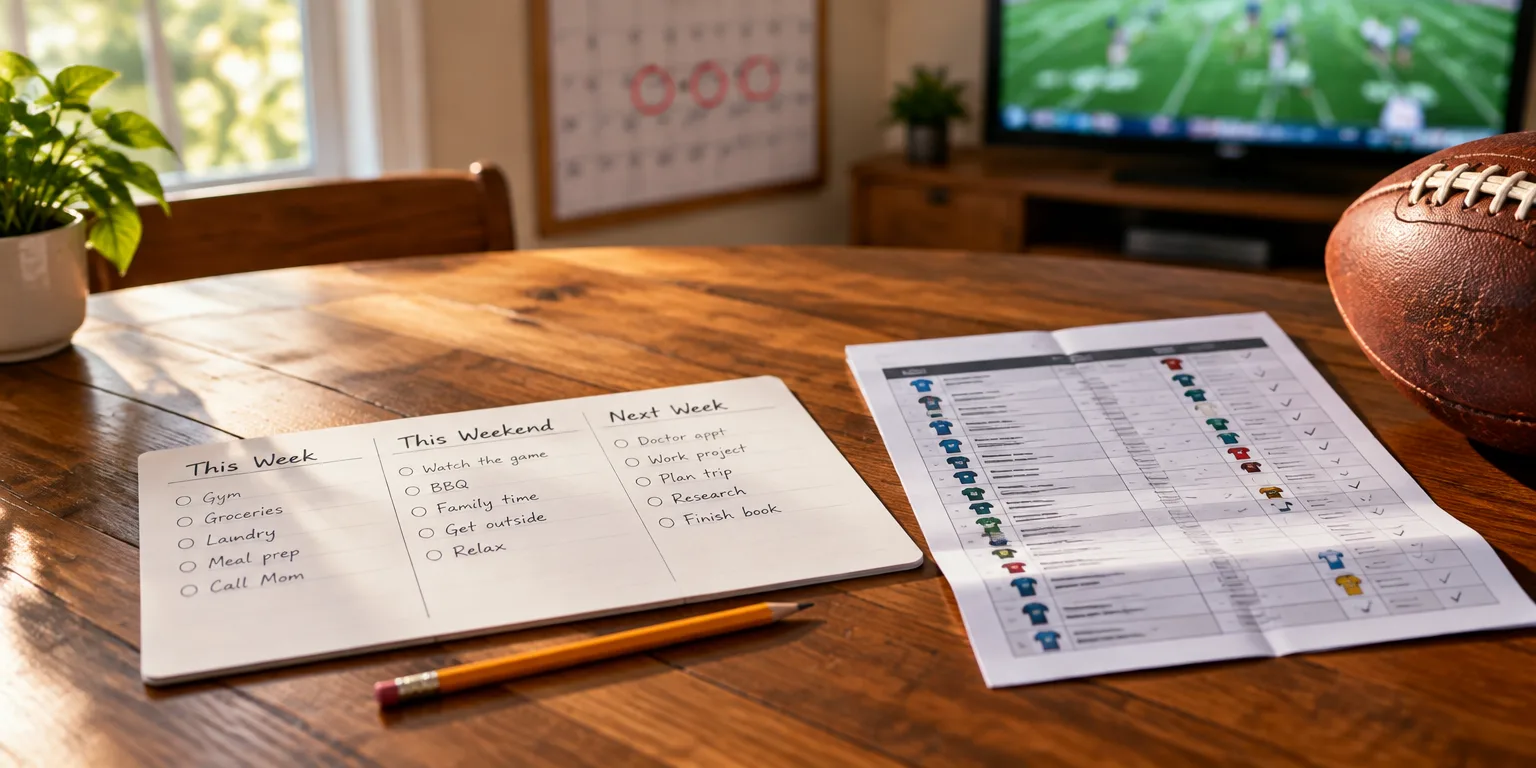
Good players separate from average ones mainly by handling basic tasks each week, on time.
That means constant phone checking is not required. What helps is a calm rhythm: early week for waivers, midweek for trades and planning, and the weekend for injuries and lineups.
Start early in the week with usage, not just points. Look at targets and routes for pass catchers, plus snaps and carries for running backs, because that playing time is often where breakouts start.
Then make one to three intentional waiver claims. Waivers are the shared pool of unclaimed players, and the point is to solve a roster problem or add upside, not to churn players out of boredom.
While you are there, check the next two weeks. Bye weeks, when NFL teams sit out, can sneak up and leave you short at a position.
Midweek, propose a single well considered deal. Keep it balanced, add a sentence or two about your reasoning, and you are more likely to get a real negotiation.
Also plan your flex spot, the extra lineup slot that can hold a running back, receiver, or tight end. Pick one safe option who should score a steady amount, and one high upside option for weeks when you need more.
On the weekend, focus on clarity. Look for confirmation that questionable players are active and still have their usual role, and ignore the rest of the noise.
Choose starters early in the weekend, then double check them close to kickoff. If a Sunday night player is uncertain, keep a backup who plays in a later game so you have a pivot.
Reminders help prevent missed deadlines and inactive starters. That steady timing cuts down on classic mistakes like a missed waiver deadline, a forgotten Thursday game, or an inactive player left in the lineup.
Questions people ask
How do waiver claims actually work?
Most leagues process waiver claims on a set night, usually Tuesday or Wednesday. Claims are ranked by priority or bidding money, so the highest ranked manager who wants a player gets him, then moves to the back of the line.
What makes a fantasy trade offer fair?
A fair offer helps both teams and fits each roster. A common test is to offer a spare player at a position where you are deep for help where you are thin, with similar recent production and playing time on both sides.
Should I set my lineup early in the week or wait until Sunday?
Set it early so a busy weekend does not leave you with an injured or inactive starter. Then check back 30 to 60 minutes before each player's game for final injury news and make one last switch if needed.