With No One Watching, Russia, China, and North Korea Swap What Sanctions Forbid
A Russian veto ended independent monitoring, letting each country supply what the others cannot buy in the open.
 Economics Explained · How Kim Jong Un "Accidentally" Fixed North Korea's Economy
The sanctions on North Korea did not end. The people who checked on them did.
After Pyongyang's first atomic weapons test in 2006, outside powers imposed sweeping trade limits on it, covering arms and luxury goods and sharply restricting fuel imports. For years, compliance was tracked by a small U.N. monitoring team, the Panel of Experts, which investigated suspected breaches and made its findings public. In March 2024, Russia, which holds a permanent seat on the U.N. Security Council, vetoed the routine resolution to keep the panel alive. Thirteen of the 15 council members voted to continue it, with China abstaining.
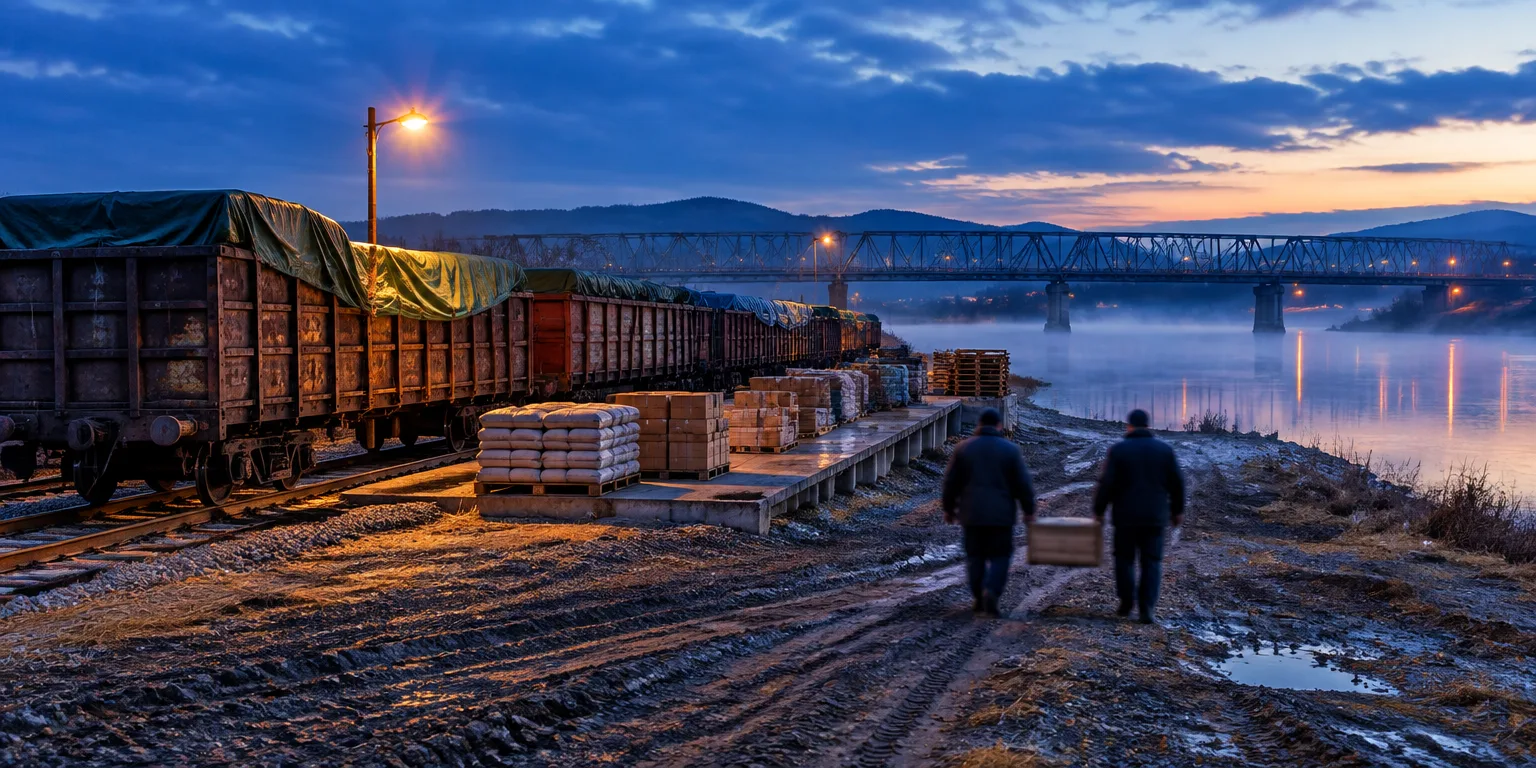
Without neutral referees, the rules still exist on paper but breaches are no longer formally documented. That change matters most on North Korea's northern border with China.
The result is a triangle in which each country gives what the others cannot easily buy in the open. North Korea sends artillery shells and soldiers to support Russia's war effort. Russia in turn sends cheap fuel and natural resources to China. China sends factory goods and development supplies to North Korea, filling the gaps in what is largely a barter exchange between countries shut out of normal bank payments.
China has reason to want cover. It wants to keep North Korea alive as a friendly buffer between itself and South Korea, which hosts a large U.S. military presence. At the same time, Beijing's commerce with other nations dwarfs anything Pyongyang can offer, so Beijing has long kept its dealings deliberately ambiguous.
With no monitors left, much more can cross the Chinese border with plausible deniability. Stripped of politics, it is textbook cooperation, except each leg depends on goods or partners the open market would not allow.
Questions people ask
What did the U.N. Panel of Experts actually do?
The Panel of Experts was a small team of independent investigators appointed by the U.N. Security Council. It tracked ships, companies, and bank accounts linked to North Korea, and published annual reports that banks and governments used to enforce sanctions.
Why do Russia and North Korea use barter instead of cash?
Both Russia and North Korea are largely cut off from dollar payments and international banks, so wiring money can trigger sanctions. Barter lets them swap shells for oil, food, and building materials without moving cash through the financial system.
Does the veto mean sanctions on North Korea are over?
No. The sanctions resolutions remain legally binding, and countries are still supposed to enforce them. What ended was independent U.N. monitoring, which makes violations much harder to prove and much less risky politically.