Wolves Brought Back Yellowstone Trees, and Beavers Made Homes From Them
After wolves returned to Yellowstone in 1995, forests regrew and tree-eating beavers built dams that sheltered six other kinds of animals.
 Sustainable Human · How Wolves Change Rivers
When wolves were reintroduced to Yellowstone National Park in 1995 after 70 years away, the forest came back, and that gave beavers lunch.
The wolves killed some deer, but more importantly they changed where deer chose to feed. The deer began avoiding the valleys and gorges where they were most exposed, and those places regenerated fast. In some spots, trees grew to five times their former height in just six years, and bare valley sides grew thick with aspen, willow, and cottonwood.
That young forest was an invitation to beavers, which eat trees. Their numbers rose, and with them came their construction work. Beavers are what scientists call ecosystem engineers, animals that reshape land and water. In doing so, they open up new living opportunities for other species, meaning new roles for others to live and feed.
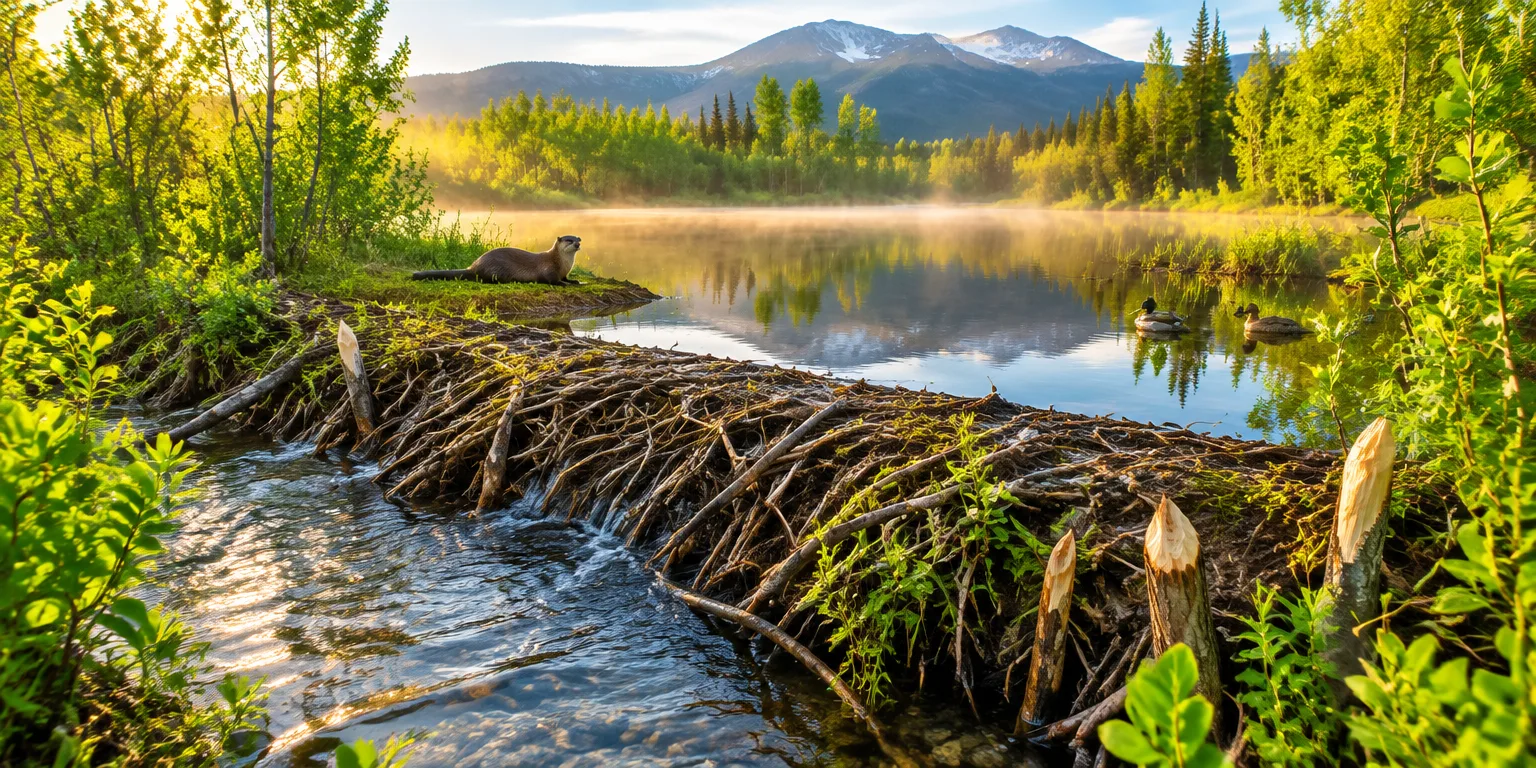
The clearest example was in the water. The dams that beavers built in the rivers held back ponds that provided habitat for other animals to live and feed in. Otters, muskrats, ducks, fish, reptiles, and amphibians all moved in.
More trees meant more tree eaters. More tree eaters meant more dammed water. That dammed water then made room for six very different kinds of animals that had little to do with trees themselves. A predator at the top had, step by step, built homes for animals it never hunted.
Questions people ask
Why do beavers build dams in the first place?
Beavers build dams to make deep, still water around their lodges. The pond protects the underwater entrances from predators like coyotes and bears, and lets beavers float branches to their food stores. In winter, that unfrozen water under the ice is their pantry and highway.
What parts of a tree does a beaver actually eat?
They mostly eat the inner bark, twigs, leaves, and buds of trees like aspen, willow, cottonwood, and birch. In summer they add grasses, pond plants, and shrubs, and they cut extra branches to store underwater for winter. They do not eat fish, and they rarely eat the hard wood itself.
How does a dam help ducks and fish if they do not eat wood?
The pond behind a dam slows the current and traps insects, plants, and small fish that ducks and larger fish feed on. Its shallow edges and marshy banks offer nesting cover for ducks and hunting ground for reptiles and amphibians. Muskrats and otters use the calm water and burrowed banks for shelter and travel.