Wolves Helped Hawks and Foxes Rebound by Killing Coyotes
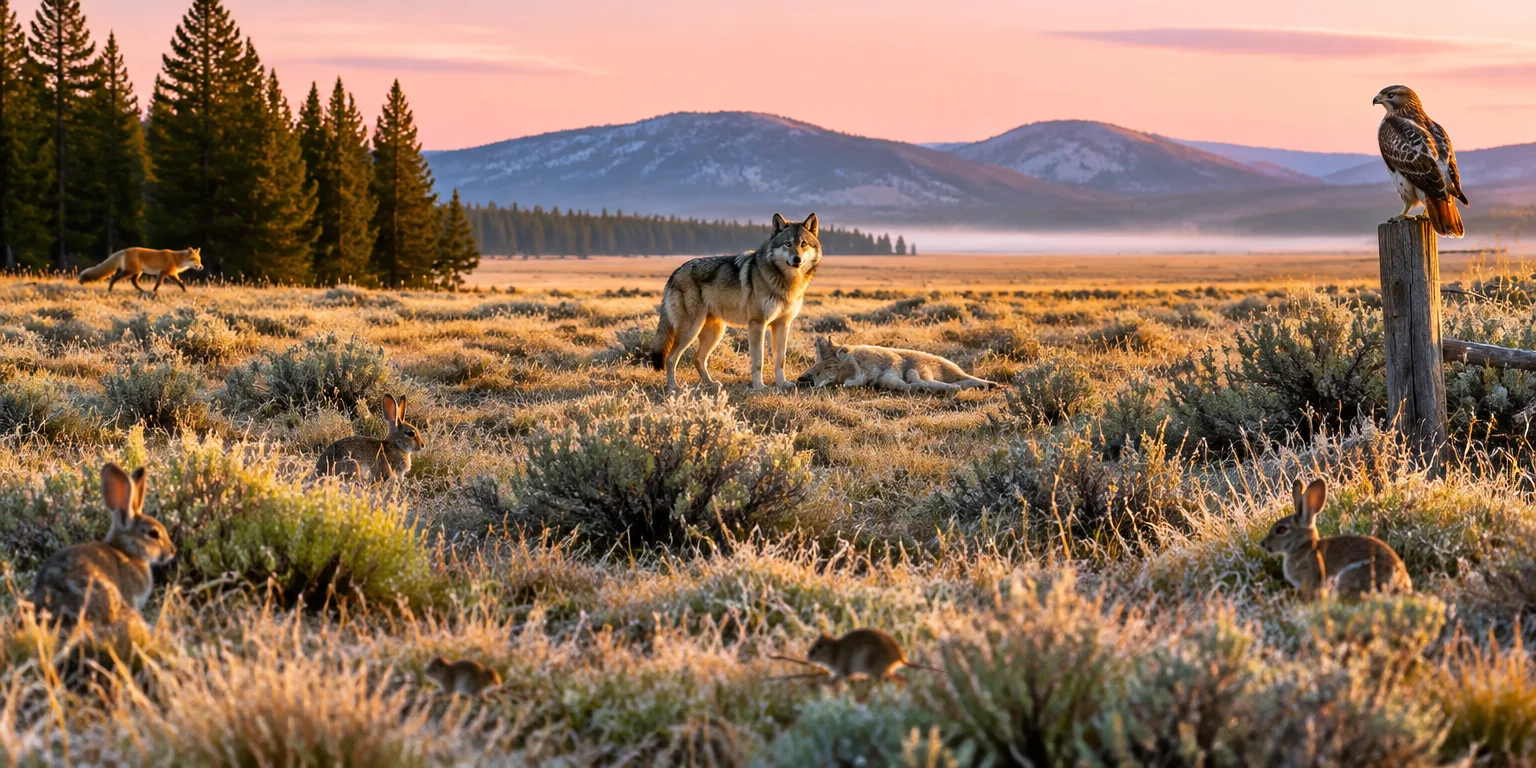
With fewer coyotes hunting them, rabbits and mice multiplied, helping smaller predators rebound.
 Sustainable Human · How Wolves Change Rivers
In Yellowstone, one of the wolves' surprising effects was killing coyotes.
Coyotes are smaller wild dogs that hunt rabbits and mice. When wolves returned to the park, they killed coyotes and drove their numbers down.
With fewer coyotes, more rabbits and mice survived and their numbers grew.
The extra rabbits and mice then helped hawks, weasels, foxes, and badgers. Their numbers rose because there was more small prey to eat.
Scientists call this kind of chain reaction a trophic cascade, a process in which effects beginning with a top predator ripple downward through the food web. Wolves did not have to eat rabbits or hawks to affect them. By killing coyotes, a small number of wolves helped more than one kind of animal increase.
Questions people ask
Do wolves eat the coyotes they kill?
Wolves often kill coyotes to remove competition rather than for food. Coyotes hunt many of the same small animals and sometimes steal kills, so wolves chase, attack, and kill them when they meet. The carcass is usually left uneaten.
Are there still coyotes in Yellowstone?
Yes. Coyotes are adaptable and remain common across Yellowstone and across North America. Wolves reduced their numbers locally, especially in open areas where coyotes are exposed, but they did not wipe them out.
Why would more mice help hawks, foxes, and badgers all at the same time?
They are mostly different hunters in different places. Hawks hunt by day from the air, foxes and badgers hunt on the ground, often at dawn, dusk, or night, and weasels can follow rodents into burrows and thick cover. More prey can therefore support more of each of them at once.