Years of mutations can make cancer harder for the immune system to spot
As sun and time change every cell, the body's definition of normal gets noisy.

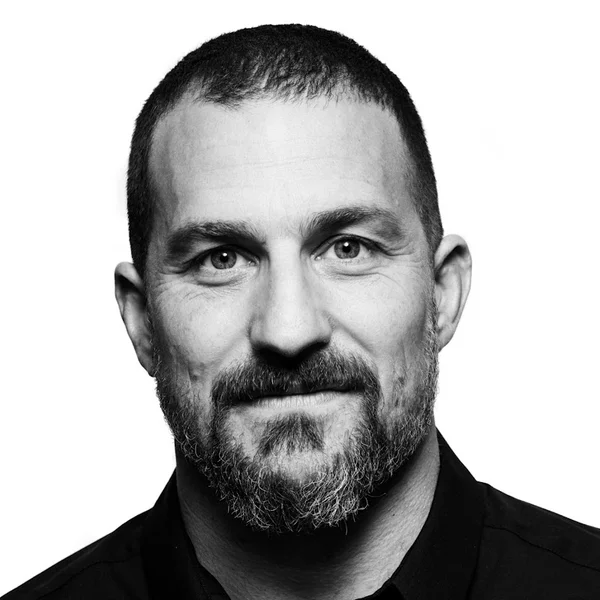 Andrew Huberman · How Your Immune System Works & How to Improve It | Dr. Max Krummel
You begin life with nearly the same instructions in every cell, 23 chromosomes from your mother and 23 from your father copied again and again.
Then the copying gets sloppy. Max Krummel, an immunologist who studies how the immune system senses the body, estimates that a skin cell may gain anywhere from 10 to 30,000 changes in a day, mainly from sun exposure. The genome is vast, so even 30,000 changes a day is a small fraction, but repeat that day after day for decades and no cell stays identical to its neighbor.
One cell picks up one set of changes on one day, another picks up a different set on the next. When you scratch yourself and new cells must fill the gap, Krummel says certain mutated cells may be best placed to take over and fill in. Over time tissue becomes like the intricate tilework in Morocco, what he calls a "pastiche of who you are."
That creates a second aging problem beyond immune cells wearing out and dying off. The immune system works as a sensing system that constantly measures the body to decide what counts as self and what counts as foreign. Krummel retells an analogy from an unnamed immunologist in the 1970s, who compared the task to American submarines in World War Two carrying two books, one with the engine sounds of friendly ships to ignore and one with the engine sounds of German ships to attack.
As the body collects more variants, those books could fill up with almost every pattern the body can make. Krummel calls the result cosmic background noise.
In that noise, a virus making unfamiliar proteins may no longer look uniquely unfamiliar, and a cancer cell may no longer look uniquely strange. As Krummel puts it, "the weird doesn't look that weird anymore," because many ordinary but mutated cells nearby also look a little different while happily making skin. That helps explain why cancer becomes more common later in life, not only because cells have collected risky mutations, but because the system built to spot them has lost a clear picture of normal.
Questions people ask
Does sunscreen or staying out of the sun stop this mosaic effect?
It reduces one major source of damage, ultraviolet light, but it does not stop mutation entirely. Cells also make copying errors when they divide, and other organs accumulate mutations from chemicals, background radiation, and normal metabolism, just at lower rates than sun-exposed skin.
If every cell looks a little different, why doesn't the immune system attack the whole body?
The immune system is trained to tolerate a range of self signals, not one exact pattern, and it usually requires strong danger cues plus unfamiliar signals to launch a full attack. With slow, gradual change it tends to accommodate, which prevents constant autoimmunity but also lets slowly changing cancers slip by.
Do neurons get mosaic too?
Yes, but in a different way. Most brain and spinal cord neurons are the same cells you were born with, since they rarely divide and get replaced. They still accumulate DNA damage over a lifetime, so they change genetically even without producing new mosaic patches the way skin does.