You Do Not Need to Simulate the Sky to Predict Rain
A machine learning model finds the math hidden in old weather data, then uses today's weather to guess tomorrow's rainfall.
 Google for Developers · What is Machine Learning?
Imagine you want to build an app that tells you how much rain will fall tomorrow afternoon.
The hard way is to build a physics-based copy of the air and land around the planet, then calculate how all that air and water moves and mixes. You would have to track winds, pressure, and moisture everywhere at once, which takes enormous computing power.
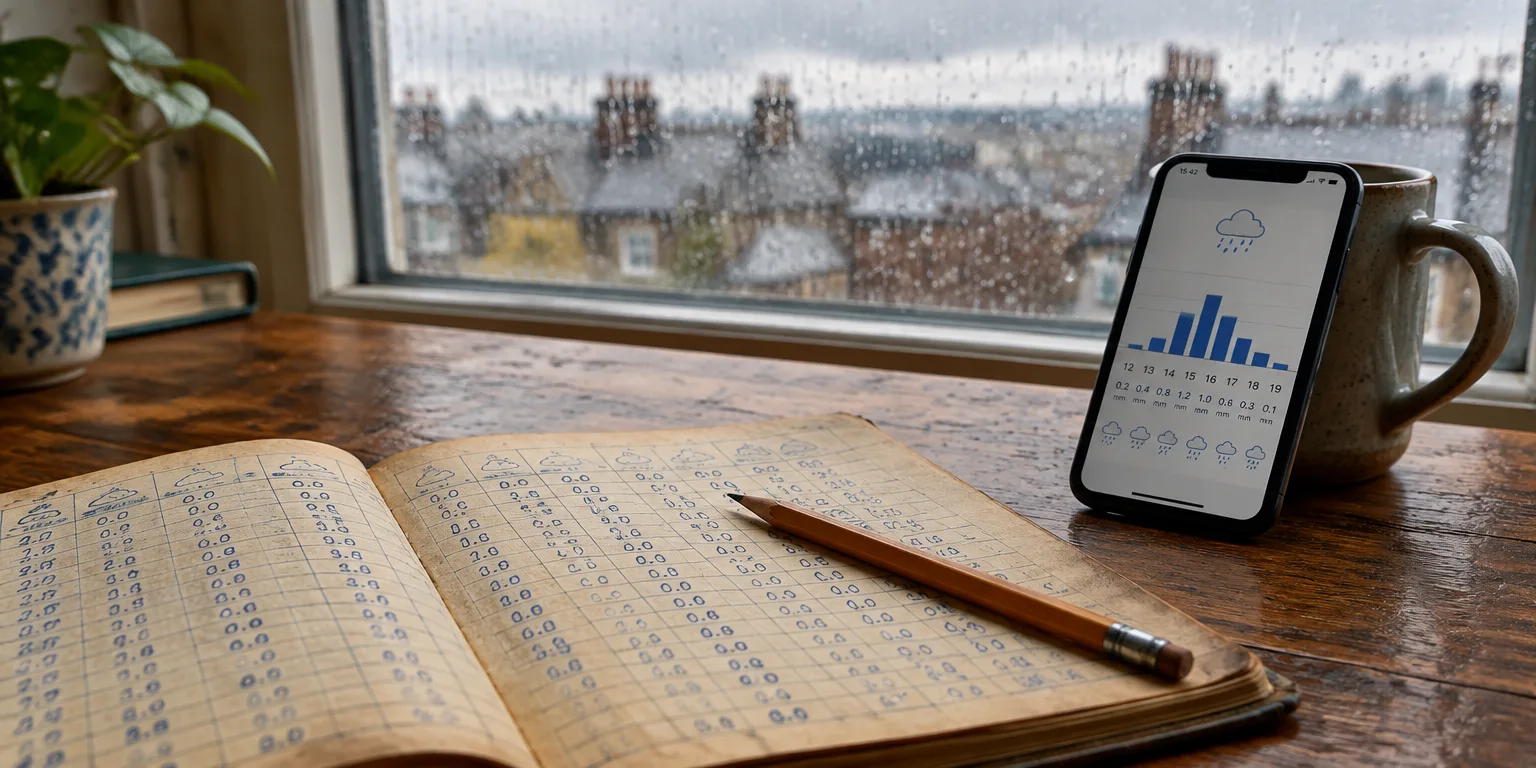
Machine learning offers a different path. Instead of simulating the sky, you show software enormous amounts of past weather data, and let it figure out the hidden numerical link connecting earlier conditions to how much rain followed.
That learned math is called a model. A model is math drawn from past examples that forecasts what comes next.
After training, you feed in today's measurements and get a rainfall forecast back, with no physics equations solved at forecast time.
The same trick works far from meteorology. The same kind of training lets software estimate travel times, recommend songs, autocomplete sentences, summarize articles, and generate images that never existed before. You do not hand it the rules of the field. You show it enough examples until it finds the pattern, then use that pattern to make predictions.
Questions people ask
Does the model actually understand why it rains?
No. The model does not learn why clouds form or why pressure systems move. It learns which combinations of past measurements were most often followed by which amounts of rain, and it applies that math to new measurements.
How much data is enormous enough to learn from?
There is no set number. More past weather gives the model more kinds of weather to learn from, including rare ones, which is why the training data is so large.
Can the same rain model also predict something else, like travel time?
Usually not. A model learns one specific relationship from one kind of training data. A rain model predicts rain, while a travel time model must be trained separately on traffic history, distance, and weather.