You Remember Your Own Work, So You Think You Do More of It
The same overcounting happens for fights started and messes made, which suggests it is about memory, not bragging.
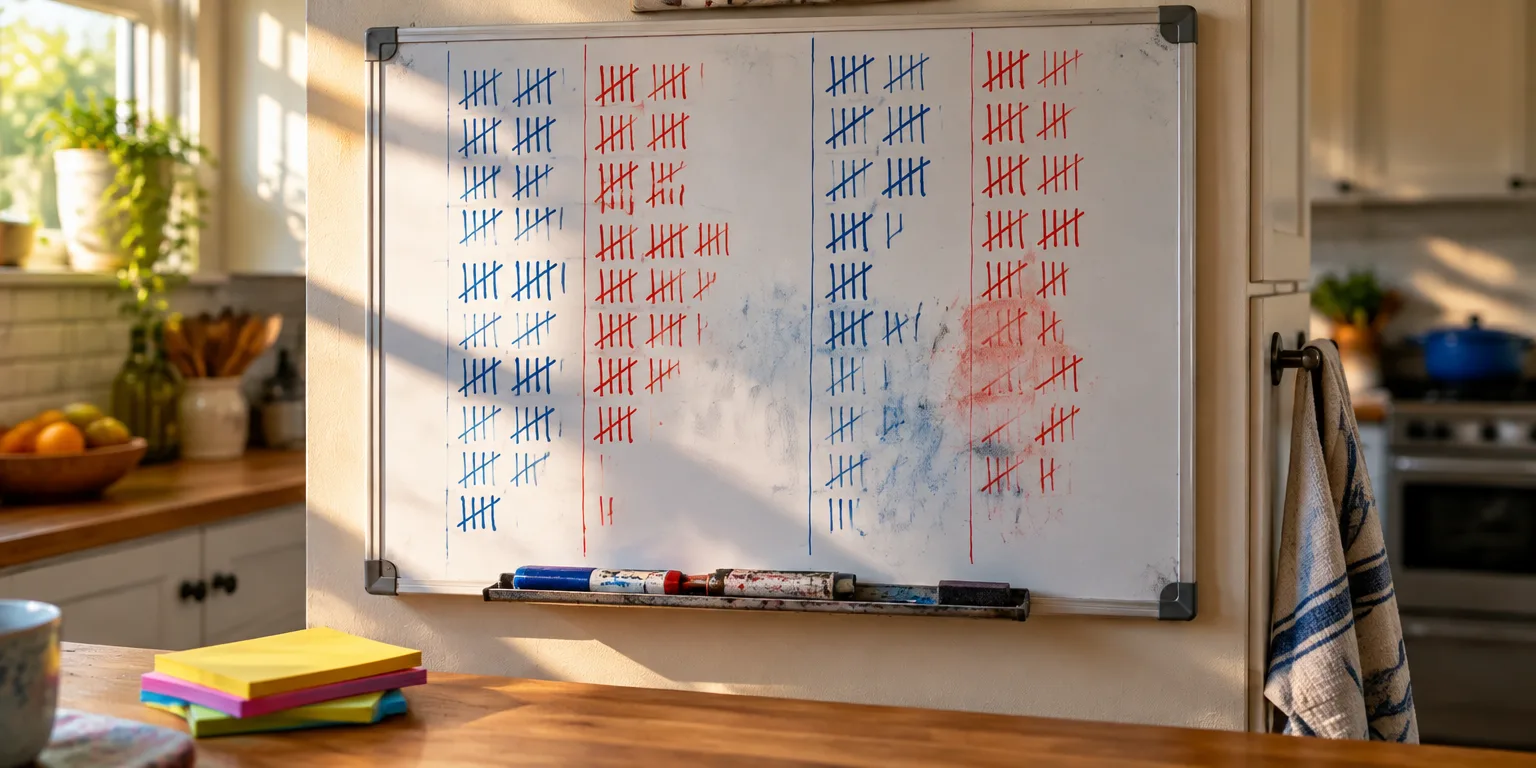
 Veritasium · Why Being Delusional is a Superpower
During the COVID lockdowns, one widely shared news headline reported a huge split over homeschooling, with many men saying they handled most of it and almost no women agreeing.
It looks like a fight about who is right, but the same overcounting shows up among coauthors of scientific papers, and among couples asked about housework, quarrels begun, and clutter created.
When researchers ask authors of a scientific paper with several names on it what share of the work each person did, the claimed shares add up to 140 percent on average. When couples are asked how much of the housework each does, their two numbers almost always add up to more than 100 percent.
The explanation offered is not that people want to look helpful. The likely reason is memory.
You live through your own actions and recall them in detail, while much of what others do never registers as strongly. When you try to tally things up later, your own work comes to mind more easily and fully than theirs.
The same pattern shows up when there is nothing good to claim. Ask couples what share of quarrels each person begins, or what portion of household clutter belongs to them, and the total again exceeds 100 percent. People claim extra credit, and they also claim extra blame.
In these cases involving couples and coauthors, the claimed shares add to more than a whole, because each person is counting from a different, lopsided set of memories.
The practical lesson is to treat a vivid feeling of doing the most with some skepticism. The vividness is real, but it is not the full count.
Questions people ask
Does keeping a list or log fix the bias?
Partly. It reduces it, but does not remove it. A shared list makes another person's tasks easier to bring to mind, because you no longer have to rely only on memory.
Do men overclaim more than women do?
In studies of work teams, friends, and married couples, both men and women overestimate their share. The size of the gap can differ by task and by who cares more about it, but the basic result that the two estimates add to more than 100 percent holds for both sexes.
Is there a simple way for couples to argue less about chores?
It can. Couples therapists often ask each partner to list what they noticed the other do that week. Researchers find that simply asking people to think through the other person's day before estimating cuts claimed shares, because it brings some of that missing work to mind.