You See the Apple Logo Every Day but Probably Cannot Draw It
Trying and failing, then checking, builds stronger memory than just looking, because the miss shows what to notice.
 Andrew Huberman · How to Improve Your Memory & Cognitive Function at Any Age | Dr. Alan Castel
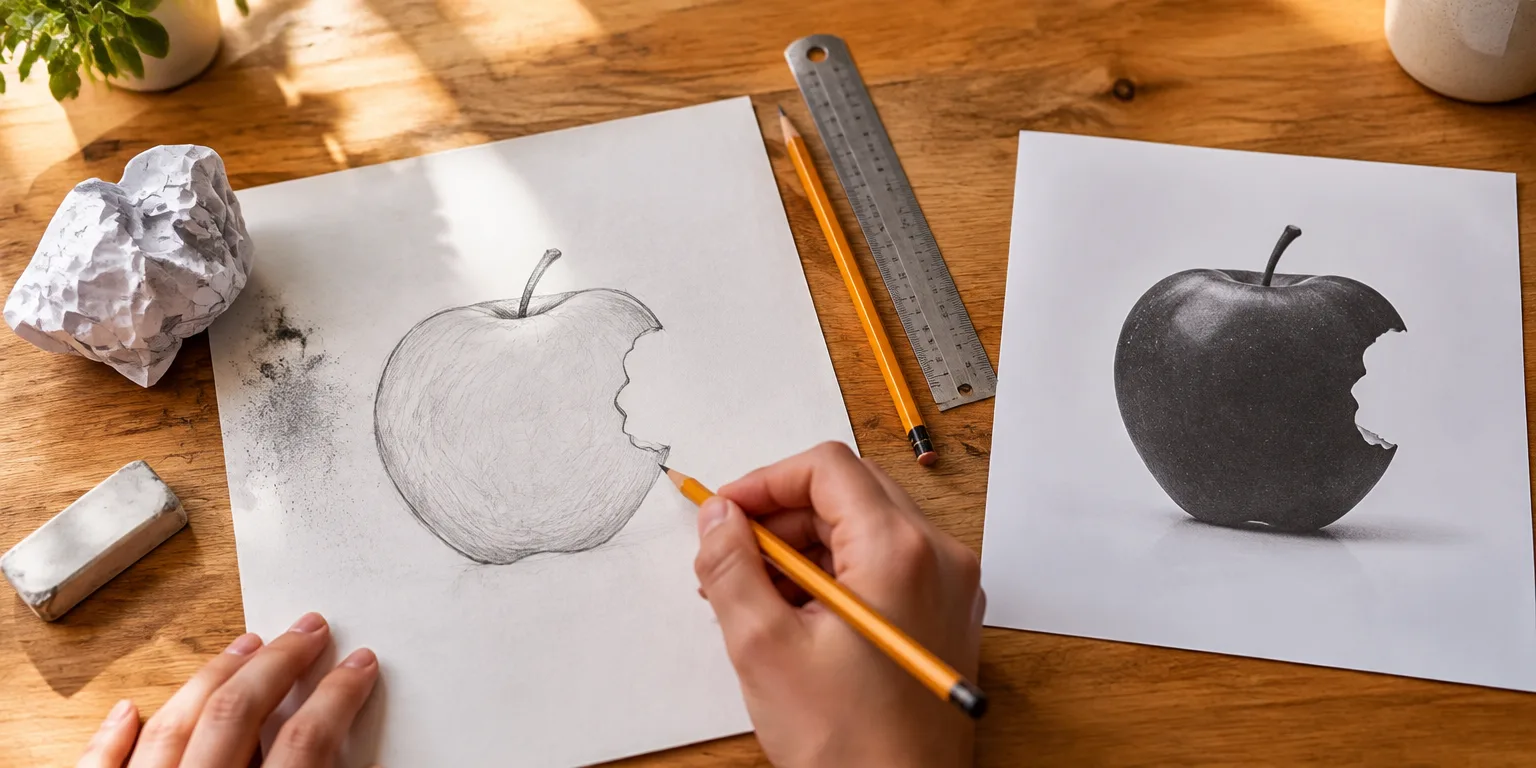
You have seen the Apple logo thousands of times, but you probably could not draw it. Alan Castel, a UCLA psychologist who studies memory, says his class grows unsure when quizzed: "Is the bite on the left or the right hand side? Is there a stem or a leaf?"
His argument is that errors followed by correction produce better learning than just looking. Trying to draw the logo without looking, failing, then looking again teaches more than passive viewing, in his view, even when the drawing is wrong.
Research on testing points to why: the failed attempt forces a search, so correction focuses attention on what was missed. Castel links the habit, which he calls habituation, to fire extinguishers people have walked past. In his study, people had to get up to find the one rather than being told where it was. Both show repeated exposure without detailed memory, what he calls "the difference between seeing something and noticing it."
Questions people ask
Does this mean rereading and highlighting do not work?
They feel fluent, so you stop attending to details. Testing yourself first is usually stronger because it reveals gaps, then rereading can fill them. Use rereading to check, not as the first step.
How can I use this for names or everyday details?
Say or write what you think before you check. Guess the name, the street, or the logo detail, then confirm right away. The quick correction teaches attention better than staring longer.
Why do we stop noticing familiar objects?
The brain conserves attention by tuning out things that seem stable and unimportant, a process called habituation. A lot of visual input reaches the eyes without reaching conscious attention. Actively searching restores attention.