Your AI Assistant Will Switch Your Trash Company to Save 50 Cents
Once assistants handle the hassle of switching, the cheapest hauler on the block can take the whole street.
 Invest Like the Best with Patrick O'Shaughnessy · Cliff Sosin - Owning the Complements to Intelligence - [Invest Like the Best, EP.497]
Your trash bill will not be $60 a month anymore. It will bounce around by the day, and you will never look at it, because your artificial intelligence assistant will keep switching it for you.
That is how investor Cliff Sosin expects everyday markets to work once everyone has an always on assistant. He puts consumer choices on a spectrum. At one end is a bank deposit, where as long as it is insured by the federal government, you just want the highest rate and can hand the decision to the machine. At the other end is picking a favorite sweater, which is all personal judgment. For trash pickup, he asks us to imagine it works like the bank deposit, something where we can hand the judgment to the machine.
Today, people are lazy about switching trash companies, and it is hard to get them to bother to switch even for what Sosin calls "a better service at a lower price." You probably do not know what you pay "off the top of your head," as Sosin puts it. With an agent, that friction disappears. One company's bot can offer to "save you 50 cents a month," in Sosin's example, your bot checks that the garbage will still go away, and the switch happens.
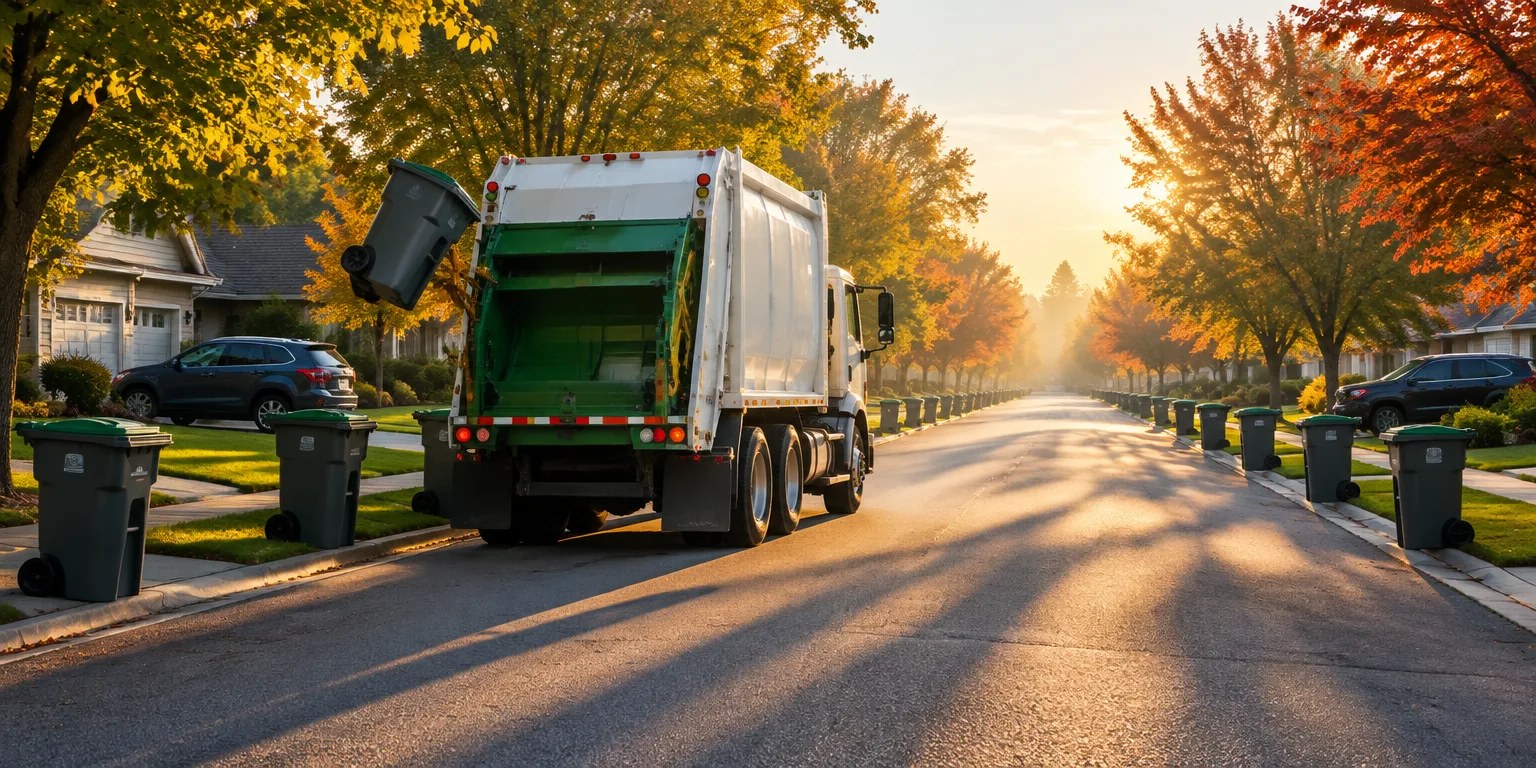
Then comes the second effect, street by street. It is far cheaper for one truck to pick up every house on a block than for three trucks from three companies to each make partial runs. Today that efficiency is lost because neighbors are too lazy to coordinate. Tomorrow, the hauler that already has two houses on your street can bid for the rest at a lower price, win the whole street, and become even lower cost because of that density.
In that world, prices lose their stickiness, they stop staying fixed for months. Sosin describes garbage companies constantly rerunning their financials to figure out the true cost of serving one more house and bidding for every customer it can serve above that cost, while every household assistant keeps optimizing and jumps to the lowest bidder. Instead of paying the same rate for 12 months and barely noticing a 5 percent increase, you get a market that reprices constantly and accurately.
The result is a better, tougher business. The low cost operator wins much more volume, but at much lower margins, and the price for a route is bid on constantly.
Questions people ask
What does price stickiness mean?
Price stickiness is the tendency for prices to stay fixed even when costs change. Trash, bank fees, and many subscriptions stay flat for months because customers do not shop around and companies do not want to constantly reprice.
Why would a trash company keep lowering its price to win my street?
A company keeps a profit on each extra stop priced above its marginal cost, so it bids down toward that cost. Marginal cost here is what it costs to add one more house to a trash route the truck already drives, and as long as the price is above it, the extra stop is profitable.
Will AI assistants take over every shopping decision?
No. Sosin puts taste-driven choices at the other end of the spectrum, like picking a favorite sweater. An assistant can find options, but only you can decide what you like, so those decisions stay personal.