Your Brain Has a Fast Guesser and a Slow Worker
The quick one draws on past patterns, and the slow one does step-by-step work but cannot do much else at the same time.
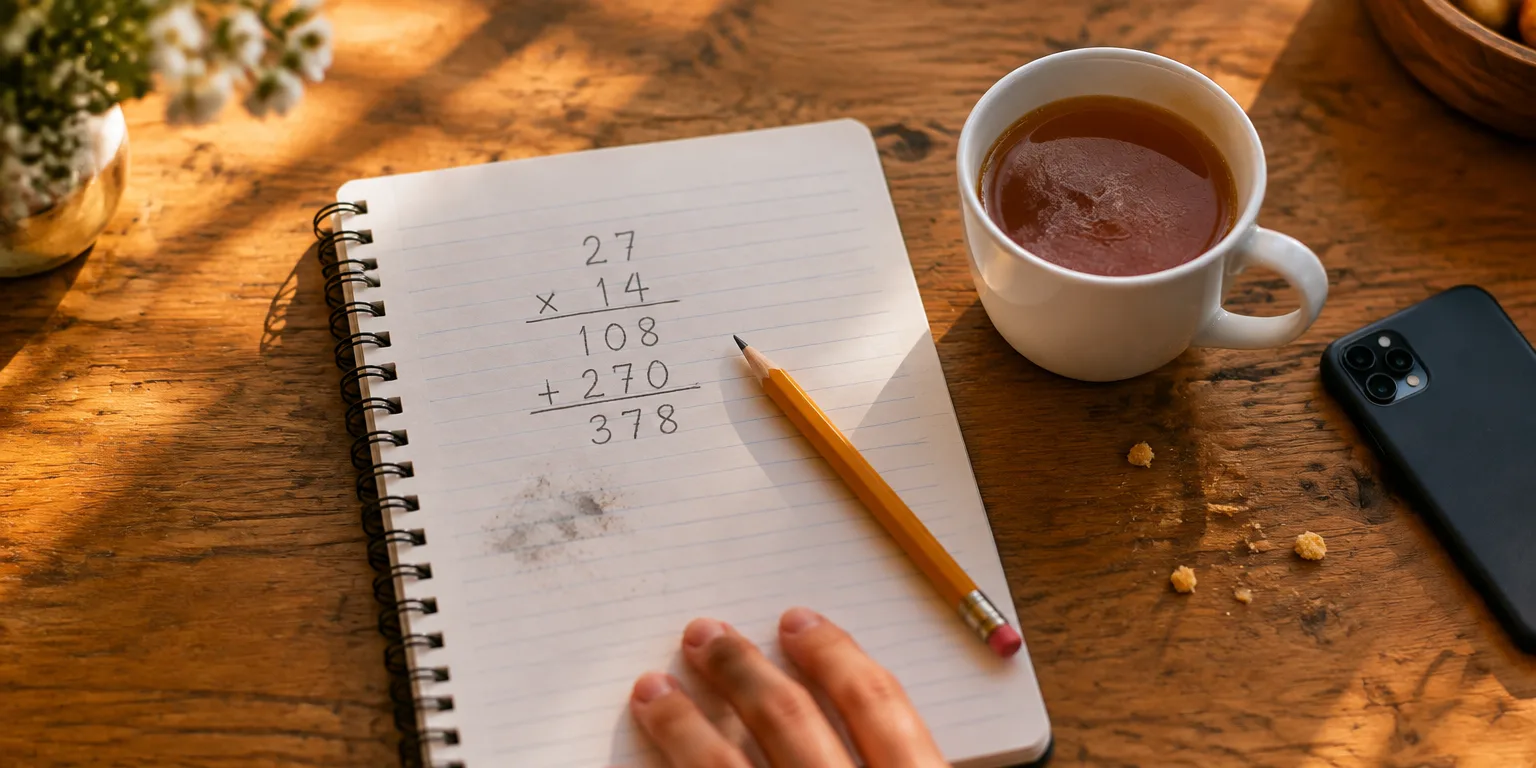
Ask yourself what 2 plus 2 is, and the answer simply arrives. Ask what 27 times 14 is, and nothing arrives except a plan for work.
That contrast is the whole idea, says Daniel Kahneman, the author of Thinking, Fast and Slow. The fast way of thinking, which he calls System 1, produces ideas automatically and without effort. The slow way, which he calls System 2, has to run a series of steps, and that work uses short-term memory and concentration. While it is running, you have little left for anything else.
Kahneman says the label is imperfect but handy. It is a useful way to describe thinking, not two separate machines sitting side by side in the brain. As his crude idea about how this arrangement evolved, he suggests the slower, deliberate capacity grew out of the older, faster one, made possible by language, a large brain, and the ability to imagine futures and things that never happened.
The fast one is not mute. It also understands language, and in a real sense it speaks for us. You do not select each word through careful reasoning before you talk. You have a rough idea of what you mean, and language follows on its own.
We have to trust that autopilot, Kahneman says, because if we were dependent on the slow system for survival, we would not survive very long. Crossing the street is one of many things that depend on responses being automatic.
Nor is the autopilot just instinct. Much of it is learned skill. You are not born knowing how to drive a car, and speaking, too, is skilled behavior that has to be learned. You practice until the behavior becomes automatic, and then the fast way of thinking gets by through sizing up the present by recalling similar situations from the past. Most of the time the comparison is good enough, so the guess about what will happen next, and what you should do, is correct.
Questions people ask
If System 1 and System 2 are not real places in the brain, why use those terms?
They are shorthand for two kinds of mental activity, automatic and effortful. Kahneman says the labels are useful because the two kinds behave so differently in experiments.
Why can't I do 27 times 14 while doing something else?
That kind of calculation depends on working memory, the mental scratch pad that holds intermediate steps. Working memory can hold only a few items at once, often described as about four chunks. When it is full, another demanding task has nowhere to go.
How does something hard become automatic?
With repeated practice, effortful control gives way to faster and more automatic responding. That is why learning to drive feels exhausting at first and later feels easy. The past practice is stored, so the fast response can take over without calling in the slow worker.