Your Business-Class Seat Faces the Aisle So Your Head Can Avoid the Noise
Angled seats put your feet by the aisle and your head by the wall, trading the takeoff view for quieter sleep.
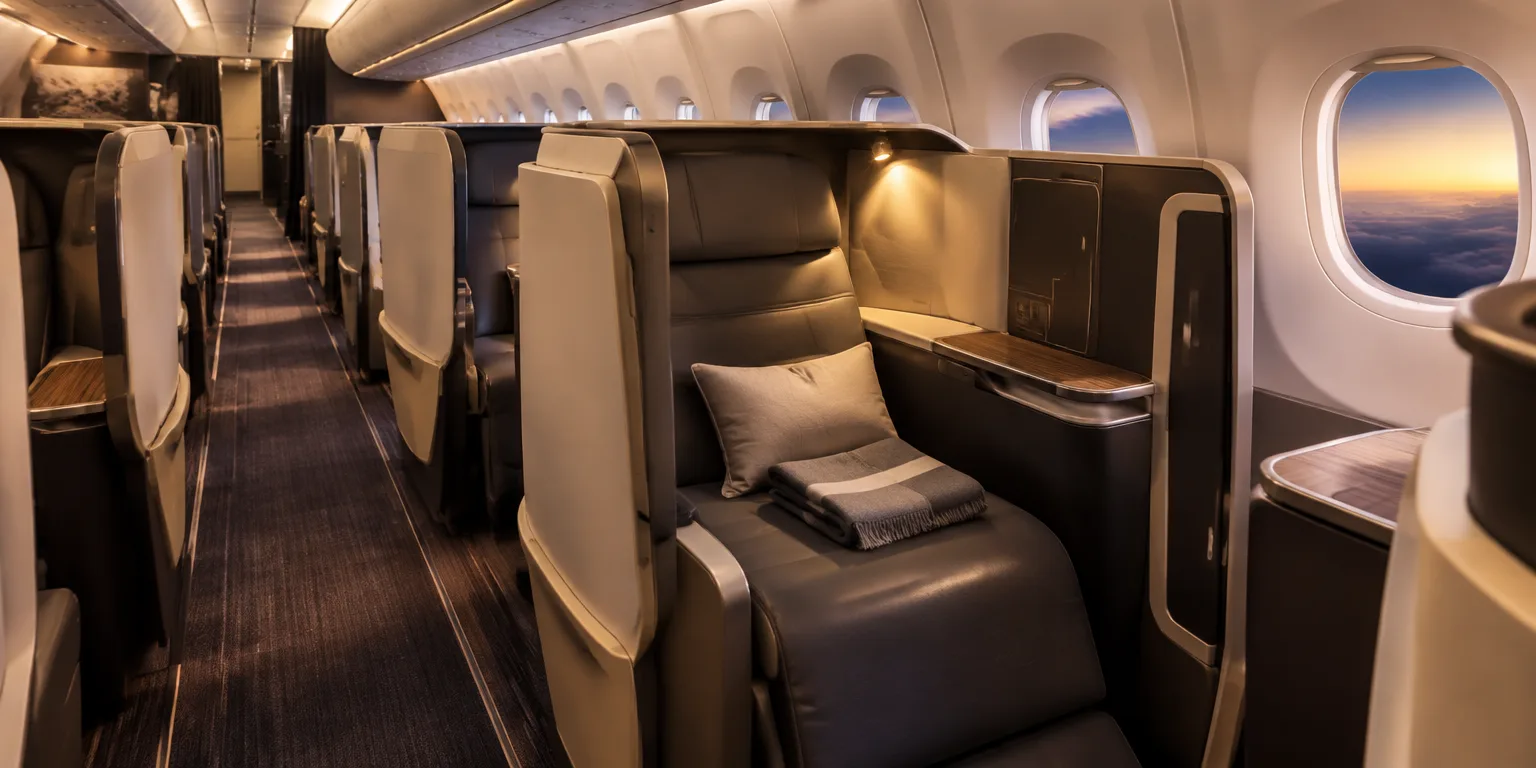
 UpgradedPoints.com · I Just Flew the New American Airlines Flagship Suites on the A321XLR. Here’s What It’s Like.
If you settle into a new Flagship suite on the A321XLR and find yourself staring at the aisle instead of the runway, the seat is not installed backward. It is angled that way on purpose.
Airlines call the setup herringbone, meaning the seats are arranged in a slanted, staggered pattern. Your chair points diagonally toward the aisle, with your feet extending toward the walkway and your head tucked back against the side of the plane near the window.
That geometry explains the awkward takeoff. When everyone else is watching the ground fall away, you are facing the wrong direction. To see out, you must twist around in the chair toward the glass and strain your neck, and you may have only one or two windows within view. Writing about a flight in the A321XLR Flagship suites, the Upgraded Points journalist found himself glancing out rather than watching the whole climb because holding the twisted position was too uncomfortable.
The opposite setup, called reverse herringbone, angles seats toward the windows. That version gives you the view, and it also gives flight attendants a clearer path to hand you a tray.
So why choose the aisle facing version at all? Sleep. In a herringbone seat, your head ends up by the outer wall when the seat lies flat, farthest from carts, chatter, and footsteps in the aisle. Your feet are the part closest to the noise. In the journalist's experience, having his head closer to the windows and away from the aisle noise made it easier to sleep on overnight flights.
The takeaway is that the aisle facing seat trades the takeoff view for quieter sleep, so pick your direction by your flight. For a daytime trip when you want to watch takeoff and landing, look for chairs that point toward the windows. For a red eye when you want quiet, choose the seat that puts the noisiest part of the plane at your feet.
Questions people ask
What is reverse herringbone, exactly?
In a reverse herringbone seat, your chair angles outward, so you face the window and the side wall. Your head stays near the aisle when you sleep, but you get a direct view outside and the crew can reach you more easily for meal service.
How can I tell which type I am booking?
Check the seat map and reviews before you book to see which version a specific aircraft uses. Airlines and travel sites often note whether a cabin faces the aisle or the windows.
Which layout suits which trip?
Daytime flyers who want views and easier meal service tend to prefer facing the window. Overnight flyers who want to be farther from aisle noise often prefer facing the aisle, since the head ends up by the wall.