Your caramelized onions are not caramelized
The deep flavor in onions, meat, and toast comes from sugars joining with proteins, not from sugars alone.
 Reactions · Why the Maillard Reaction Makes Everything Delicious
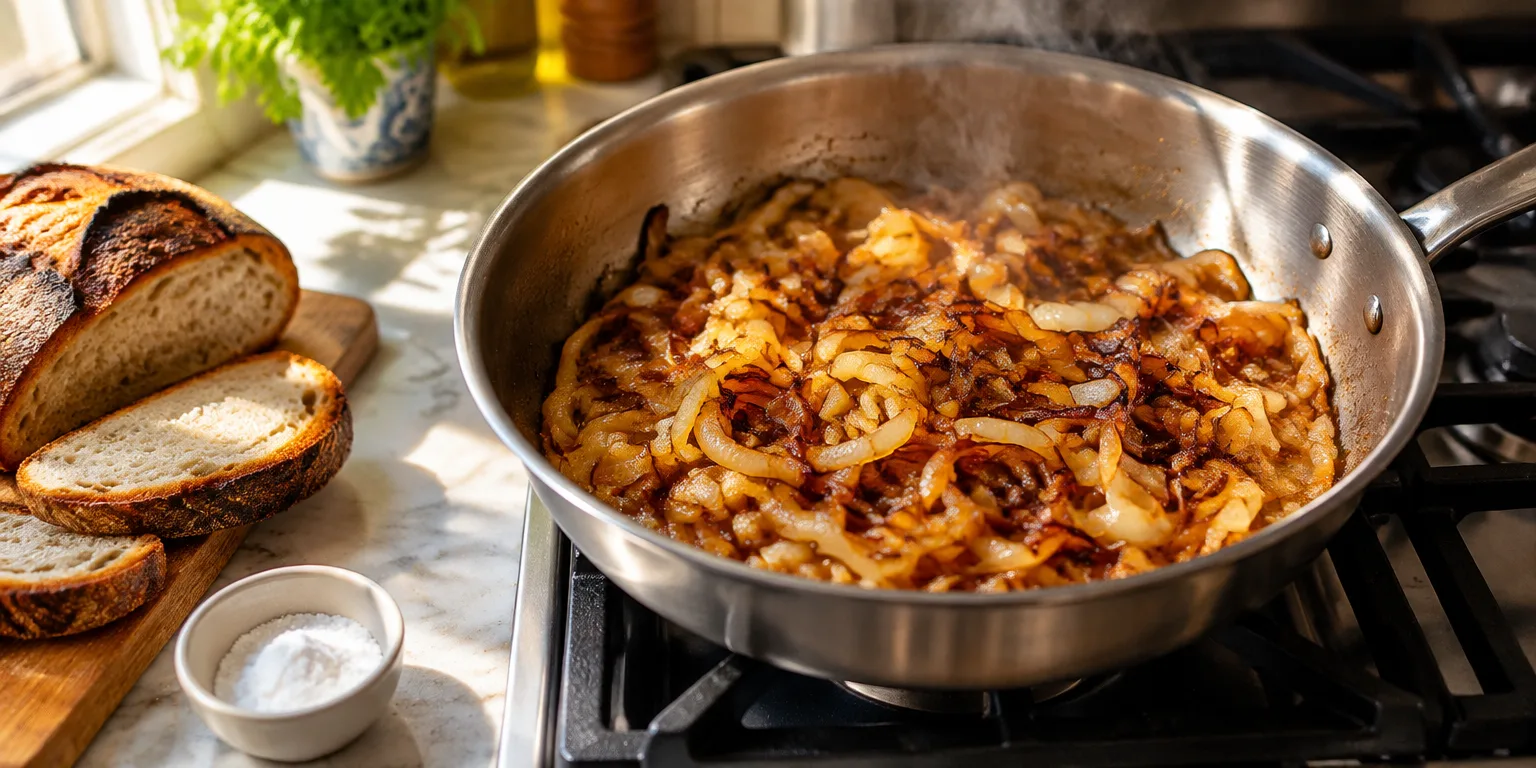
Those soft, sweet brown onions on your burger are almost certainly not caramelized. They are browned, and the flavor comes from a different and much more common piece of kitchen chemistry.
The workhorse is the Maillard reaction, sometimes called the browning reaction. It starts when heat brings together two kinds of building materials in food. On one side are sugars, abundant in carbohydrate rich foods like bread and potatoes. On the other side are amino acids, the small pieces that proteins are made from and that are found in foods like dairy, meat, and nuts. When they meet in a hot pan, they do not just combine once. They set off many linked reactions running at the same time.
Caramelization is narrower. It involves only sugars, heated until they break down and turn brown and sweet on their own. No proteins are required, and no proteins join in.
That is why the onion name is misleading. A pan of slowly browned onions can taste sweet, with hints of caramel. But that sweetness is largely thanks to Maillard, sugars plus amino acids reacting together, not sugars acting alone.
Knowing the difference gives cooks a shortcut. The Maillard reaction speeds up when food becomes less acidic, so just a very small amount of baking soda, plus a bit of salt for flavor, will make onions brown faster. Add too much, though, and the chemistry goes too far. You will get brown, mealy onion goop instead of tender strands.
Questions people ask
When does real caramelization actually happen?
Caramelization usually needs much higher heat than Maillard browning, often above 320 degrees Fahrenheit depending on the sugar, and it happens in sugary foods like table sugar, caramel sauce, and flan topping. Most browned meat, bread, and onions cook at lower temperatures and contain proteins, so Maillard does most of the work.
Why does a pinch of baking soda speed up browning?
A higher pH changes the shape and charge of amino acids, making them react more readily with sugars. Baking soda is basic, so even a small amount raises the pH on the onion surfaces and lets the cascade run faster. That is why the onions color and soften in less time.
Is this sugars-plus-proteins browning only a savory food thing?
No. The same reaction also makes bread crust, roasted coffee, toasted marshmallows, and french fries taste complex. Anywhere sugars and proteins cook together with enough heat and relatively dry conditions, Maillard flavors can develop.