Your evening free time is being mined for profit
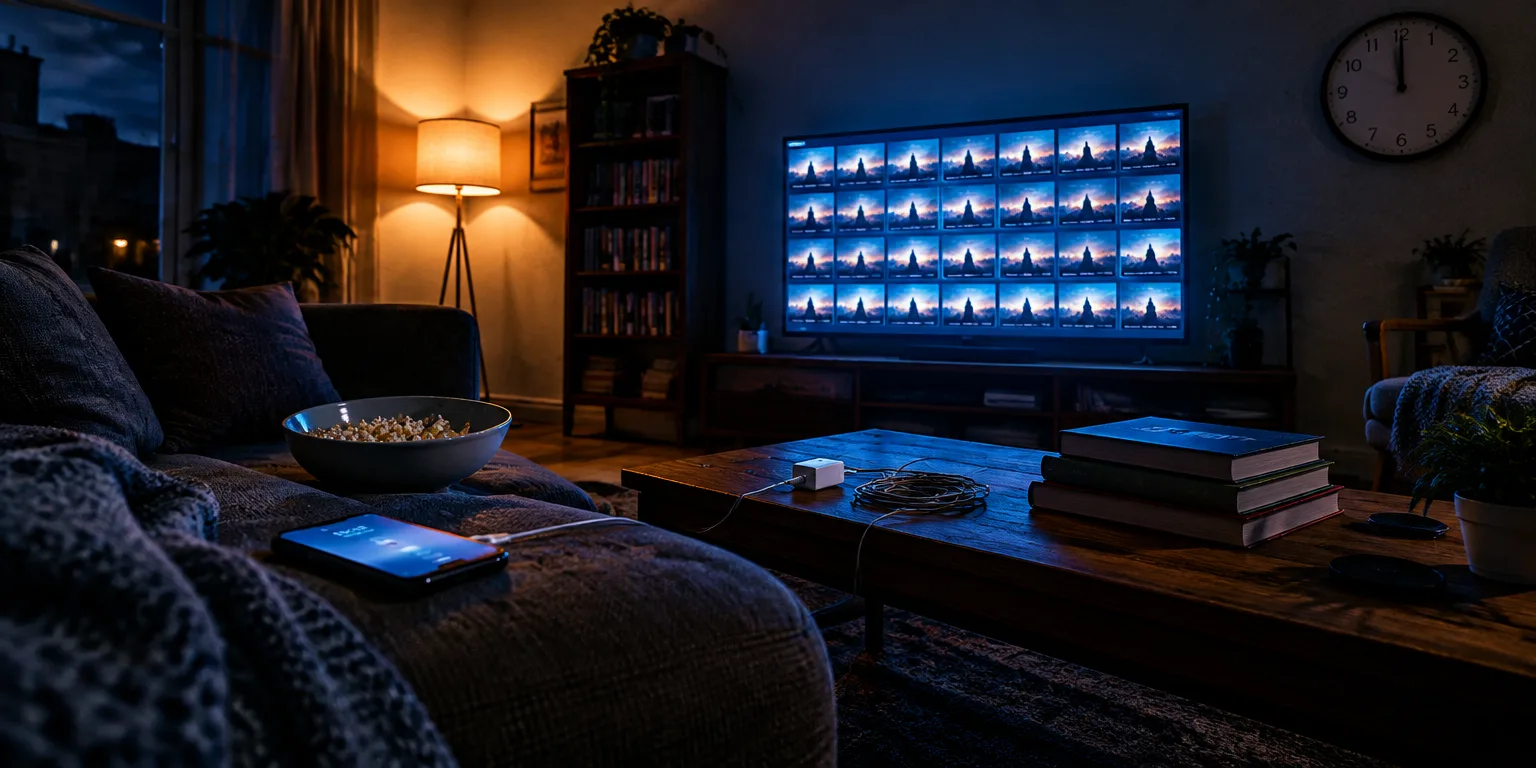
Philosophy writer Paul argues extraction also continues beyond work hours, from 5 p.m. to midnight, on streaming platforms.
 The Micro-Philosopher · How To Make Life Interesting Again And Escape The Dopamine Economy
Paul, a philosophy writer, was trying to name what feels off about modern evenings. In an essay about what Paul calls "one of the leading existential problems" facing humanity today, he argues that humanity is "living through a mass distraction event," one that numbs higher thought and replaces “Meaning-making, wondering, and intellectual risk” with assured blandness and uniformity.
His line for it is blunt: “While the mainstream economy continues to extract wealth from labor and slowly erode human freedom between 9am and 5pm, the Dopamine Economy has extended the extraction of wealth beyond business hours, diminishing the human spirit on a mass scale between 5pm and 12am.”
In his account, both day and night involve extraction, but the evening extends it into leisure hours. By Dopamine Economy, Paul means a system that extracts wealth from minds through “the creation of dopamine and the control of human attention.” He says “The locus of this mass event is the streaming platform.” He even offers what he calls a master equation: Paul writes “the greater the reduction of human agency relative to a population, the greater the extraction of wealth from human minds in the form of the creation of dopamine and the control of human attention.” Where dinosaurs faced mass extinction, he writes, humans face mass distraction, with “a mass reduction in human potential, agency, free thought, creativity, and most of all, meaning.” He calls it a downward spiral that threatens to rob “our finite and precious lives of their highest potentialities.”
What shrinks, in his telling, is what the German philosopher Friedrich Nietzsche called the last man, which Paul describes as the human Spirit reduced to its minimum livable state.
Questions people ask
Is scrolling really involuntary if I choose to do it?
Paul does not address that question directly in these passages. More generally, apps use autoplay, recommendations, and notifications that can keep people watching longer than planned. This explanation goes beyond Paul, and the choice remains with the viewer.
What does dopamine have to do with it?
Dopamine is a brain chemical involved in motivation and reward, and designers often talk about hits of it from likes, laughs, and cliffhangers. The phrase Dopamine Economy is a metaphor, not a medical diagnosis. It means companies make money by triggering quick pleasures that bring you back.
What would Paul want me to do with my evenings instead?
In these passages Paul points toward meaning-making, wondering, and intellectual risk rather than bland uniformity. He names no specific routine here. As a suggestion only, not his prescription, a reader could try spending some leisure time on art, conversation, or thought that takes effort to appreciate.