Your Fast Mind Does Most of the Mental Work
The slower, deliberate system does the hard work, but the fast system handles most of what the mind does.
 Inc. · Daniel Kahneman: Thinking Fast vs. Thinking Slow | Inc. Magazine
Ask yourself what comes after 2 plus 2. The answer arrives before you decide to calculate it. Mention your mother, says Daniel Kahneman, the psychologist and economist who won a Nobel Prize, and an emotion arrives just as fast. That is System 1, the fast, automatic, and involuntary part of the mind. You have no control over it because it simply happens.
System 2 is the slower partner. It is distinguished less by speed than by effort, Kahneman says. It is deliberate. It controls thoughts, performs complicated computations, and handles important work.
Kahneman says System 1 "does most of the mental work." It handles routines like deciding where to put your next foot when you walk and what word should come next when you talk, so you do not have to stop and decide. That efficiency is useful, and it is also misleading.
Most people feel they have reasons for what they do, Kahneman says. But, in his words, the reasons they give when asked "are not necessarily the causes of" their actions. People act for reasons they are not fully aware of. A decision maker can believe he was thinking carefully in System 2 when he was really running on System 1.
When the fast system is running the show, thinking shifts in predictable ways. People become more impulsive, more emotional, and more optimistic, and they generally follow their first impressions and their first intuitions. Some of the mistakes that follow could have been avoided, Kahneman says, if people had slowed down and brought System 2 to bear.
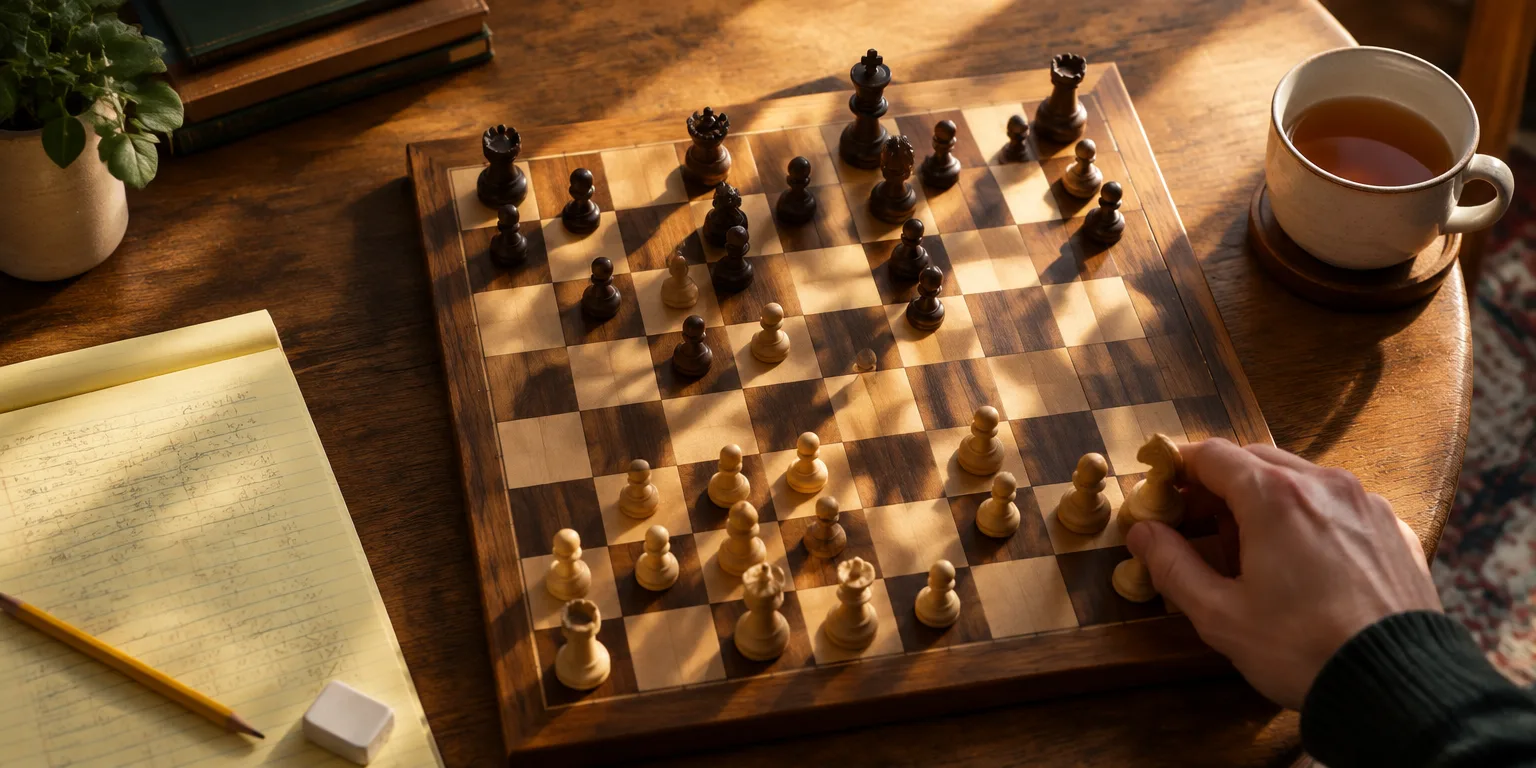
That does not mean intuition is always wrong. Kahneman says the gut of a master chess player is right most of the time because chess rewards practiced skill. When the choice is "whether to invest in this or that," Kahneman says, the setting is messier, and the first guess is not necessarily right.
Questions people ask
How can I tell which system I am using?
Check for effort and control. If an answer or feeling arrived on its own, without concentration, that was System 1. If you had to focus, weigh options, or do math step by step, you were using System 2. A sense of ease is usually a clue that the fast system is in charge.
Can I make my System 1 smarter?
Yes, but mainly through repeated practice with quick feedback. A skill practiced for years, like reading a chessboard or recognizing a familiar face, becomes automatic and reliable. Without that kind of stable practice, first impressions do not improve much on their own.
Does using System 2 guarantee a better decision?
No. Slowing down helps catch impulsive errors and forces you to check evidence and arithmetic, but it can still go wrong. System 2 is effortful and tires easily, and people often stop too soon and accept a plausible answer. It improves the odds, it does not remove uncertainty.