Your stock settles slower than the mail
Banks update records in batches every few days, part of the reason no one knew who owned what when Lehman failed.
 Joys of Compounding · Chad Cascarilla - Blockchain’s Carpenter - [Joys of Compounding, EP.26]
A package sent by FedEx can arrive faster than a stock trade can settle, even though the stock is just electronic information that should move like email.
That comparison comes from Chad Cascarilla, the co-founder of the blockchain company Paxos and a former hedge fund manager who once covered banks and mortgage firms. He blames the delay on old software.
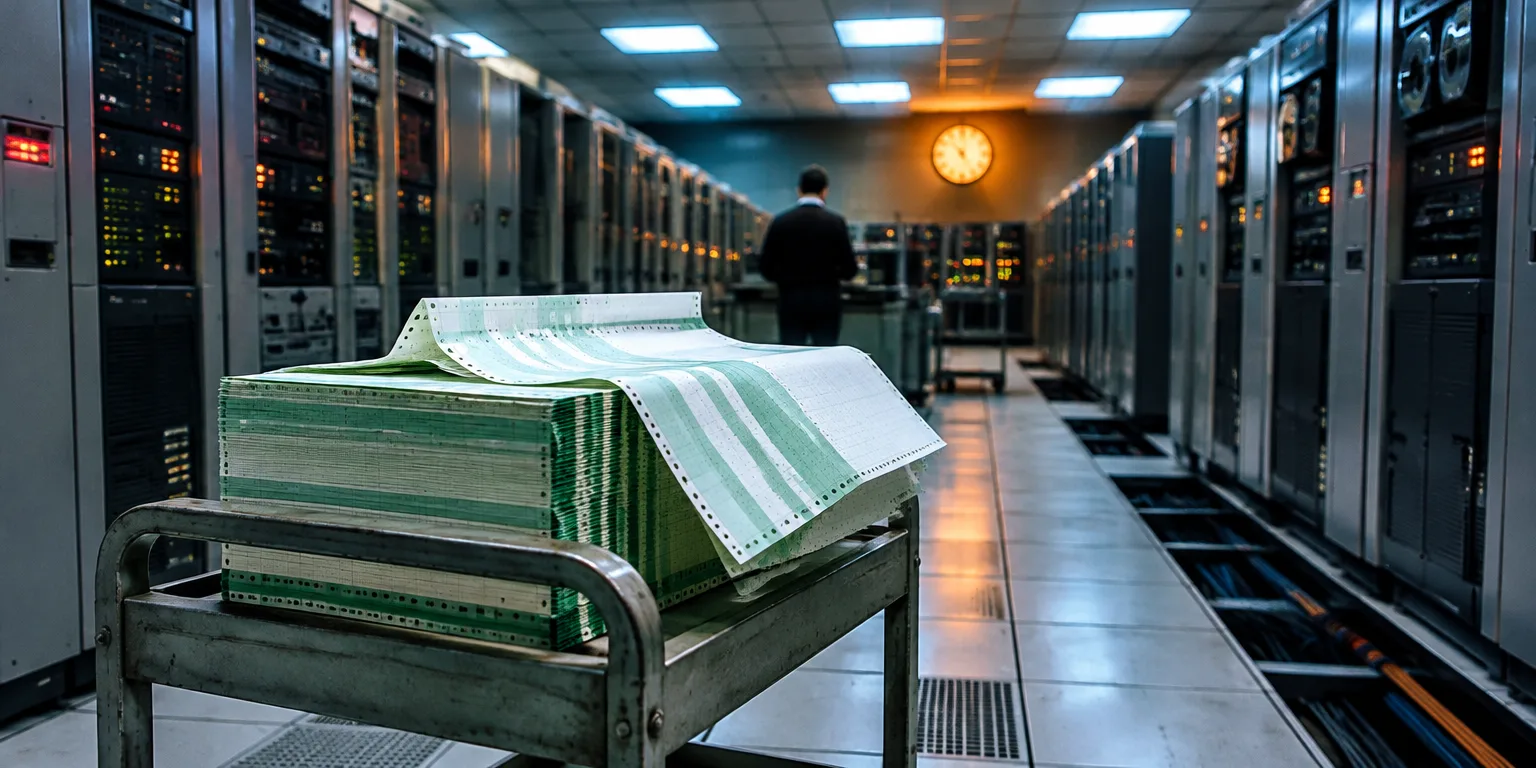
At the bottom of the system, in his account, are giant central computers called mainframes, programmed in languages most engineers no longer learn. He believes JPMorgan's core deposit system runs on Fortran, an early programming language, though he notes that may have changed in the last couple of years. A Bank of America leader told him the three most critical people at the company were COBOL programmers, a business language from the early computing era. One firm he encountered had only recently stopped using machine code, which means programming directly in ones and zeros, the most basic instructions a computer understands, dating to the 1950s.
Old technology combined with regulation means finance works like a private office network from the 1980s, what technologists call an intranet, not like the open internet. An email leaves your outbox instantly. A dematerialized stock, a share that exists only as a computer record and not as a paper certificate, still settles the next business day under what Wall Street calls T plus one.
The reason settlement is slow, he says, is that nothing moves in real time. Banks record promises in long chains of accounts and then update them in batches every few days. That batch system is part of the reason, Cascarilla says, that when Lehman Brothers failed no one could say exactly where anything was or who owned what at that moment.
Questions people ask
What does T plus one mean?
It means a stock trade officially completes one business day after you agree to it. If you buy shares on Monday, you become the owner on the books on Tuesday. Until recently the U.S. used T plus two, or two days.
What is batch processing?
It means saving up lots of transactions and processing them all at once, often at night or every few days, instead of one by one as they happen. It was efficient when computers were slow and expensive. It looks slow today next to systems that update continuously.
Why don't banks just replace COBOL and Fortran?
Those systems hold decades of account rules and balances, and any mistake could lose money or break compliance. Replacing them means rebuilding while the bank stays open every day. Many banks add new apps on top instead, leaving the old core in place.