Your Tires Broadcast an ID That Can Track Your Car Even If You Change the Plates
The sensors were built to flash a dashboard warning, not to identify your car, but their constant radio signal can be picked up from the roadside.
 The Shawn Ryan Show · #340 Byron Tau - The Government Doesn't Just Spy on You. It Buys You.
Your car tires are constantly broadcasting a unique ID that can identify your car on the road, even if you swap your license plates.
That low-pressure warning on a cold morning comes from a little radio transmitter inside each tire. It measures the pressure and sends a signal to the car's computer, said Byron Tau, a reporter who wrote a book on surveillance.
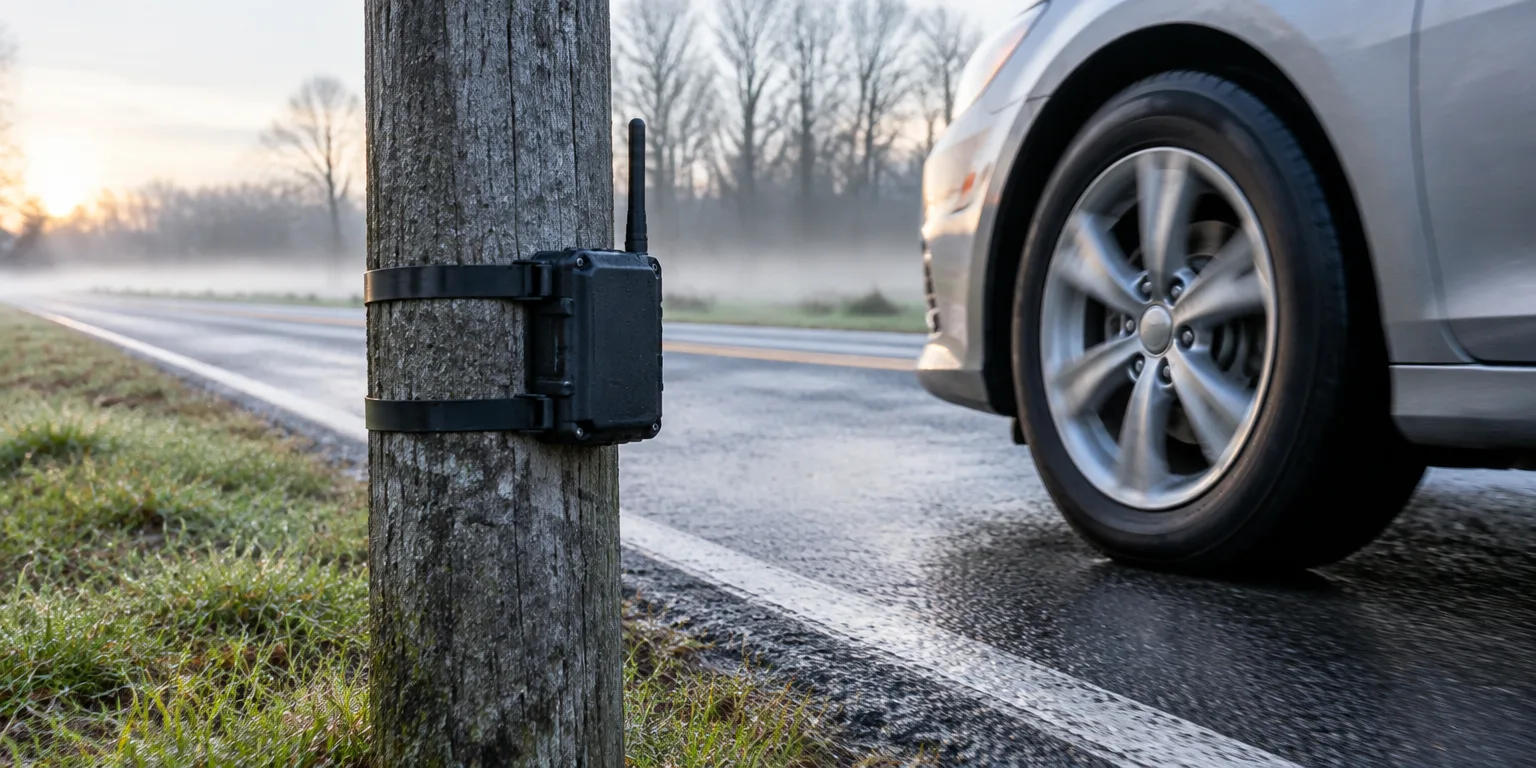
Each sensor has its own pairing number so the car knows which tire is which, and it keeps shouting that number as you drive. Put small receivers along a highway or at the end of a road, and you can log when a particular set of tires passes. Companies have set up such roadside receivers, Tau said.
Changing plates would not defeat it, because most drivers probably would not think to change the sensors too. Tau called it a poorly designed system that ended up doubling as a tracker, but not one most drivers need to worry about.
Questions people ask
Can I just turn the sensors off?
Not easily. Tire pressure monitoring has been required on new passenger cars sold in the United States since 2007, so a mechanic will expect it to work. Driving without working sensors usually means living with a permanent warning light.
How far away can someone read my tire signal?
Only at short range, typically tens of yards. The sensors use low-power radio meant to reach the car itself, not a distant tower. That is why reading them requires placing a small receiver close to the road where the vehicle will pass.
Is this how police usually track cars?
No. Police far more often rely on license plate readers, toll records, and phone location data, which are easier to collect at scale. Tire IDs are a niche method for re-identifying a car after its plates have changed.