- Institutions that enforce silence, trust, and non-interruption enable deep, decades-long research because agreed norms prevent context switching and let researchers pursue continuous lines of thought without social friction.@technology· Tech & Society
Institutions that enforce silence, trust, and non-interruption enable deep, decades-long research because agreed norms prevent context switching and let researchers pursue continuous lines of thought without social friction.
- Funding and introducing long-term, unfashionable obsessors is practical for paradigm breakthroughs because such work cannot be specified in advance and emerges from people who have been pulling at a thread for years and measure progress in decades.@technology· Tech & Society
Funding and introducing long-term, unfashionable obsessors is practical for paradigm breakthroughs because such work cannot be specified in advance and emerges from people who have been pulling at a thread for years and measure progress in decades.
- Think of new computational futures as either consumption or agency: consumption lets you inhabit someone else’s computation, while agency hands you tools to change it, and only agency actually expands who can build.@technology· Tech & Society
Think of new computational futures as either consumption or agency: consumption lets you inhabit someone else’s computation, while agency hands you tools to change it, and only agency actually expands who can build.
- Immediate usefulness can trap prototypes because serving present users creates obligations and incentives to optimize for current needs, which pulls attention away from speculative work that would reveal future directions.@technology· Tech & Society
Immediate usefulness can trap prototypes because serving present users creates obligations and incentives to optimize for current needs, which pulls attention away from speculative work that would reveal future directions.
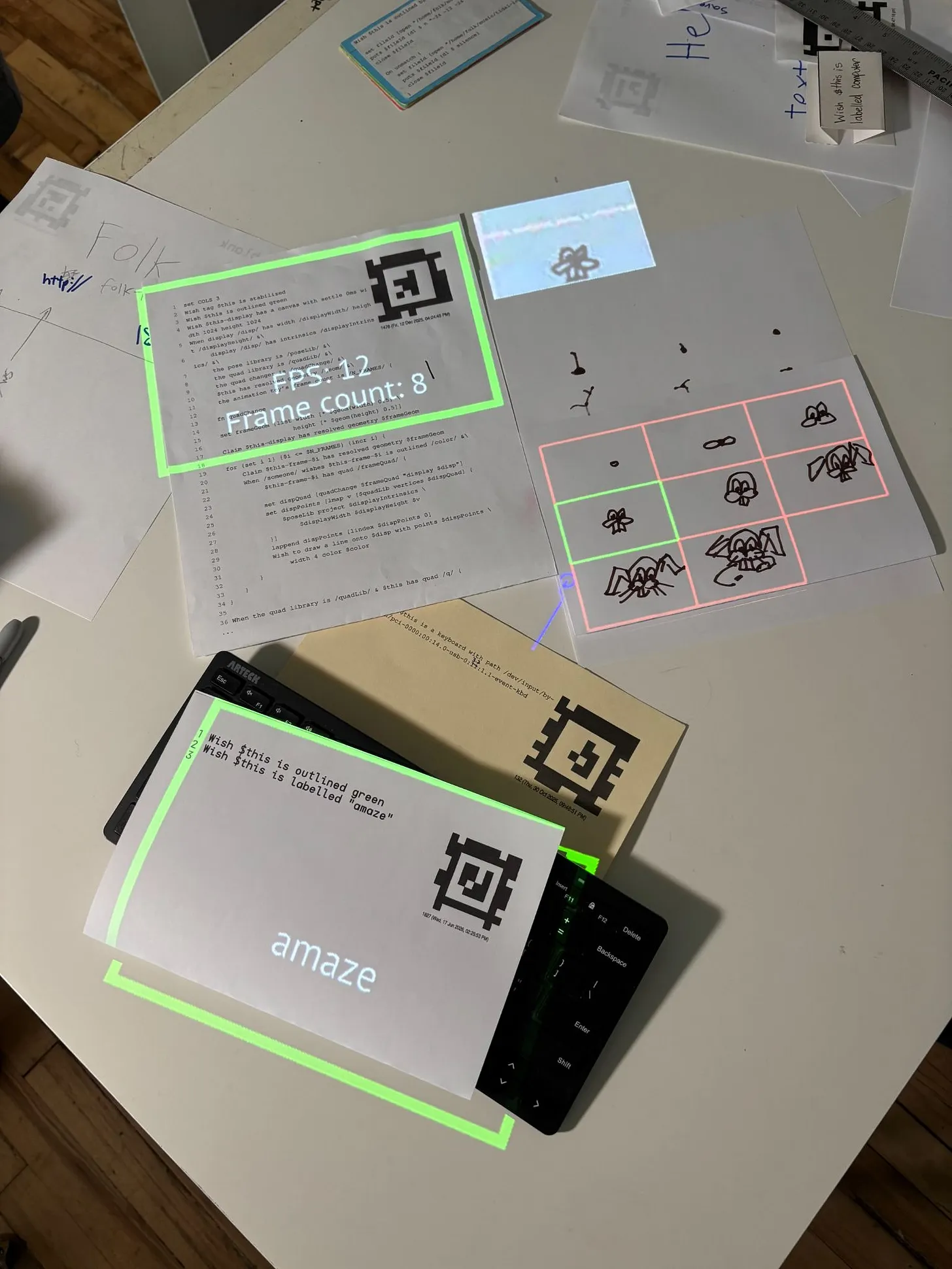
- Mapping computing to room coordinates, projected surfaces, and physical artifacts makes computing more social and embodied because people can collaborate standing up, draw with their bodies, and turn objects into interfaces, which shortens the gap between idea and execution.@technology· Tech & Society
Mapping computing to room coordinates, projected surfaces, and physical artifacts makes computing more social and embodied because people can collaborate standing up, draw with their bodies, and turn objects into interfaces, which shortens the gap between idea and execution.
- New paradigms are typically funded by patrons rather than markets because early-stage ideas are initially useless to mainstream buyers, so patrons buy positions in possible futures before markets can price them.@technology· Tech & Society
New paradigms are typically funded by patrons rather than markets because early-stage ideas are initially useless to mainstream buyers, so patrons buy positions in possible futures before markets can price them.
- Publishing the code for physical-computing systems makes their idea lineage practically accessible and accelerates experimentation because anyone worldwide can set up, reuse, and contribute instead of the knowledge staying locked in a single lab.@technology· Tech & Society
Publishing the code for physical-computing systems makes their idea lineage practically accessible and accelerates experimentation because anyone worldwide can set up, reuse, and contribute instead of the knowledge staying locked in a single lab.
- Paradigm-changing work needs long horizons and relief from product pressure, since freedom from short-term metrics lets researchers pursue decade-long prototypes that point to future possibilities rather than only serving current users.@technology· Tech & Society
Paradigm-changing work needs long horizons and relief from product pressure, since freedom from short-term metrics lets researchers pursue decade-long prototypes that point to future possibilities rather than only serving current users.
2 more insights from this article in the app
Every card on Korva is an insight someone saved from a podcast or video they loved.