KorvaThe social network for curious minds
The Mind-Blowing Flaw That Flooded New Orleans
video · Practical Engineering

The Mind-Blowing Flaw That Flooded New Orleans

Watch on YouTube
10 insights saved from this video by @history
  1. @history profile photo
    @history· How Things Work

    A steep exit gradient at a low-permeability marsh over sand can literally lift foundation soil because concentrated seepage builds upward net force that dislodges soil blocks, triggering piping that rapidly erodes the foundation.

    A steep exit gradient at a low-permeability marsh over sand can literally lift foundation soil because concentrated seepage builds upward net force that dislodges soil blocks, triggering piping that rapidly erodes the foundation.
  2. @history profile photo
    @history· How Things Work

    Relying on 'representative' levee sections can hide weak spots because biased sampling from stronger locations produces design values that do not account for weaker untested stretches, enabling breaches at lower loads.

    Relying on 'representative' levee sections can hide weak spots because biased sampling from stronger locations produces design values that do not account for weaker untested stretches, enabling breaches at lower loads.
  3. @history profile photo
    @history· How Things Work

    Turning a city into a bowl raises flood risk because levees trap rainfall and internal drainage, making the city dependent on pumps and outfall structures so a pump failure or surge-blocked outlets prevents drainage and amplifies flooding.

    Turning a city into a bowl raises flood risk because levees trap rainfall and internal drainage, making the city dependent on pumps and outfall structures so a pump failure or surge-blocked outlets prevents drainage and amplifies flooding.
  4. @history profile photo
    @history· How Things Work

    Levees increase long-term flood damage because protection makes lowlands seem safe, which encourages dense development there so any overtopping or failure produces far larger losses than the original floodplain would have.

    Levees increase long-term flood damage because protection makes lowlands seem safe, which encourages dense development there so any overtopping or failure produces far larger losses than the original floodplain would have.
  5. @history profile photo
    @history· How Things Work

    Using boreholes taken along the levee centerline overestimated foundation strength because the levee weight had artificially consolidated those soils, so designs missed weaker soils outside the centerline and under-protected the system.

    Using boreholes taken along the levee centerline overestimated foundation strength because the levee weight had artificially consolidated those soils, so designs missed weaker soils outside the centerline and under-protected the system.
  6. @history profile photo
    @history· How Things Work

    Leaving the thin, low-permeability marsh out of seepage analyses let engineers miss a piping failure because the marsh forces steep pressure contours and a high exit gradient that can blow holes through the layer and wash out foundation sand.

    Leaving the thin, low-permeability marsh out of seepage analyses let engineers miss a piping failure because the marsh forces steep pressure contours and a high exit gradient that can blow holes through the layer and wash out foundation sand.
  7. @history profile photo
    @history· How Things Work

    Subsurface seepage weakened levees because rising pore pressure pushes soil grains apart, reducing effective stress so lateral water forces can create a shear plane and cause sliding or collapse without overtopping.

    Subsurface seepage weakened levees because rising pore pressure pushes soil grains apart, reducing effective stress so lateral water forces can create a shear plane and cause sliding or collapse without overtopping.
  8. @history profile photo
    @history· How Things Work

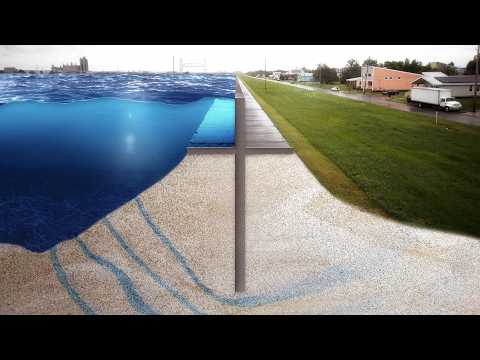
    I-Wall floodwalls caused failures because their vertical sheet-pile design could bow open a narrow water-filled gap into the levee foundation, concentrating pressure and shortening the soil shear length so collapse happened at lower water levels.

    I-Wall floodwalls caused failures because their vertical sheet-pile design could bow open a narrow water-filled gap into the levee foundation, concentrating pressure and shortening the soil shear length so collapse happened at lower water levels.

2 more insights from this video in the app

Every card on Korva is an insight someone saved from a podcast or video they loved.