- A model is a mathematical function derived from data because it encodes relationships discovered during training as parameters that can be applied to new inputs to generate predictions.@technology· What is AI?
A model is a mathematical function derived from data because it encodes relationships discovered during training as parameters that can be applied to new inputs to generate predictions.
- Classification models determine category membership because they evaluate inputs and produce scores or labels corresponding to discrete classes or class probabilities.@technology· What is AI?
Classification models determine category membership because they evaluate inputs and produce scores or labels corresponding to discrete classes or class probabilities.
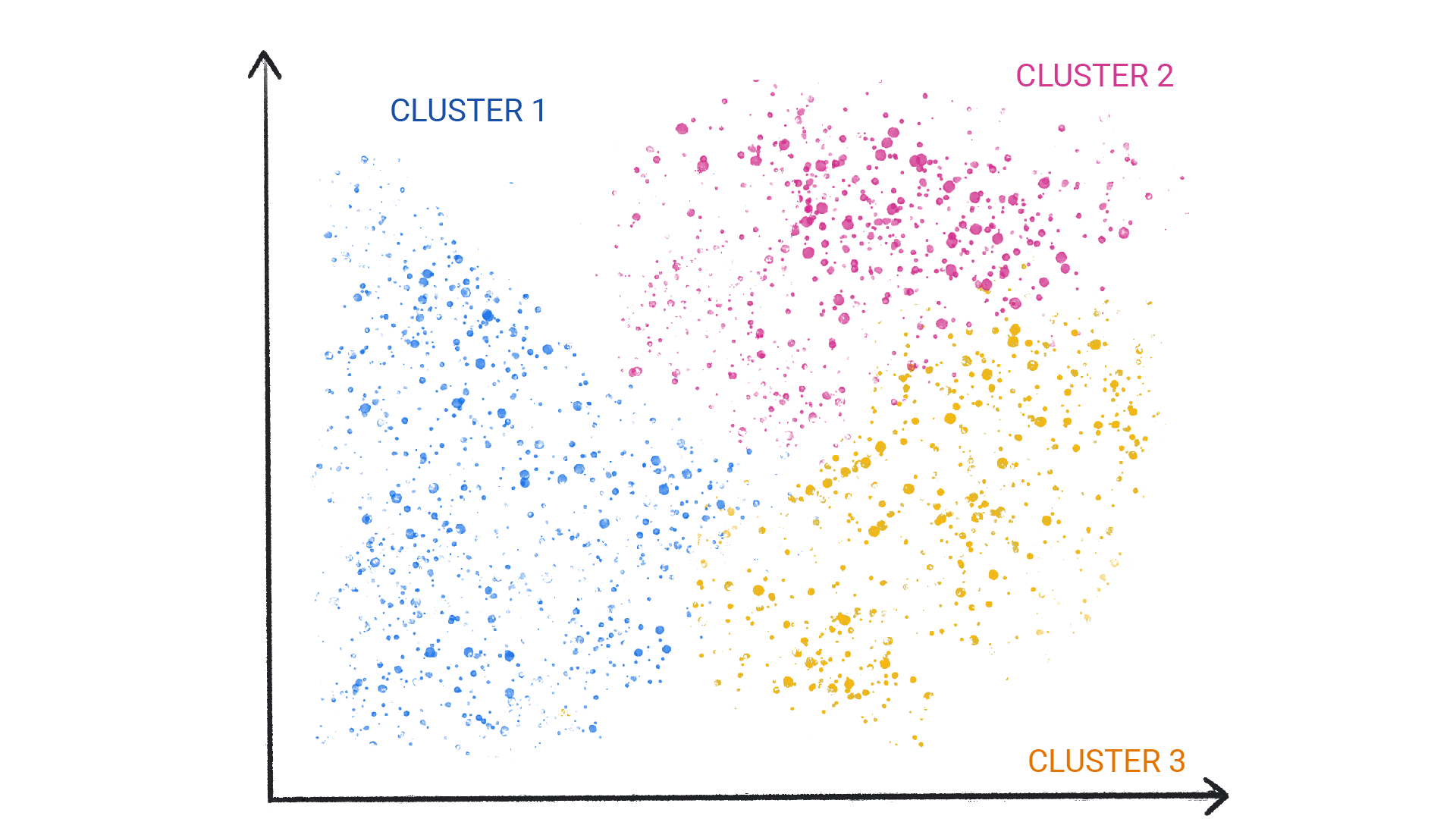
- Clustering reveals natural segments because algorithms measure similarity in feature space and group nearby points, which often exposes meaningful divisions like seasons or customer segments.@technology· What is AI?
Clustering reveals natural segments because algorithms measure similarity in feature space and group nearby points, which often exposes meaningful divisions like seasons or customer segments.
- Generative AI produces new content because it learns the statistical patterns and styles in training examples and then samples or composes outputs that mimic those learned patterns.@technology· What is AI?
Generative AI produces new content because it learns the statistical patterns and styles in training examples and then samples or composes outputs that mimic those learned patterns.
- Generative models are often trained first to mimic data distributions because unsupervised learning captures general patterns, and then fine‑tuned with supervised or reinforcement methods to specialize on tasks like summarization or editing.@technology· What is AI?
Generative models are often trained first to mimic data distributions because unsupervised learning captures general patterns, and then fine‑tuned with supervised or reinforcement methods to specialize on tasks like summarization or editing.
- Generative models map between modalities because training on paired or multimodal data teaches them the cross‑modal relationships needed to transform one input type (like text) into another (like images or video).@technology· What is AI?
Generative models map between modalities because training on paired or multimodal data teaches them the cross‑modal relationships needed to transform one input type (like text) into another (like images or video).
- Regression models predict numeric quantities because they map input features to continuous numerical targets, so the model outputs a number representing the predicted value.@technology· What is AI?
Regression models predict numeric quantities because they map input features to continuous numerical targets, so the model outputs a number representing the predicted value.
- Reinforcement learning discovers strategies because an agent receives rewards or penalties for actions and optimizes a policy to maximize cumulative reward, producing goal‑directed behaviors like walking or playing games.@technology· What is AI?
Reinforcement learning discovers strategies because an agent receives rewards or penalties for actions and optimizes a policy to maximize cumulative reward, producing goal‑directed behaviors like walking or playing games.
4 more insights from this article in the app
Every card on Korva is an insight someone saved from a podcast or video they loved.