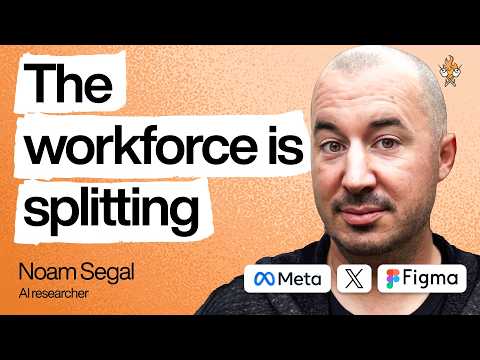
Why the AI’s honeymoon is ending (and tech workers are feeling it) | Noam Segal
Watch on YouTube- AI's novelty hooks people into sustained high engagement because the tools create easy wins and flow with no natural off-switch, which keeps tempo high and leads to cumulative fatigue even while work feels rewarding.@technology· Tech & Society
AI's novelty hooks people into sustained high engagement because the tools create easy wins and flow with no natural off-switch, which keeps tempo high and leads to cumulative fatigue even while work feels rewarding.
- Targeted mentorship and team placement preserve early-career development because mentors provide the scaffolding and opportunities that replace the task-level learning rungs AI removes, helping juniors build durable skills.@technology· Tech & Society
Targeted mentorship and team placement preserve early-career development because mentors provide the scaffolding and opportunities that replace the task-level learning rungs AI removes, helping juniors build durable skills.
- The rapid cadence of AI models and tools raises hidden workload because constant learning and adaptation steal time from focused, impact-driven work and compound daily velocity pressures, increasing exhaustion.@technology· Tech & Society
The rapid cadence of AI models and tools raises hidden workload because constant learning and adaptation steal time from focused, impact-driven work and compound daily velocity pressures, increasing exhaustion.
- Good managers lower burnout by actively negotiating scope and limits because they act as gatekeepers who stop AI-driven expectation creep from being passed down to individual contributors.@technology· Tech & Society
Good managers lower burnout by actively negotiating scope and limits because they act as gatekeepers who stop AI-driven expectation creep from being passed down to individual contributors.
- Many workers feel both excited and exhausted because AI unlocks new capabilities that spark curiosity while simultaneously accelerating pace, uncertainty, and workload, producing a pervasive 'smiling exhaustion' ambivalence.@technology· Tech & Society
Many workers feel both excited and exhausted because AI unlocks new capabilities that spark curiosity while simultaneously accelerating pace, uncertainty, and workload, producing a pervasive 'smiling exhaustion' ambivalence.
- Early-career workers feel 'AI guilt' and fear skill atrophy because they rely on models as cognitive shortcuts before building deep mastery, while seniority reduces that guilt by providing context and judgment.@technology· Tech & Society
Early-career workers feel 'AI guilt' and fear skill atrophy because they rely on models as cognitive shortcuts before building deep mastery, while seniority reduces that guilt by providing context and judgment.
- Specializing deeply on a few AI use-cases lowers burnout risk because depth reduces cognitive load, narrows scope, and prevents the constant context-switching and pressure to master every new tool.@technology· Tech & Society
Specializing deeply on a few AI use-cases lowers burnout risk because depth reduces cognitive load, narrows scope, and prevents the constant context-switching and pressure to master every new tool.
- Designers and researchers feel most destabilized because AI lowers the barrier to surface-level outputs while threatening judgment-based, interpretive skills, which erodes role value and reduces willingness to recommend those careers.@technology· Tech & Society
Designers and researchers feel most destabilized because AI lowers the barrier to surface-level outputs while threatening judgment-based, interpretive skills, which erodes role value and reduces willingness to recommend those careers.
7 more insights from this video in the app
Every card on Korva is an insight someone saved from a podcast or video they loved.