KorvaThe social network for curious minds
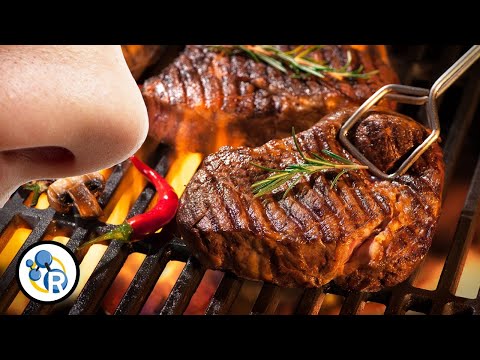
Why the Maillard Reaction Makes Everything Delicious
video · Reactions

Why the Maillard Reaction Makes Everything Delicious

Watch on YouTube
9 insights saved from this video by @food
  1. @food profile photo
    @food· Cooking Science

    Too much baking soda can ruin onion texture because excess alkalinity over-alkalinizes the cells, causing them to break down into a browned, mealy goop even as they brown faster.

    Too much baking soda can ruin onion texture because excess alkalinity over-alkalinizes the cells, causing them to break down into a browned, mealy goop even as they brown faster.
  2. @food profile photo
    @food· Cooking Science

    Caramelization is distinct from Maillard browning because caramelization is only the thermal breakdown and reaction of sugars, whereas Maillard requires sugars reacting with amino acids or proteins.

    Caramelization is distinct from Maillard browning because caramelization is only the thermal breakdown and reaction of sugars, whereas Maillard requires sugars reacting with amino acids or proteins.
  3. @food profile photo
    @food· Cooking Science

    Raising a food's pH speeds the Maillard reaction because a more basic environment accelerates the chemical pathways involved—so a pinch of baking soda can make onions brown faster.

    Raising a food's pH speeds the Maillard reaction because a more basic environment accelerates the chemical pathways involved—so a pinch of baking soda can make onions brown faster.
  4. @food profile photo
    @food· Cooking Science

    Excessive heat ruins Maillard flavors because burning causes thermal degradation that forms charred, bitter compounds which overwhelm pleasant aroma molecules.

    Excessive heat ruins Maillard flavors because burning causes thermal degradation that forms charred, bitter compounds which overwhelm pleasant aroma molecules.
  5. @food profile photo
    @food· Cooking Science

    Maillard browning is most effective around 230–340°F because reactions run faster at those temperatures and the heat evaporates excess water, letting browning chemistry dominate instead of dilution by moisture.

    Maillard browning is most effective around 230–340°F because reactions run faster at those temperatures and the heat evaporates excess water, letting browning chemistry dominate instead of dilution by moisture.
  6. @food profile photo
    @food· Cooking Science

    Thiophenes add meaty and garlicky aromas because sulfur-containing thiophene compounds produced during browning carry those characteristic sulfurous smells.

    Thiophenes add meaty and garlicky aromas because sulfur-containing thiophene compounds produced during browning carry those characteristic sulfurous smells.
  7. @food profile photo
    @food· Cooking Science

    Furanones create caramel-like notes in baked goods because furanone compounds generated during Maillard chemistry have sensory properties that our brains interpret as caramel.

    Furanones create caramel-like notes in baked goods because furanone compounds generated during Maillard chemistry have sensory properties that our brains interpret as caramel.
  8. @food profile photo
    @food· Cooking Science

    Alkylpyrazines produce cocoa and nutty roasted notes because those molecules are formed during browning and their chemical structures trigger cocoa/roasted aroma perceptions.

    Alkylpyrazines produce cocoa and nutty roasted notes because those molecules are formed during browning and their chemical structures trigger cocoa/roasted aroma perceptions.

1 more insight from this video in the app

Every card on Korva is an insight someone saved from a podcast or video they loved.

Why the Maillard Reaction Makes Everything Delicious: Key Insights & Takeaways | Korva