K
Korva
™
Board
Ancient Societies
History
·
59 insights
·
0 followers
@history
Sumerian’s linguistic isolation has led historians to ask whether its speakers reached southern Iraq by boat.
Fall of Civilizations
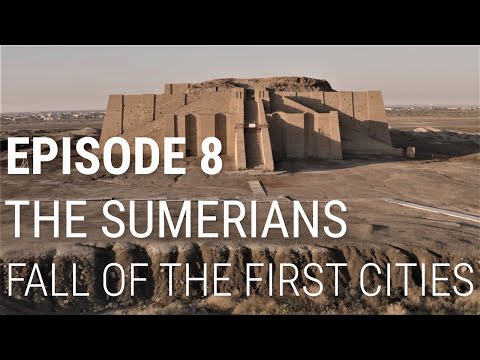
8. The Sumerians - Fall of the First Cities
Go deeper ✨
@history
Ishbi-Ira requested transport for grain, used the request to stay in Isin with the supplies, and declared himself king.
Fall of Civilizations
8. The Sumerians - Fall of the First Cities
Go deeper ✨
@history
Akkadian and Sumerian communities coexisted for centuries, sharing cities, achievements, and failures.
Fall of Civilizations
8. The Sumerians - Fall of the First Cities
Go deeper ✨
@history
Ur stood where the Euphrates met the sea, turning its location into a prosperous trading port and fishing town.
Fall of Civilizations
8. The Sumerians - Fall of the First Cities
Go deeper ✨
@history
For Sumerians and Akkadians, kur meant both “mountain” and the rebellious, barbaric wilderness beyond settled society.
Fall of Civilizations
8. The Sumerians - Fall of the First Cities
Go deeper ✨
@history
Utu-Hengal’s victory launched the Third Dynasty of Ur, also called the Sumerian Empire or Sumerian Renaissance.
Fall of Civilizations
8. The Sumerians - Fall of the First Cities
Go deeper ✨
@history
Babylonian and Assyrian kings invoked Ur and Sumer in their titles to claim legitimacy from Mesopotamia’s earliest civilization.
Fall of Civilizations
8. The Sumerians - Fall of the First Cities
Go deeper ✨
@history
Lagash accumulated wealth through raiding, enslavement, and selling captives, exposing the organized violence beneath urban prosperity.
Fall of Civilizations
8. The Sumerians - Fall of the First Cities
Go deeper ✨
@history
Uruk is linked to the oldest surviving world literature, the Epic of Gilgamesh, whose king was two-thirds divine and one-third human.
Fall of Civilizations
8. The Sumerians - Fall of the First Cities
Go deeper ✨
@history
Ur-Nammu standardized bronze market weights and divided silver into fixed units, laying foundations for monetary exchange.
Fall of Civilizations
8. The Sumerians - Fall of the First Cities
Go deeper ✨
@history
Mountain erosion releases quartz and feldspar particles that rivers carry downstream as fertile silt.
Fall of Civilizations
8. The Sumerians - Fall of the First Cities
Go deeper ✨
@history
A climate disruption reduced rainfall across the Middle East and made the Akkadian Empire’s river-fed agriculture unreliable.
Fall of Civilizations
8. The Sumerians - Fall of the First Cities
Go deeper ✨
@history
Cuneiform began with wedge-shaped reeds pressed into clay, using two abundant local materials.
Fall of Civilizations
8. The Sumerians - Fall of the First Cities
Go deeper ✨
@history
Sumerian recipes used beer, onions, rocket, coriander, semolina, cumin, beetroot, leeks, garlic, and carrots.
Fall of Civilizations
8. The Sumerians - Fall of the First Cities
Go deeper ✨
@history
Sumerian tradition treated civilization as a package of crafts, wisdom, government, and inheritance rules, alongside conquest and plunder.
Fall of Civilizations
8. The Sumerians - Fall of the First Cities
Go deeper ✨
@history
Sargon weakened conquered cities by demolishing their walls, stripping rebels of their strongest defenses.
Fall of Civilizations
8. The Sumerians - Fall of the First Cities
Go deeper ✨
@history
The first writing tracked food rations and supplies with pictorial signs for quantities and objects.
Fall of Civilizations
8. The Sumerians - Fall of the First Cities
Go deeper ✨
@history
Irrigation poisoned southern Iraq’s soil with salt. Evaporation left minerals behind, while rainfall could not wash them away.
Fall of Civilizations
8. The Sumerians - Fall of the First Cities
Go deeper ✨
@history
Around 3500 BC, Uruk reached approximately 50,000 inhabitants, making it the largest city the world had yet seen.
Fall of Civilizations
8. The Sumerians - Fall of the First Cities
Go deeper ✨
@history
Sumerian base-60 mathematics still divides hours, minutes, seconds, and circles into 60, 60, and 360.
Fall of Civilizations
8. The Sumerians - Fall of the First Cities
Go deeper ✨
@history
One Sumerian factory produced 1,100 tons of flour yearly, plus bread, beer, and linseed oil, using 134 specialists and 858 skilled workers, most women.
Fall of Civilizations
8. The Sumerians - Fall of the First Cities
Go deeper ✨
@history
Pompeian carpenters processed with a shrine displaying craft symbols and patron figures including Minerva and Daedalus.
Ancient Rome Live
Daily Life in Ancient Rome
Go deeper ✨
@history
Roman fullers whitened cloth with fuller's earth before washing, pressing, drying, combing, and fumigating it with sulfur.
Ancient Rome Live
Daily Life in Ancient Rome
Go deeper ✨
@history
Roman images documented specialized manual jobs including metalsmithing, copperworking, and cutting tesserae for mosaics.
Ancient Rome Live
Daily Life in Ancient Rome
Go deeper ✨
@history
Roman cities filled their streets with occupational and religious processions organized by trade associations, not just elite triumphs.
Ancient Rome Live
Daily Life in Ancient Rome
Go deeper ✨
@history
The Capitoline carpenters' association maintained the roofing system of the Temple of Jupiter Optimus Maximus.
Ancient Rome Live
Daily Life in Ancient Rome
Go deeper ✨
@history
The Torlonia relief shows Portus as an industrial harbor packed with ships, complex rigging, a lighthouse, tugboat, and cargo.
Ancient Rome Live
Daily Life in Ancient Rome
Go deeper ✨
@history
Lucius Caecilius Iucundus left 153 wax tablets in Pompeii documenting banking and business from 15 to 62 AD.
Ancient Rome Live
Daily Life in Ancient Rome
Go deeper ✨
@history
Pompeian bars hosted drinking, demands for more alcohol, dice games, kissing, and fights staff had to break up.
Ancient Rome Live
Daily Life in Ancient Rome
Go deeper ✨
@history
Roman fullers cleaned cloth with water mixed with urine, potash, or natron while slaves, including children, trampled it.
Ancient Rome Live
Daily Life in Ancient Rome
Go deeper ✨
@history
Iron-armed infantry from smaller kingdoms challenged the chariot warfare of larger Bronze Age states as rebellions weakened them further.
Fall of Civilizations
2. The Bronze Age Collapse - Mediterranean Apocalypse
Go deeper ✨
@history
At the end of the 13th century BC, the eastern Mediterranean suddenly shifted toward extreme dryness and aridity.
Fall of Civilizations
2. The Bronze Age Collapse - Mediterranean Apocalypse
Go deeper ✨
@history
An attack through the Nile threatened Egypt’s lifeblood, where its major cities and wealth were concentrated.
Fall of Civilizations
2. The Bronze Age Collapse - Mediterranean Apocalypse
Go deeper ✨
@history
Egypt’s empire fractured permanently less than 80 years after Ramses III’s reign, when the dynasty’s final ruler could no longer restrain the priests.
Fall of Civilizations
2. The Bronze Age Collapse - Mediterranean Apocalypse
Go deeper ✨
@history
Ramses III inherited Egypt’s throne at about 31 after his father Setnakhte founded the 20th Dynasty through civil war.
Fall of Civilizations
2. The Bronze Age Collapse - Mediterranean Apocalypse
Go deeper ✨
@history
Knowledge of the Late Bronze Age rests on archaeological evidence and written texts, both incomplete and biased.
Fall of Civilizations
2. The Bronze Age Collapse - Mediterranean Apocalypse
Go deeper ✨
@history
Egypt could not retreat inland from maritime threats. Its Mediterranean coast and trade economy kept it exposed.
Fall of Civilizations
2. The Bronze Age Collapse - Mediterranean Apocalypse
Go deeper ✨
@history
The destruction reached Aleppo, Megiddo, and Cypriot settlements including Kition and Kokkinokremnos.
Fall of Civilizations
2. The Bronze Age Collapse - Mediterranean Apocalypse
Go deeper ✨
@history
Egyptian armies advanced in infantry formation while archers and chariots shattered enemy lines across open battlefields.
Fall of Civilizations
2. The Bronze Age Collapse - Mediterranean Apocalypse
Go deeper ✨
@history
Assyria survived by abandoning exposed territories and retreating into its defensible heartland around Nineveh, between the Tigris and Euphrates.
Fall of Civilizations
2. The Bronze Age Collapse - Mediterranean Apocalypse
Go deeper ✨
@history
The Mediterranean’s calm inland waters let ships move goods and people across a flourishing maritime trade network.
Fall of Civilizations
2. The Bronze Age Collapse - Mediterranean Apocalypse
Go deeper ✨
@history
Some Late Bronze Age societies may have fallen directly under Sea Peoples attacks, not merely economic or environmental pressure.
Fall of Civilizations
2. The Bronze Age Collapse - Mediterranean Apocalypse
Go deeper ✨
@history
The Elamite invasion devastated Babylon, carried away its last Kassite king in chains, and removed the statue of Marduk.
Fall of Civilizations
2. The Bronze Age Collapse - Mediterranean Apocalypse
Go deeper ✨
@history
Around 1200 BC, one network linked Mycenaean Greece, Egypt, Cyprus, Crete, coastal city-states, Babylon, Assyria, and the Hittite Empire.
Fall of Civilizations
2. The Bronze Age Collapse - Mediterranean Apocalypse
Go deeper ✨
@history
The Bronze Age collapse combined iron-armed invasions, opportunistic wars, internal conflict, and the breakdown of interdependence.
Fall of Civilizations
2. The Bronze Age Collapse - Mediterranean Apocalypse
Go deeper ✨
@history
About 1300 BC, the Uluburun shipwreck carried ten tons of copper, one ton of tin, and goods from at least seven lands.
Fall of Civilizations
2. The Bronze Age Collapse - Mediterranean Apocalypse
Go deeper ✨
@history
Ugarit’s last king begged Cyprus for military aid after enemy ships attacked while Ugarit’s troops and fleet were elsewhere.
Fall of Civilizations
2. The Bronze Age Collapse - Mediterranean Apocalypse
Go deeper ✨
@history
What if the Sea Peoples were victims displaced by the Bronze Age collapse rather than its primary perpetrators?
Fall of Civilizations
2. The Bronze Age Collapse - Mediterranean Apocalypse
Go deeper ✨
@history
Egypt repelled the Sea Peoples, yet collapsed trade networks left the kingdom victorious and economically isolated.
Fall of Civilizations
2. The Bronze Age Collapse - Mediterranean Apocalypse
Go deeper ✨
@history
The Sea Peoples became a convenient scapegoat for a civilization-wide collapse that the evidence refuses to reduce to one cause.
Fall of Civilizations
2. The Bronze Age Collapse - Mediterranean Apocalypse
Go deeper ✨
@history
For an ordinary Roman soldier, imperial glory mattered less than surviving to retire, marry, and farm.
TED-Ed
A day in the life of a Roman soldier - Robert Garland
Go deeper ✨
@history
In Germania, Roman soldiers built causeways and bridges where roads ended in marshes and forests.
TED-Ed
A day in the life of a Roman soldier - Robert Garland
Go deeper ✨
@history
Roman legionaries typically served 25 years, received three gold coins on enlistment, and could retire with land.
TED-Ed
A day in the life of a Roman soldier - Robert Garland
Go deeper ✨
@history
Nearly 5,000 men filled a Roman legion, split into cohorts of 500 and centuries of 80 to 100.
TED-Ed
A day in the life of a Roman soldier - Robert Garland
Go deeper ✨
@history
Roman legions revolted over pay and excessively long service, and charismatic negotiation stopped the mutiny.
TED-Ed
A day in the life of a Roman soldier - Robert Garland
Go deeper ✨
@history
A first watch meant guarding baggage animals while staying alert for ambushes instead of sleeping.
TED-Ed
A day in the life of a Roman soldier - Robert Garland
Go deeper ✨
@history
The sarcina carried food and camp-building tools: a spade, saw, pickaxe, and basket.
TED-Ed
A day in the life of a Roman soldier - Robert Garland
Go deeper ✨
@history
At Teutoburg Forest, torrential rain, forest cover, and a blocked escape trapped the marching Roman legions.
TED-Ed
A day in the life of a Roman soldier - Robert Garland
Go deeper ✨
@history
A Roman legionary marched carrying over 20 kilograms of armor and weapons before adding his backpack.
TED-Ed
A day in the life of a Roman soldier - Robert Garland
Go deeper ✨
Keep what matters
Save insights to your own Boards and return to them anytime.
Create your Korva account