K
Korva
™
Board
Behavioral Science
Psychology
·
116 insights
·
0 followers
@psychology
Psychology has genuine flaws, but most of it consists of good ideas and dependable research.
Scott Alexander
Psychology Research Is Mostly Fine
Go deeper ✨
@psychology
Most introductory psychology is useful and trustworthy, even though some theories and findings failed to hold up.
Scott Alexander
Psychology Research Is Mostly Fine
Go deeper ✨
@psychology
Psychology includes psychophysics, psychopharmacology, psychometrics, personality, cognition, clinical work, development, and neuropsychology.
Scott Alexander
Psychology Research Is Mostly Fine
Go deeper ✨
@psychology
Criticize social priming specifically. Treating every psychological subfield as equally discredited misses the evidence.
Scott Alexander
Psychology Research Is Mostly Fine
Go deeper ✨
@psychology
Sasha Putilin’s failed replication found that synchronizing brain waves to an external stimulus did not improve learning speed.
Scott Alexander
Psychology Research Is Mostly Fine
Go deeper ✨
@psychology
Replication problems affect economics, medicine, sociology, political science, and the hard sciences, with different responses across fields.
Scott Alexander
Psychology Research Is Mostly Fine
Go deeper ✨
@psychology
Kitty Genovese and the Stanford Prison Experiment remain historically important, but their famous descriptions are likely inaccurate.
Scott Alexander
Psychology Research Is Mostly Fine
Go deeper ✨
@psychology
The replication crisis primarily hit social psychology, especially social priming, rather than psychology as a whole.
Scott Alexander
Psychology Research Is Mostly Fine
Go deeper ✨
@psychology
Widely hyped, counterintuitive findings collapse under replication more often than incremental extensions of established science.
Scott Alexander
Psychology Research Is Mostly Fine
Go deeper ✨
@psychology
Researchers at the University of California San Diego ran 14 experiments on how doctors’ normalization language changes treatment-seeking.
Jake Currie
Why Doctors Telling Patients Their Symptoms Are “Normal” Can Backfire
Go deeper ✨
@psychology
Treatment-seeking improved when doctors supported care or explained that common symptoms still have management options.
Jake Currie
Why Doctors Telling Patients Their Symptoms Are “Normal” Can Backfire
Go deeper ✨
@psychology
Doctors should reassure patients while making clear that “normal” means common, not harmless or unworthy of treatment.
Jake Currie
Why Doctors Telling Patients Their Symptoms Are “Normal” Can Backfire
Go deeper ✨
@psychology
Calling symptoms “normal” discouraged patients from seeking further treatment, even when doctors expected reassurance to help.
Jake Currie
Why Doctors Telling Patients Their Symptoms Are “Normal” Can Backfire
Go deeper ✨
@psychology
Doctors mean “statistically common” by “normal,” but patients may hear “not worth treating.”
Jake Currie
Why Doctors Telling Patients Their Symptoms Are “Normal” Can Backfire
Go deeper ✨
@psychology
Without challenges exposing inconsistencies, people have little reason to develop detailed ethical or theological convictions.
Adam Mastroianni
Incentives are for losers
Go deeper ✨
@psychology
Without chosen purpose, money, power, fame, and status occupy the psychological space where moral convictions should live.
Adam Mastroianni
Incentives are for losers
Go deeper ✨
@psychology
Developing a value system resembles learning to read, not learning to speak. It requires sustained work to emerge.
Adam Mastroianni
Incentives are for losers
Go deeper ✨
@psychology
Building life around arbitrary rewards abandons human agency. Act from purposes and convictions, not whatever incentive appears.
Adam Mastroianni
Incentives are for losers
Go deeper ✨
@psychology
Bad incentives explain harmful behavior, but that diagnosis can turn incentives into commands people feel obligated to obey.
Adam Mastroianni
Incentives are for losers
Go deeper ✨
@psychology
Moral action requires auditing and revising incentives for unintended effects, then doing right when they point elsewhere.
Adam Mastroianni
Incentives are for losers
Go deeper ✨
@psychology
Permanent social problems demand backbone: doing what is right despite incentives, opposition, or personal cost.
Adam Mastroianni
Incentives are for losers
Go deeper ✨
@psychology
A durable value system often begins with an assumption so disturbing that examining it forces a major reorganization of life.
Adam Mastroianni
Incentives are for losers
Go deeper ✨
@psychology
People defend grades, money, and prestige as valuable to protect the system validating their lives, like failing governments defend currencies.
Adam Mastroianni
Incentives are for losers
Go deeper ✨
@psychology
Thin moral convictions are easily overwritten by rewards and punishments when little substantive moral content exists to resist them.
Adam Mastroianni
Incentives are for losers
Go deeper ✨
@psychology
“Bad incentives” can become a new “I was just following orders,” turning explanation into excuse.
Adam Mastroianni
Incentives are for losers
Go deeper ✨
@psychology
Every incentive system eventually rewards people for optimizing the measurement instead of the outcome it was meant to achieve.
Adam Mastroianni
Incentives are for losers
Go deeper ✨
@psychology
Add meaning through constructive friction: make, repair, garden, or build something with your hands.
The Curiosity Chronicle with Sahil Bloom
The IKEA Effect: Why Effort Still Counts
Go deeper ✨
@psychology
Choose hard now over easy now, hard later. Immediate difficulty often prevents greater difficulty later.
The Curiosity Chronicle with Sahil Bloom
The IKEA Effect: Why Effort Still Counts
Go deeper ✨
@psychology
We often value achievements because of the struggle, effort, resilience, and adaptability required to earn them.
The Curiosity Chronicle with Sahil Bloom
The IKEA Effect: Why Effort Still Counts
Go deeper ✨
@psychology
Address uncomfortable conversations early. Delay makes conversations harder, problems larger, and small repairs more expensive.
The Curiosity Chronicle with Sahil Bloom
The IKEA Effect: Why Effort Still Counts
Go deeper ✨
@psychology
Convenience can hollow out life by removing the friction and effort that sustain attachment and meaning.
The Curiosity Chronicle with Sahil Bloom
The IKEA Effect: Why Effort Still Counts
Go deeper ✨
@psychology
A difficult process satisfies by transforming you into someone capable, not merely by delivering a reward.
The Curiosity Chronicle with Sahil Bloom
The IKEA Effect: Why Effort Still Counts
Go deeper ✨
@psychology
People who assembled an IKEA storage box paid 63% more to keep it than those given one assembled.
The Curiosity Chronicle with Sahil Bloom
The IKEA Effect: Why Effort Still Counts
Go deeper ✨
@psychology
In an origami experiment, creators valued their own work roughly five times higher than neutral strangers did.
The Curiosity Chronicle with Sahil Bloom
The IKEA Effect: Why Effort Still Counts
Go deeper ✨
@psychology
Effort creates attachment only when you finish. Stop people just before completion, and the IKEA effect disappears.
The Curiosity Chronicle with Sahil Bloom
The IKEA Effect: Why Effort Still Counts
Go deeper ✨
@psychology
American Express increased retention by putting “member since” on cards, making continuity feel valuable and switching feel costly.
My First Million
Rory Sutherland: completely legal marketing hacks that always work
Go deeper ✨
@psychology
A technical advantage becomes commercially useful only when translated into the customer’s language and economic calculation.
My First Million
Rory Sutherland: completely legal marketing hacks that always work
Go deeper ✨
@psychology
Recurring irritation is innovation material: reverse the convention everyone dislikes and design the opposite experience.
My First Million
Rory Sutherland: completely legal marketing hacks that always work
Go deeper ✨
@psychology
Eccentric products can reveal larger markets by attracting customers who are not choosing among mainstream alternatives.
My First Million
Rory Sutherland: completely legal marketing hacks that always work
Go deeper ✨
@psychology
Economic logic predicts consumer behavior poorly. Lowering a price does not reliably increase demand.
My First Million
Rory Sutherland: completely legal marketing hacks that always work
Go deeper ✨
@psychology
Consumers happily accept sacrifices when they choose an explicit trade-off, but resent cost reductions imposed without consent.
My First Million
Rory Sutherland: completely legal marketing hacks that always work
Go deeper ✨
@psychology
Reducing user anxiety can be cheaper and more effective than improving the technical specification causing it.
My First Million
Rory Sutherland: completely legal marketing hacks that always work
Go deeper ✨
@psychology
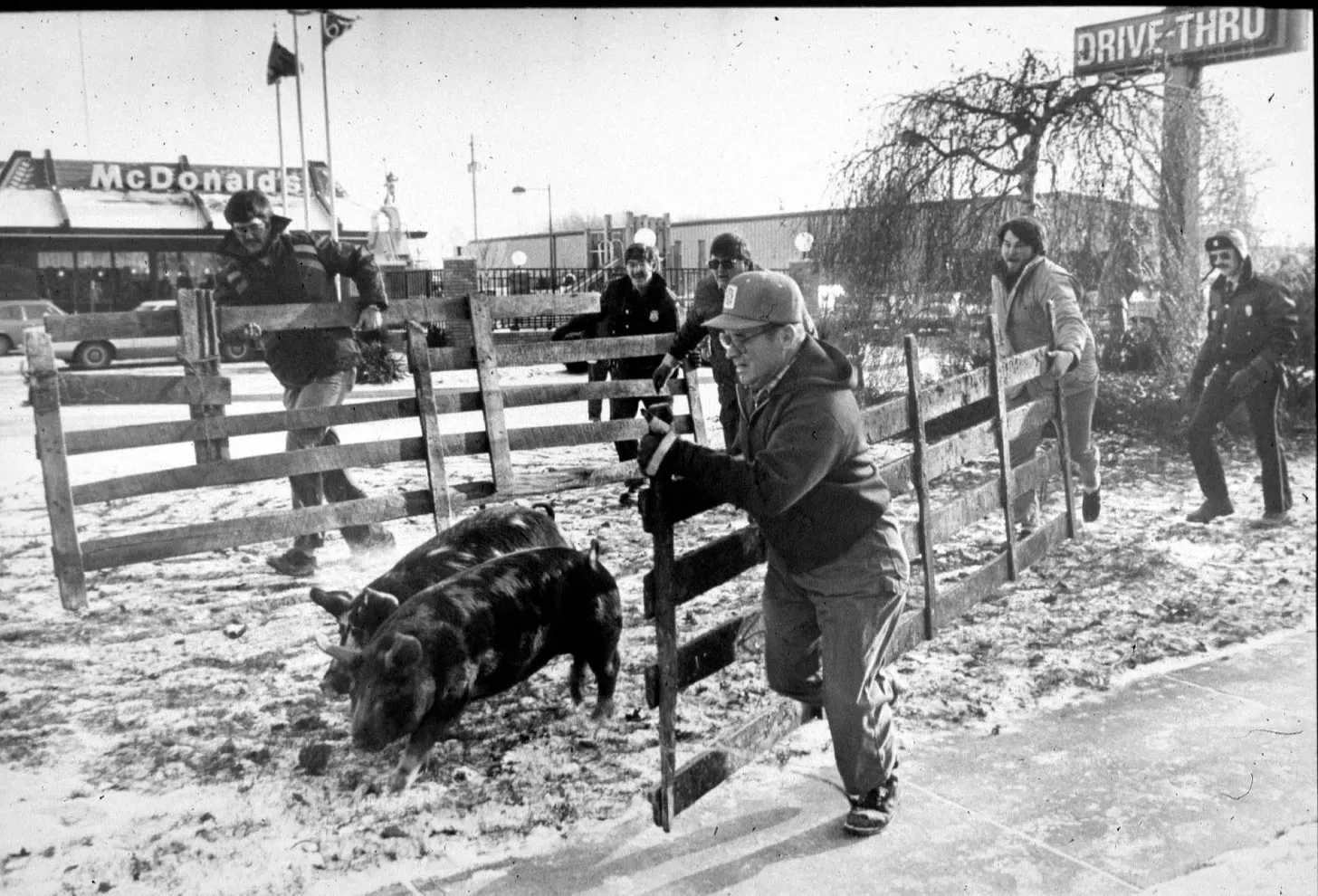
McDonald's makes waiting feel better by showing visible progress, turning delay into intermittent rewards that sustain effort.
My First Million
Rory Sutherland: completely legal marketing hacks that always work
Go deeper ✨
@psychology
Uber’s growth came primarily from better psychology and reduced uncertainty, not reliably lower prices.
My First Million
Rory Sutherland: completely legal marketing hacks that always work
Go deeper ✨
@psychology
A high-quality flat white or nothing can increase throughput and preserve quality when customers value speed over endless customization.
My First Million
Rory Sutherland: completely legal marketing hacks that always work
Go deeper ✨
@psychology
Direct-response testing found that media choice could change performance fourfold, while creative execution could change it twofold.
My First Million
Rory Sutherland: completely legal marketing hacks that always work
Go deeper ✨
@psychology
Richard Thaler’s boardroom bet offered a 50% chance of raising profits 50% and a 20% chance of cutting them 30%. Six of eight division heads rejected it.
My First Million
Rory Sutherland: completely legal marketing hacks that always work
Go deeper ✨
@psychology
American Express’s cost-free “member since” designation generated billions in value by reducing cancellations.
My First Million
Rory Sutherland: completely legal marketing hacks that always work
Go deeper ✨
@psychology
An antiseptic’s sting can reassure people by becoming evidence that the treatment is working.
My First Million
Rory Sutherland: completely legal marketing hacks that always work
Go deeper ✨
@psychology
Car-rental companies obsess over price and driving, while customers suffer most during airport pickup before reaching the car.
My First Million
Rory Sutherland: completely legal marketing hacks that always work
Go deeper ✨
@psychology
Real-world outcomes are fat-tailed, not normally distributed: a few events or factors can dominate results.
My First Million
Rory Sutherland: completely legal marketing hacks that always work
Go deeper ✨
@psychology
In 1775, Watt and Boulton supplied steam engines upfront and charged for a share of the coal savings.
My First Million
Rory Sutherland: completely legal marketing hacks that always work
Go deeper ✨
@psychology
Watt and Boulton sold steam engines to mine owners in horsepower, not engineering specifications: the number of horses replaced.
My First Million
Rory Sutherland: completely legal marketing hacks that always work
Go deeper ✨
@psychology
A dishwasher’s deeper value may be hiding dirty dishes from view, not washing crockery.
My First Million
Rory Sutherland: completely legal marketing hacks that always work
Go deeper ✨
@psychology
A swimming pool can make wearing a bathing suit outdoors feel socially acceptable, even when nobody swims.
My First Million
Rory Sutherland: completely legal marketing hacks that always work
Go deeper ✨
@psychology
Removing The Economist’s paper-only decoy weakened paper-plus-digital subscriptions. Keeping it increased them roughly 200–300%.
My First Million
Rory Sutherland: completely legal marketing hacks that always work
Go deeper ✨
@psychology
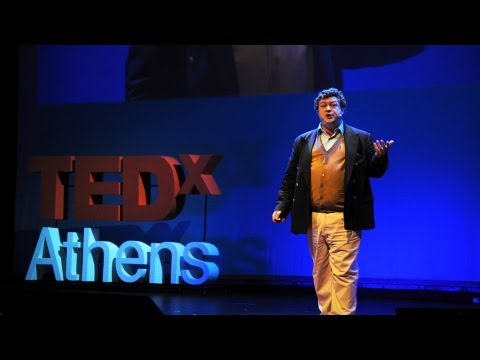
Economics becomes more realistic when it starts with behavioral psychology and how humans choose, act, and decide.
TED
Rory Sutherland: Perspective is everything
Go deeper ✨
@psychology
One negative feature can drag down judgments of everything else when people experience product and context as one.
TED
Rory Sutherland: Perspective is everything
Go deeper ✨
@psychology
Breaking a long sequence into visible chunks and adding a midpoint makes completion more likely.
TED
Rory Sutherland: Perspective is everything
Go deeper ✨
@psychology
Happiness depends less on circumstances than on whether people experience them as chosen or imposed.
TED
Rory Sutherland: Perspective is everything
Go deeper ✨
@psychology
An efficient express lane can be hated when customers believe the company created delays to charge them more.
TED
Rory Sutherland: Perspective is everything
Go deeper ✨
@psychology
A fair tax debate asks two questions: how much people pay, and how much control they retain.
TED
Rory Sutherland: Perspective is everything
Go deeper ✨
@psychology
Change the comparison standard and perceived value changes, even when the underlying performance stays exactly the same.
TED
Rory Sutherland: Perspective is everything
Go deeper ✨
@psychology
A restaurant can create more value by fixing its smell and cleanliness than by improving already Michelin-starred food.
TED
Rory Sutherland: Perspective is everything
Go deeper ✨
@psychology
A longer wait with a visible countdown can feel better than a shorter wait with no information.
TED
Rory Sutherland: Perspective is everything
Go deeper ✨
@psychology
Branded analgesics produce greater measured pain reduction than unbranded analgesics, not merely greater reported relief.
TED
Rory Sutherland: Perspective is everything
Go deeper ✨
@psychology
A freshly washed car feels like it drives better, even though washing has not changed its mechanical performance.
TED
Rory Sutherland: Perspective is everything
Go deeper ✨
@psychology
Countdowns at red lights reduce accidents, while countdowns at green lights increase accidents as drivers rush to beat them.
TED
Rory Sutherland: Perspective is everything
Go deeper ✨
@psychology
In England, calling unemployment “a year off” turns embarrassment into upper-middle-class status.
TED
Rory Sutherland: Perspective is everything
Go deeper ✨
@psychology
Driving is harder than Go because it requires hierarchical situation recognition and contextually relevant knowledge retrieval.
Daniel Kahneman: Thinking Fast and Slow, Deep Learning, and AI | Lex Fridman Podcast #65
Go deeper ✨
@psychology
Intelligence grows through action: an agent learns by anticipating what will happen after it acts on the world.
Daniel Kahneman: Thinking Fast and Slow, Deep Learning, and AI | Lex Fridman Podcast #65
Go deeper ✨
@psychology
Shared knowledge still matters socially, but its sources shifted from books and newspapers to fragmented media.
Daniel Kahneman: Thinking Fast and Slow, Deep Learning, and AI | Lex Fridman Podcast #65
Go deeper ✨
@psychology
A laboratory result describes the experiment first. Applying it to real life requires a major inductive leap.
Daniel Kahneman: Thinking Fast and Slow, Deep Learning, and AI | Lex Fridman Podcast #65
Go deeper ✨
@psychology
Science can explain profound phenomena, yet the ultimate reason anything exists may remain beyond human understanding.
Daniel Kahneman: Thinking Fast and Slow, Deep Learning, and AI | Lex Fridman Podcast #65
Go deeper ✨
@psychology
Even scientists rarely abandon important beliefs, building intellectual systems where alternative frameworks feel foreign and barely interact.
Daniel Kahneman: Thinking Fast and Slow, Deep Learning, and AI | Lex Fridman Podcast #65
Go deeper ✨
@psychology
What built-in structure lets a machine learn quickly from only a handful of examples? AI still has no settled answer.
Daniel Kahneman: Thinking Fast and Slow, Deep Learning, and AI | Lex Fridman Podcast #65
Go deeper ✨
@psychology
We still do not know whether atrocities reflect universal human nature or specific conditions like German efficiency and discipline.
Daniel Kahneman: Thinking Fast and Slow, Deep Learning, and AI | Lex Fridman Podcast #65
Go deeper ✨
@psychology
System 2 demands mental effort, uses working memory and executive function, and leaves less capacity for other tasks.
Daniel Kahneman: Thinking Fast and Slow, Deep Learning, and AI | Lex Fridman Podcast #65
Go deeper ✨
@psychology
Weak effects require larger samples, especially in between-subject experiments where participants never experience both conditions.
Daniel Kahneman: Thinking Fast and Slow, Deep Learning, and AI | Lex Fridman Podcast #65
Go deeper ✨
@psychology
Hype, investment, and public intuition can reinforce each other until unmet promises trigger an AI winter.
Daniel Kahneman: Thinking Fast and Slow, Deep Learning, and AI | Lex Fridman Podcast #65
Go deeper ✨
@psychology
AI raced from solving chess to Go, then from AlphaGo to AlphaZero, far faster than anticipated.
Daniel Kahneman: Thinking Fast and Slow, Deep Learning, and AI | Lex Fridman Podcast #65
Go deeper ✨
@psychology
Great collaborators can understand an idea more deeply than the person who first said it.
Daniel Kahneman: Thinking Fast and Slow, Deep Learning, and AI | Lex Fridman Podcast #65
Go deeper ✨
@psychology
Fifty-three behavioral-change studies by 20 teams failed to produce a successful way to increase gym attendance.
Daniel Kahneman: Thinking Fast and Slow, Deep Learning, and AI | Lex Fridman Podcast #65
Go deeper ✨
@psychology
Autonomous vehicles generally treat pedestrians as obstacles to avoid, not people whose intentions and strategies they must understand.
Daniel Kahneman: Thinking Fast and Slow, Deep Learning, and AI | Lex Fridman Podcast #65
Go deeper ✨
@psychology
Memory does not replay an experience. It reconstructs a schematic story from selected moments.
Daniel Kahneman: Thinking Fast and Slow, Deep Learning, and AI | Lex Fridman Podcast #65
Go deeper ✨
@psychology
People choose vacations partly for future memories, so the best remembered trip may not be the best lived.
Daniel Kahneman: Thinking Fast and Slow, Deep Learning, and AI | Lex Fridman Podcast #65
Go deeper ✨
@psychology
A language translator can perform brilliantly without understanding a single thing it is talking about.
Daniel Kahneman: Thinking Fast and Slow, Deep Learning, and AI | Lex Fridman Podcast #65
Go deeper ✨
@psychology
The focusing illusion makes whatever has your attention feel more important and powerful than it really is.
Daniel Kahneman: Thinking Fast and Slow, Deep Learning, and AI | Lex Fridman Podcast #65
Go deeper ✨
@psychology
Being the boss creates authority. Credible expertise creates an authority people actually trust.
Summation with Auren Hoffman
Robert Cialdini - 7 Principles of Influence Explained
Go deeper ✨
@psychology
Improving your appearance is acceptable. Drastically altering it digitally can become artificial misrepresentation.
Summation with Auren Hoffman
Robert Cialdini - 7 Principles of Influence Explained
Go deeper ✨
@psychology
Representations of people should stay genuine and current, not rely only on idealized pictures from the past.
Summation with Auren Hoffman
Robert Cialdini - 7 Principles of Influence Explained
Go deeper ✨
@psychology
A customer reportedly traded a $2,800 Louis Vuitton bag for an earlier place in an Apple product line.
Summation with Auren Hoffman
Robert Cialdini - 7 Principles of Influence Explained
Go deeper ✨
@psychology
Increase compliance by giving genuine value before making a request or asking for agreement.
Summation with Auren Hoffman
Robert Cialdini - 7 Principles of Influence Explained
Go deeper ✨
@psychology
The most dangerous frauds do not just fool naïve targets. They fool other foxes.
Summation with Auren Hoffman
Robert Cialdini - 7 Principles of Influence Explained
Go deeper ✨
@psychology
Praise ethical behavior and report misconduct online. Your information helps shape the incentives around everyone.
Summation with Auren Hoffman
Robert Cialdini - 7 Principles of Influence Explained
Go deeper ✨
@psychology
“Operators are busy” makes viewers infer popularity, while “operators are waiting” signals no one else has bought.
Summation with Auren Hoffman
Robert Cialdini - 7 Principles of Influence Explained
Go deeper ✨
@psychology
In polarized conversations, listen deeply and ask non-evaluative questions before stating your position. Reciprocity opens ears.
Summation with Auren Hoffman
Robert Cialdini - 7 Principles of Influence Explained
Go deeper ✨
@psychology
Influence turns unethical when it counterfeits evidence, from invented sales to fake scarcity and cherry-picked authorities.
Summation with Auren Hoffman
Robert Cialdini - 7 Principles of Influence Explained
Go deeper ✨
@psychology
Self-deprecating humor makes necessary self-promotion easier to hear and easier to like.
Summation with Auren Hoffman
Robert Cialdini - 7 Principles of Influence Explained
Go deeper ✨
@psychology
A genuine compliment gives someone a reputation to live up to, making the praised behavior more likely to recur.
Summation with Auren Hoffman
Robert Cialdini - 7 Principles of Influence Explained
Go deeper ✨
@psychology
Asking restaurant customers to commit to calling reduced unannounced no-shows by 64%, and the reduction persisted.
Summation with Auren Hoffman
Robert Cialdini - 7 Principles of Influence Explained
Go deeper ✨
@psychology
A supermarket limited purchases to three units, and response doubled compared with the product’s previous response.
Summation with Auren Hoffman
Robert Cialdini - 7 Principles of Influence Explained
Go deeper ✨
@psychology
Telling university students a fundraiser came from another student increased donations by 450%.
Summation with Auren Hoffman
Robert Cialdini - 7 Principles of Influence Explained
Go deeper ✨
@psychology
One bonus exam point produced 291 returned questionnaires from 296 students. Tiny incentives can create astonishing response rates.
Summation with Auren Hoffman
Robert Cialdini - 7 Principles of Influence Explained
Go deeper ✨
@psychology
Technological progress can keep improving descendants’ lives, while opposing administrations can reverse policy gains, making economic growth politically durable.
Scott Alexander
Contra Pritchard On Liberal Happiness
Go deeper ✨
@psychology
Without a technological singularity, standard economic-growth projections reach the limits of today’s happiness scale around 2040.
Scott Alexander
Contra Pritchard On Liberal Happiness
Go deeper ✨
@psychology
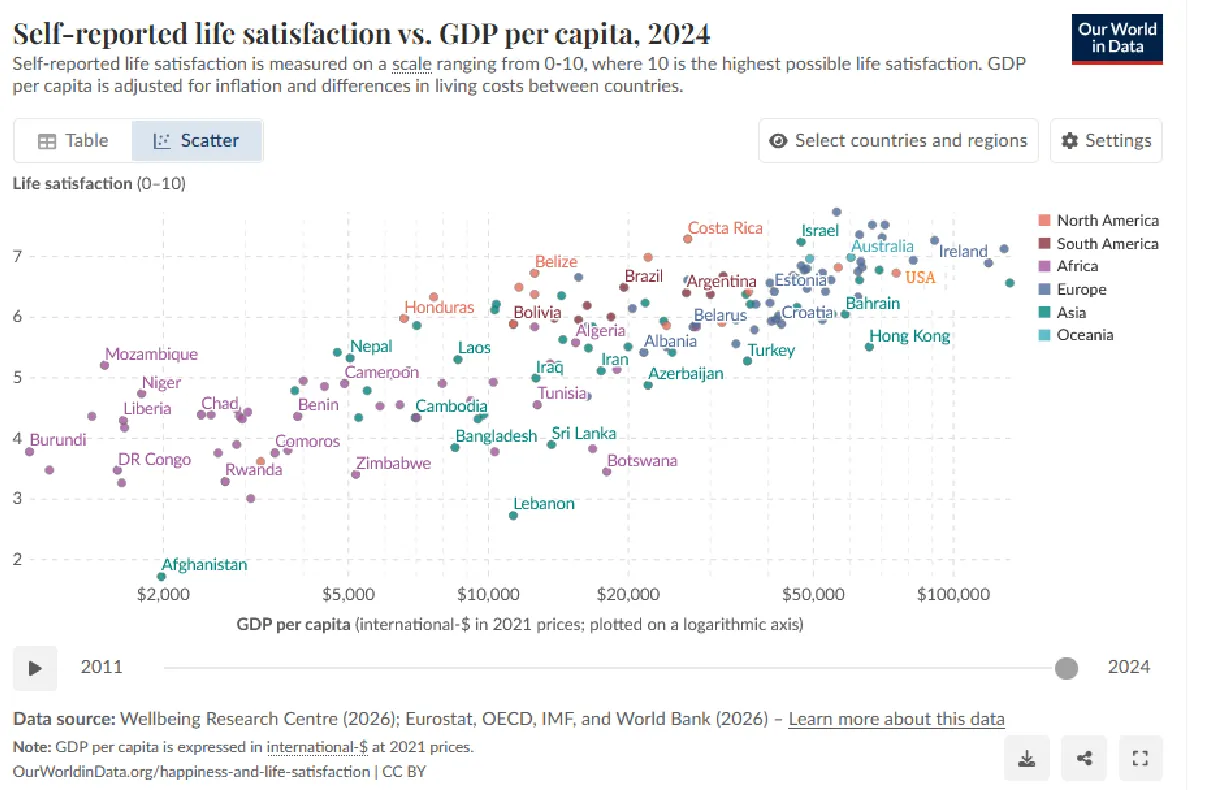
Medieval England around 1000 AD had GDP per capita resembling modern Burundi’s, with reported happiness around 3 versus 6–7 among Americans.
Scott Alexander
Contra Pritchard On Liberal Happiness
Go deeper ✨
@psychology
U.S. GDP per capita rose from about $20,000 in the 1950s to $75,000 today, predicting only a half-point happiness gain.
Scott Alexander
Contra Pritchard On Liberal Happiness
Go deeper ✨
@psychology
Finland and Israel score 0.5–1 happiness points above the U.S. after adjusting for wealth, despite embodying sharply different political virtues.
Scott Alexander
Contra Pritchard On Liberal Happiness
Go deeper ✨
@psychology
Unaffordable housing violates liberal capitalism’s promises and creates a specific poverty, but does not prove wealth cannot increase happiness.
Scott Alexander
Contra Pritchard On Liberal Happiness
Go deeper ✨
@psychology
After shocks, low national happiness reinforces itself as people become less willing to display happiness when surrounding mood is low.
Scott Alexander
Contra Pritchard On Liberal Happiness
Go deeper ✨
@psychology
U.S. happiness wandered through 1970–2020, then fell abruptly, rather than peaking in the 1970s and steadily declining.
Scott Alexander
Contra Pritchard On Liberal Happiness
Go deeper ✨
@psychology
Economic growth generated about three happiness points since medieval times, while major policy differences appear to yield only 0.5–1.
Scott Alexander
Contra Pritchard On Liberal Happiness
Go deeper ✨
@psychology
U.S. output per capita is roughly 900 times pre-agricultural levels and 225 times levels around 1 CE or medieval Europe.
Scott Alexander
Contra Pritchard On Liberal Happiness
Go deeper ✨
@psychology
A 225-fold income increase predicts only about three extra happiness points on a 1–10 scale.
Scott Alexander
Contra Pritchard On Liberal Happiness
Go deeper ✨
@psychology
Across incomes from $10,000 to over $500,000 annually, happiness and log income correlate at 0.98–0.99 across several measures.
Scott Alexander
Contra Pritchard On Liberal Happiness
Go deeper ✨
Keep what matters
Save insights to your own Boards and return to them anytime.
Create your Korva account