Korva is a scroll of the internet’s best ideas.
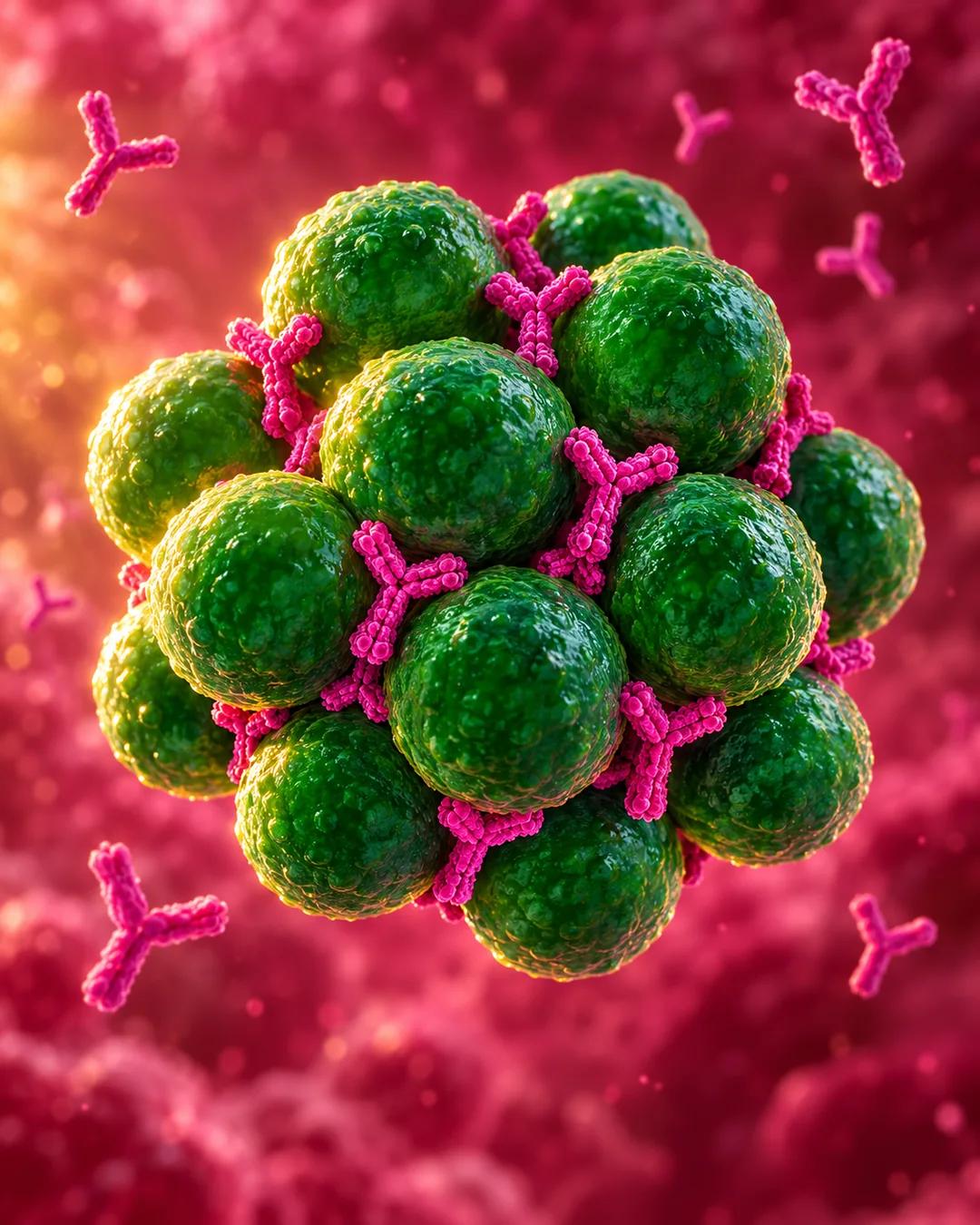
2,000 antibodies per second

Reinforcing the front line
Once helper T cells multiply, they split into two groups. The first heads to the battlefield, where a tired macrophage is ready to give up after days of fighting. A helper T cell whispers something to it with special chemical signals, and the demoralized soldier feels fresh again and throws itself against the enemies once more.
The antibody factories
The second group looks for B cells, your antibody factories. Antibodies are protein super weapons that look like tiny crabs with two pincers to grab enemies. After a day or two, the right B cell is found and begins to clone itself. Each B cell then pumps out up to 2,000 antibodies per second, and the antibodies clump the bacteria together so they cannot move or fight.
Cleanup and memory
As the last enemies are cleaned up, the soldiers begin to kill themselves to save resources. A few helper T cells remain and turn into memory cells that guard the tissue for years, and a few B cells stay alive and keep producing a low amount of antibodies, making you immune to this bacteria maybe for the rest of your life. The wound grows over and leaves nothing but a faint red mark.
Why does the antibody response take a week?
Only a tiny fraction of T and B cells fit any given invader, so the matching cells must first be found and then multiplied. Frank Macfarlane Burnet proposed the clonal selection idea in 1957: an infection selects the cells that fit, and those cells expand into an army. A single cell dividing repeatedly needs days to become thousands. A second encounter with the same microbe is much faster because memory cells are already waiting.
How do antibodies stop bacteria besides clumping them?
Antibodies coat bacteria so that macrophages and neutrophils can grip and swallow them more easily, a process called opsonization. The tail of the antibody is the part those cells recognize. Antibodies bound to a bacterium can also trigger complement proteins to punch holes in it. Others lock onto toxins that bacteria release so the toxins cannot reach the body's cells.
How do memory cells last for years?
Some activated B cells become long-lived plasma cells that move into the bone marrow and keep secreting antibodies at a low rate. A 2007 study in the New England Journal of Medicine, led by Ian Amanna, measured antibody levels against smallpox and several other viruses and found that they persisted for decades. Memory B and T cells rest quietly in tissues and lymph nodes until the same microbe returns.