Korva is a scroll of the internet’s best ideas.
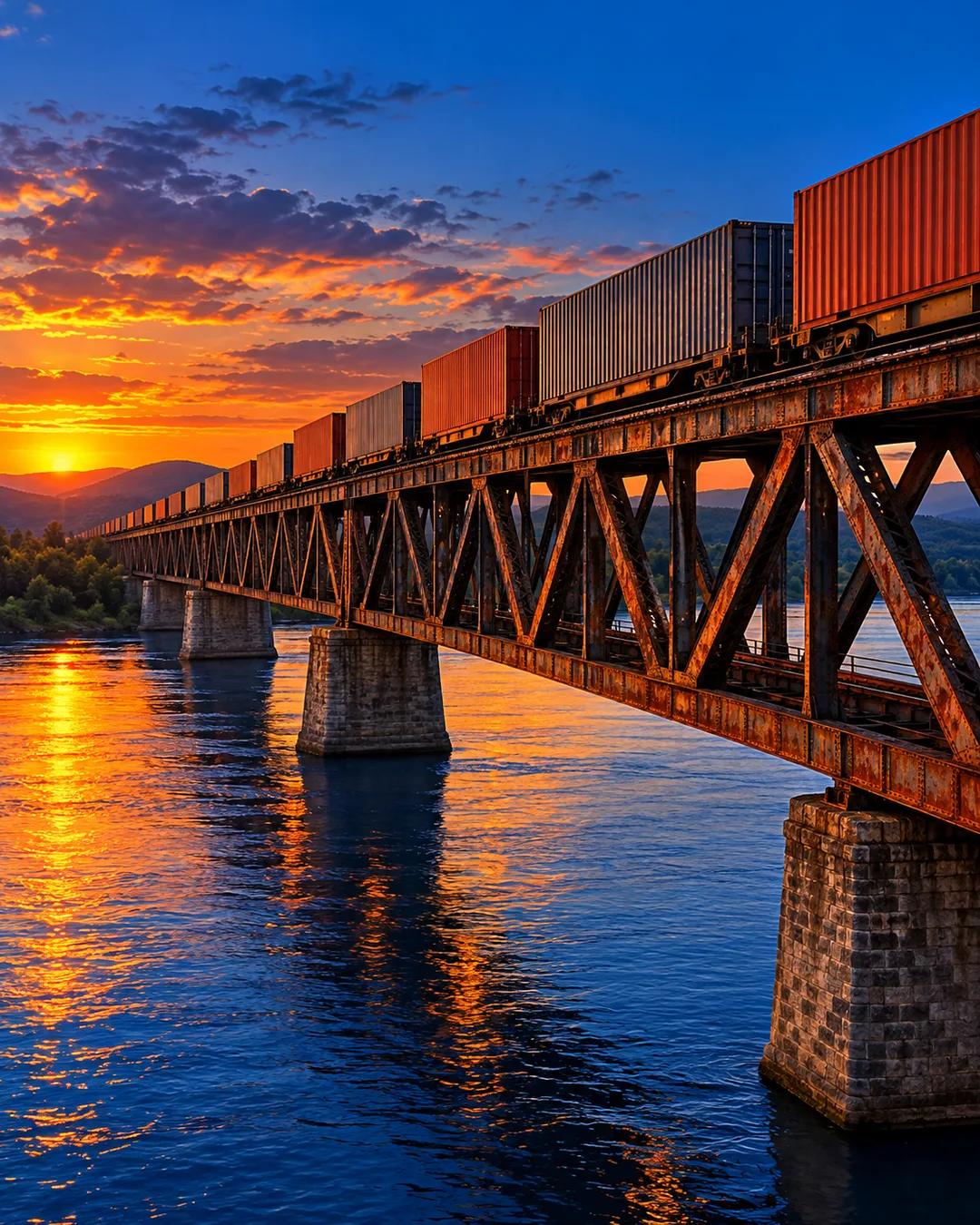
6,700 containers of shells

A bridge and a shortage
The bridge spans a short 17-kilometer stretch of the Tumen River in North Korea's far northeast, where the two countries share a border. They only broke ground on their first road link in 2025. Russia's war has been consuming ammunition faster than its own factories can produce it, and North Korea runs its military on the same Soviet standard calibers, which it spent decades mass-producing and warehousing for a war that never came.
The containers potentially held millions of artillery rounds. At times, those shipments have reportedly made up as much as half of all the artillery ammunition Russian forces fired in Ukraine, a remarkable market share for a country of 26 million people with an economy smaller than Vermont's.
Soldiers and laborers
Shells were not the only export. Since late 2024, North Korea has sent between 14,000 and 15,000 soldiers to fight for Russia, mostly in the Kursk region, along with thousands of construction workers and laborers to backfill the Russian workforce.
The money involved
Estimates of what North Korea earned from late 2023 to the end of 2025 run from 7.7 billion to 14.4 billion dollars, and one South Korean defense institute puts the cumulative total above 20 billion. The country's entire gross national income is around 32 billion dollars a year, less than what Woolworths turns over in the same period.
Why do Russian guns fit North Korean shells?
Artillery shells only work in guns built for the same caliber, so armies that share a standard can share ammunition. After the Korean War, the Soviet Union supplied North Korea with weapons and designs, and North Korean factories went on to produce Soviet-pattern ammunition. The 122-millimeter and 152-millimeter calibers are long-standing Soviet standards. NATO countries, by contrast, standardized on 155 millimeters.
Why did North Korea stockpile so many shells?
The Korean War ended in 1953 with an armistice rather than a peace treaty, so the two Koreas are still formally at war. In the 1990s, Kim Jong Il made the army the first claim on national resources under a policy called songun, or military first. That put arms production ahead of nearly everything else for decades. Artillery aimed at the South has long been central to the North's military planning, since Seoul lies only a few dozen kilometers from the border.
Why do artillery wars burn through shells?
Artillery is used to suppress and destroy over wide areas, so an offensive or a defense can require thousands of rounds a day. Factories built for peacetime orders are sized for far smaller volumes than that. Britain ran into the same problem in 1915, when the army's firing rates outran supply, in what became known as the Shell Crisis. The government responded by creating a Ministry of Munitions that May, with David Lloyd George as its first minister.
More from Economics Explained