Korva is a scroll of the internet’s best ideas.
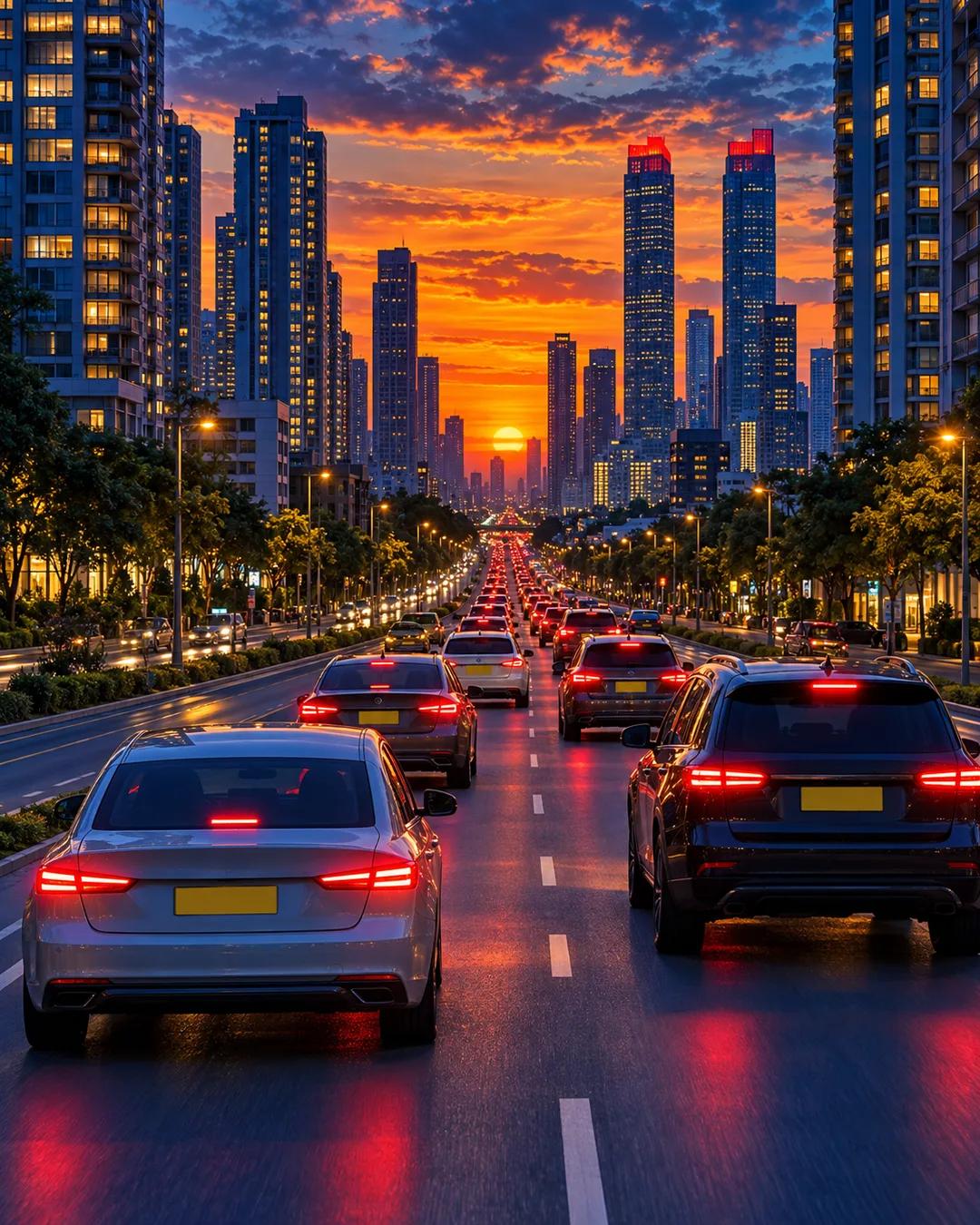
Pyongyang now has traffic jams

Cars and yellow plates
Recent visitors describe Chinese brands like Chery, Changan, and Geely sitting alongside BMWs and Audis, with prices running up to 30,000 dollars. Private cars wear yellow number plates, and those plates are multiplying so quickly that analysts think the country could pass 20,000 privately owned cars within a year. Tire imports are up 88% on pre-pandemic levels.
Phones, TVs, and lights
The cars arrive alongside smartphones, food delivery apps that let residents order meals, and domestic smart TVs with built-in advertising. Some new luxury residential precincts share their names with intercontinental ballistic missiles. Satellite data shows the country is about three times brighter at night than it was three years ago.
A building boom
The construction is just as striking. Pyongyang built more new homes last year than Chicago or Los Angeles. The showpiece Hwasong district alone added 10,000 apartments as part of a five-year plan to build 50,000 across the capital, complete with twin missile-shaped towers painted red.
How can satellites measure an economy?
Brighter nights tend to track more electricity use, more streetlights, and more commercial activity. Economists Vernon Henderson, Adam Storeygard, and David Weil showed in a 2012 paper in the American Economic Review that nighttime light intensity follows GDP growth closely enough to serve as a proxy. That makes it especially useful for countries like North Korea that publish almost no economic data. Researchers use imagery from instruments such as the VIIRS sensor on US polar-orbiting weather satellites.
Why did Pyongyang have so few cars?
For most of its history, North Korea's planned economy allocated vehicles through the state, to institutions and officials, rather than selling them to individuals. Fuel was scarce, and the economic collapse of the 1990s made it scarcer. The result was wide boulevards that carried few vehicles. Pyongyang even became known for uniformed traffic controllers, most of them women, who direct cars at major intersections.
Why do UN sanctions target cars?
UN Security Council Resolution 1718, passed after North Korea's first nuclear test in 2006, banned the sale of luxury goods to the country. The idea was to pressure the ruling elite, whose perks come from imports, without cutting off goods the general population relies on. Luxury cars are among the items that sanctions guidelines have named. Resolution 2397, adopted in December 2017, extended the bans to transportation vehicles more broadly.
More from Economics Explained