Korva is a scroll of the internet’s best ideas.
68 Dutch survivors vanished

The Dutch never bothered to establish a permanent presence in Australia, and the closest they came happened entirely by accident. The ship was the Vergulde Draeck, and 75 of its survivors made it to shore. Seven of them were sent off in one of the ship's lifeboats to Batavia, modern-day Jakarta, the administrative capital of Dutch rule in Indonesia.
After 41 grueling days of travel, the seven reached Batavia and raised the alarm for the 68 crew and passengers they had left behind in Australia. For the next several years, the Dutch Navy carried out numerous search and rescue missions along the Western Australian coast. Little sign of the ship's wreckage was ever found.
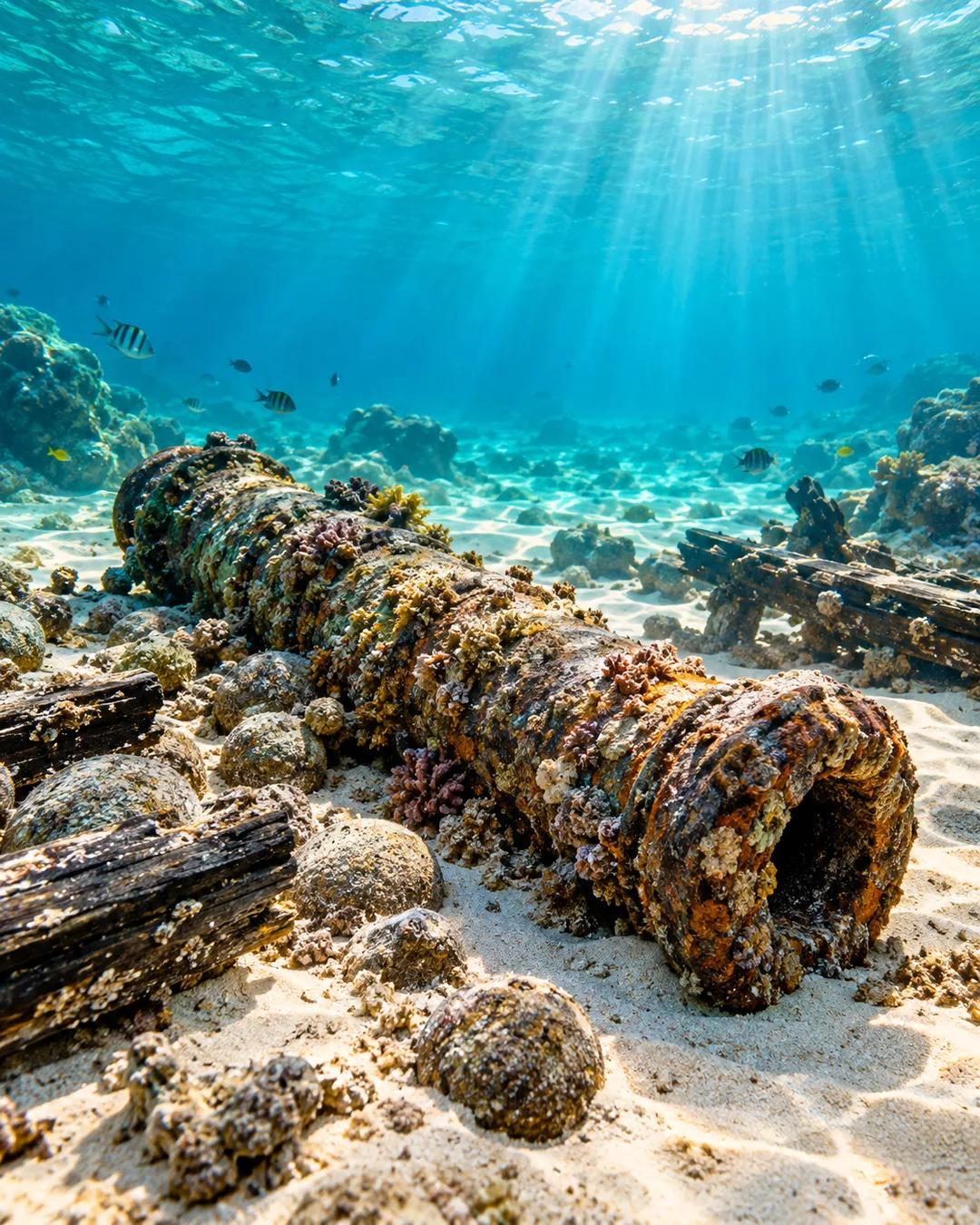
The 68 were never seen or heard from again, and their fates remain a mystery. The wreck itself turned up only in 1963, when a team of Australian divers found it roughly 100 km north of modern-day Perth, more than three centuries after the ship went down.
Why were Dutch ships sailing past Western Australia?
Dutch East India Company ships bound for Batavia followed a route that began with a long run east across the southern Indian Ocean. The captain Hendrik Brouwer pioneered it in 1611, using the strong westerly winds known as the Roaring Forties to cut months from the voyage. Captains then had to turn north at the right moment, and a misjudged turn put a ship onto the Western Australian coast. Company ships wrecked there on several occasions, including the Batavia in 1629 and the Zuytdorp in 1712.
Why couldn't sailors tell how far east they were?
Latitude could be worked out from the angle of the sun or stars above the horizon. Longitude required a clock that kept accurate time at sea, so a navigator could compare local noon with the time at a home port. Pendulum clocks failed on rolling ships, and early spring clocks drifted by minutes a day. John Harrison's marine chronometer, tested at sea in 1761, was the first to keep time accurately enough.
Why did the Dutch show little interest in settling?
The Dutch East India Company existed to turn a profit from trade, chiefly in spices, pepper, and textiles. Its captains who charted the western and northern coasts of Australia found no spices and no trading partners. A dry, distant coast offered nothing to justify the cost of a colony. The company's trading center stayed in Batavia until the company was dissolved in 1799.
More from RealLifeLore