Korva is a scroll of the internet’s best ideas.
80,000 hand drawings for one layer

Drawing
Animators sketched in pencil or charcoal and flipped through the pages to feel how the emotion carried from frame to frame. Lead animators drew the key poses, in-betweeners filled the gaps, and cleanup artists traced the messy sketches with a single clean line. The process had become closer to Henry Ford than to Picasso.
Ink and paint
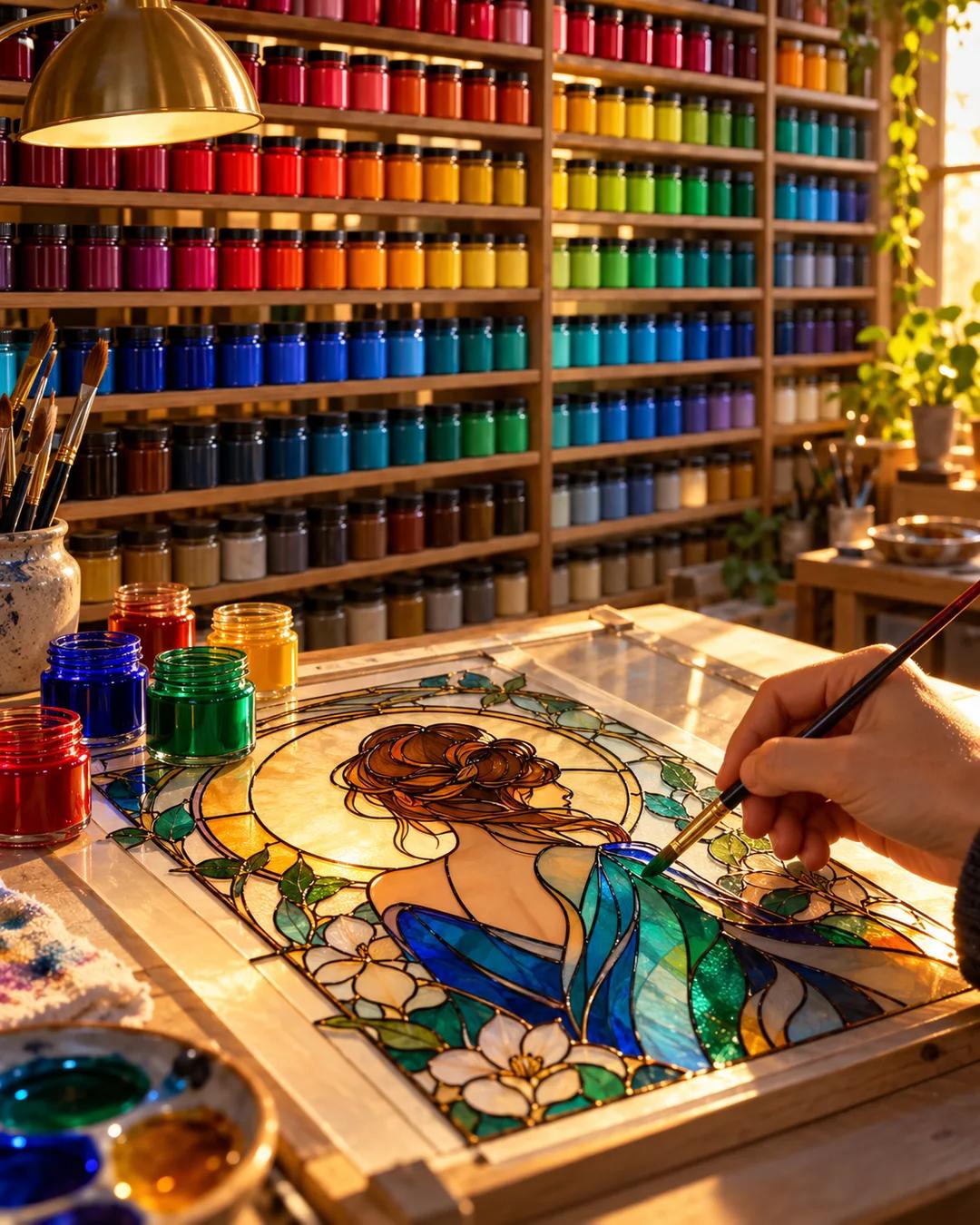
Then came ink and paint. Cel animation, invented by Earl Hurd in 1914, let animators redraw only the character on transparent celluloid while the background stayed still. Armies of workers, almost all women, traced every line of every drawing in ink onto the front of the cel. The cels were flipped, and painters applied color to the back so the outlines on the front masked any color that overflowed a dwarf's shirt or Mickey's shoe.
Disney had a room of thousands of colors of handmade paint, once called the Rainbow Room, and that paint went into Snow White, Cinderella, Peter Pan, and Alice in Wonderland. Before any of the expensive inking and painting, animators ran the pencil drawings through a camera in a pencil test, so Walt could see whether the action felt right.
Why did animators draw on twos?
Film runs at 24 frames per second. Disney animators usually drew one picture and held it for two frames, which gave 12 drawings per second. Fast action needed a fresh drawing on every frame. Slow movement could stretch longer.
How did cels change animation?
Before cels, animators had to redraw the whole picture, background included, for every frame. Winsor McCay did exactly that for Gertie the Dinosaur in 1914. Earl Hurd's cel method, patented that year, let artists draw only the moving parts. Backgrounds could be painted once and reused.
When did hand inking and painting end at Disney?
Disney developed a digital system called CAPS in the late 1980s. It scanned pencil drawings and colored them on computers. It was used for a scene in The Little Mermaid in 1989. The Rescuers Down Under in 1990 was the first Disney feature produced entirely with it.
More from Acquired