Korva is a scroll of the internet’s best ideas.
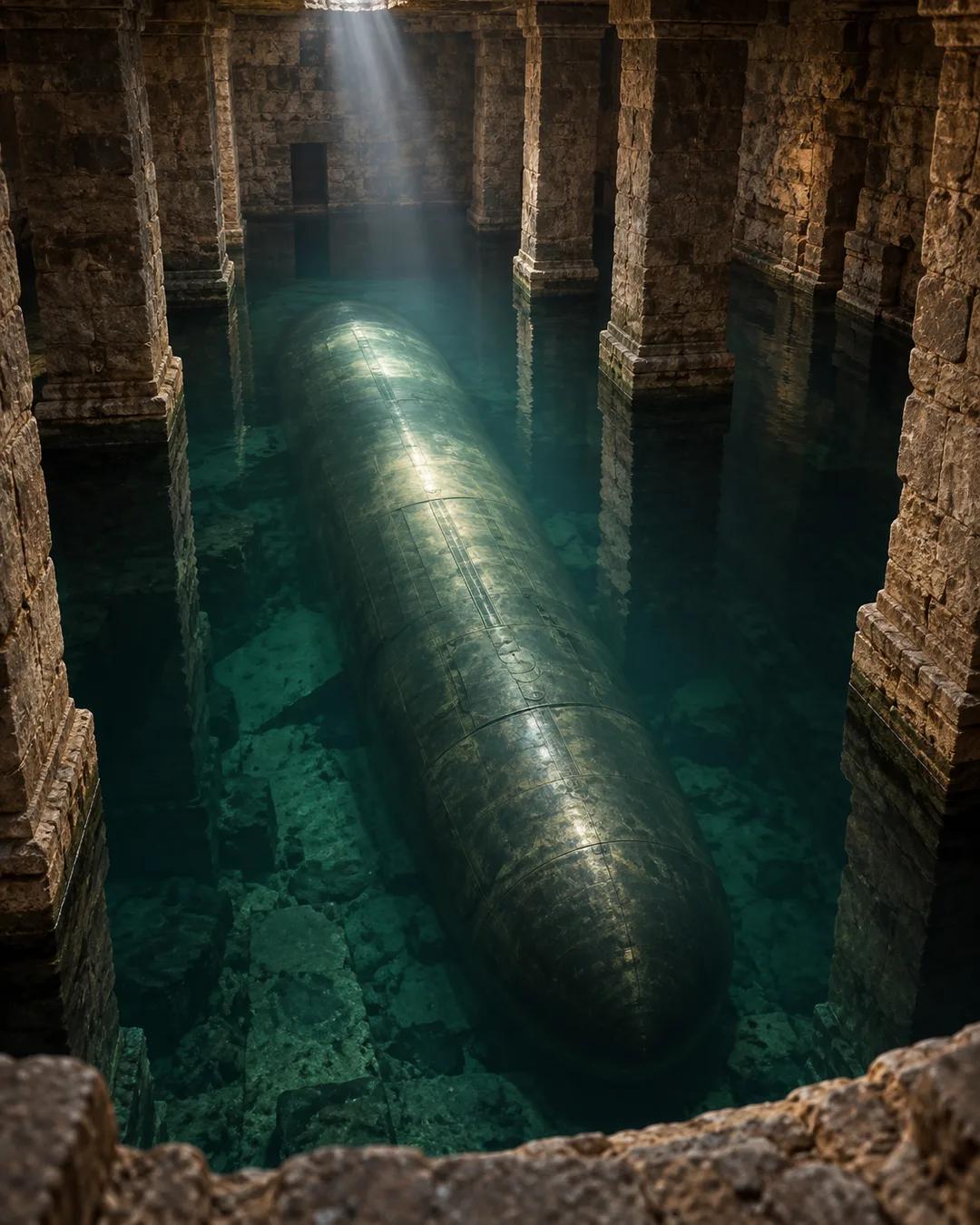
A 40-meter metal object under Egypt

Herodotus's labyrinth
Herodotus wrote about the underground compound thousands of years ago and ranked it above Giza in grandeur. People studied at least its upper levels as late as the 1800s. Ground-penetrating radar has since confirmed symmetrical rooms and cavities beneath the ground, and researchers know where they are.
The metal object
The area is flooded because a dam built in the 1960s to divert water for agriculture changed the water table. Radar and radio tomography found a metallic object about 40 meters long inside a large room. The metal does not register as copper, steel, or iron, and its origin is unknown.
The researcher who found it named the object Dippy, after the Diplodocus skeleton in London's Natural History Museum, and found it hard to classify: it appears metallic, not stone or wood. Its shape resembles a Tic Tac mint, an upright disc, or a colossal shen ring, the ancient Egyptian symbol of the eternal cycle of creation.
A deeper structure
Separate work by Filippo Biondi, using the same kind of satellite radio tomography, shows a structure beneath the pyramids that reaches over a kilometer into the ground.
What did Herodotus say about the labyrinth?
Herodotus described the Egyptian labyrinth in the second book of his Histories after visiting around the fifth century BCE. He reported twelve roofed courts and three thousand chambers, half of them underground, and said it surpassed even the pyramids. He was not allowed into the underground rooms, which the keepers said held the tombs of the kings. Later Greek and Roman writers such as Strabo also described the building.
How does ground-penetrating radar see underground?
The device sends short radar pulses into the ground and records the echoes that bounce back from boundaries between materials. The time delay gives depth, and the strength of the echo depends on the materials involved. Metal reflects radar very strongly, while wet clay and salty soil absorb it and limit how deep it reaches. Archaeologists use the method to map walls, tombs, and voids without digging.
Why is the Dippy nickname familiar?
Dippy is the nickname of the Diplodocus skeleton cast that stood in the main hall of London's Natural History Museum. The steel magnate Andrew Carnegie donated the cast, which was unveiled in 1905. It was made from bones excavated in Wyoming and reproduced in plaster. The cast stood in the museum's main hall until 2017.
More from The Joe Rogan Experience