Korva is a scroll of the internet’s best ideas.
A treaty with a UAP clause

The 1971 agreement
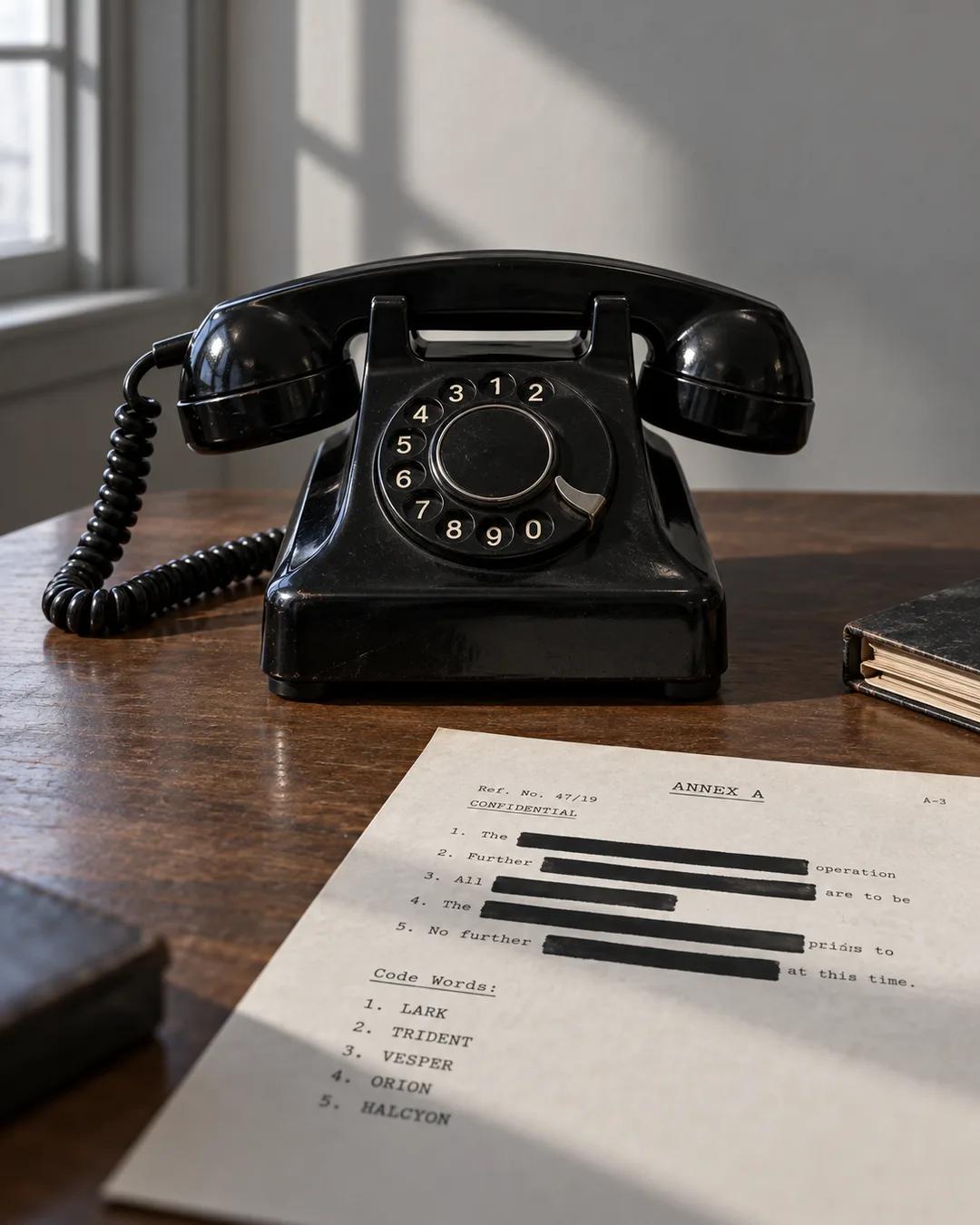
The Accident Measures Agreement was signed in September 1971 between the USSR and the United States. Article three covers unidentified objects: spot one near a nuclear site or a critical communications facility, and call the other side. The classified annex was declassified in 2013 and is online at the National Security Archive at George Washington University.
The flash codes
The annex gives the nuke flash codes for those calls, with names like Adam 222 and Adam 333. Picture a message to the Kremlin about something strange over Plesetsk: it is not ours, and it is not a false flag. The same channel ran in the other direction.
No such deal with China
During the Cold War the two countries also had a mutual notification treaty for space launch vehicles and ICBM launches. Nothing like it has ever existed with China, which is not obligated by treaty to warn the United States before, for example, a submarine-launched ballistic missile test off its coast. Northern Command, NORAD, the Missile Warning Center, and the NSA have to work out on their own whether an event is a test.
Why did the US and USSR sign a nuclear accidents agreement?
The Cuban Missile Crisis of 1962 showed how a misunderstanding could lead to nuclear war, and the two powers set up a direct hotline in 1963. The 1971 agreement on measures to reduce the risk of nuclear war, signed on September 30, required each side to notify the other of accidents and unexplained incidents involving nuclear weapons. It also called for advance warning of missile launches headed toward the other country's territory. A separate 1971 agreement upgraded the hotline to use satellite links.
Why would an unidentified object trigger a call?
Early warning systems have mistaken harmless things for attacks. In 1960 a radar in Greenland read the rising moon as a missile raid. In 1983 a Soviet satellite system reported incoming American missiles because sunlight reflected off high clouds, and the officer on duty, Stanislav Petrov, judged it a false alarm. A call between governments exists to settle such uncertainty before anyone retaliates.
What is the Washington-Moscow hotline really?
The 1963 hotline was a teletype link, not a red telephone, because written messages were less likely to be misread than spoken ones. It was first used during the 1967 Six-Day War. Satellite links replaced the original cable and radio circuits in the 1970s. Today the connection runs through secure computer links between the two governments' nuclear risk reduction centers.
More from The Joe Rogan Experience