Korva is a scroll of the internet’s best ideas.
A botanist smuggled China's tea out

Until then, the tea plant grew only in China. The British East India Company wanted to grow tea itself and further control the market, so it commissioned the botanist Robert Fortune to steal tea in a covert operation.
Fortune disguised himself and took a perilous journey through China's mountainous tea regions. He eventually smuggled tea trees and experienced tea workers into Darjeeling, India.
From there, the plant spread further still. Tea grown outside China helped drive its rapid growth into an everyday commodity.
Why did Britain want its own tea plantations?
Britain bought most of its tea from China, and the East India Company had spent decades paying for it with silver and, later, opium. Growing tea inside its own empire meant the company could supply itself instead of depending on Chinese growers. British officials also found a tea variety growing wild in Assam in the 1820s, which pointed to India as a possible home for the crop. Assam later became one of the largest tea-growing regions in the world.
How do you keep a plant alive for months at sea?
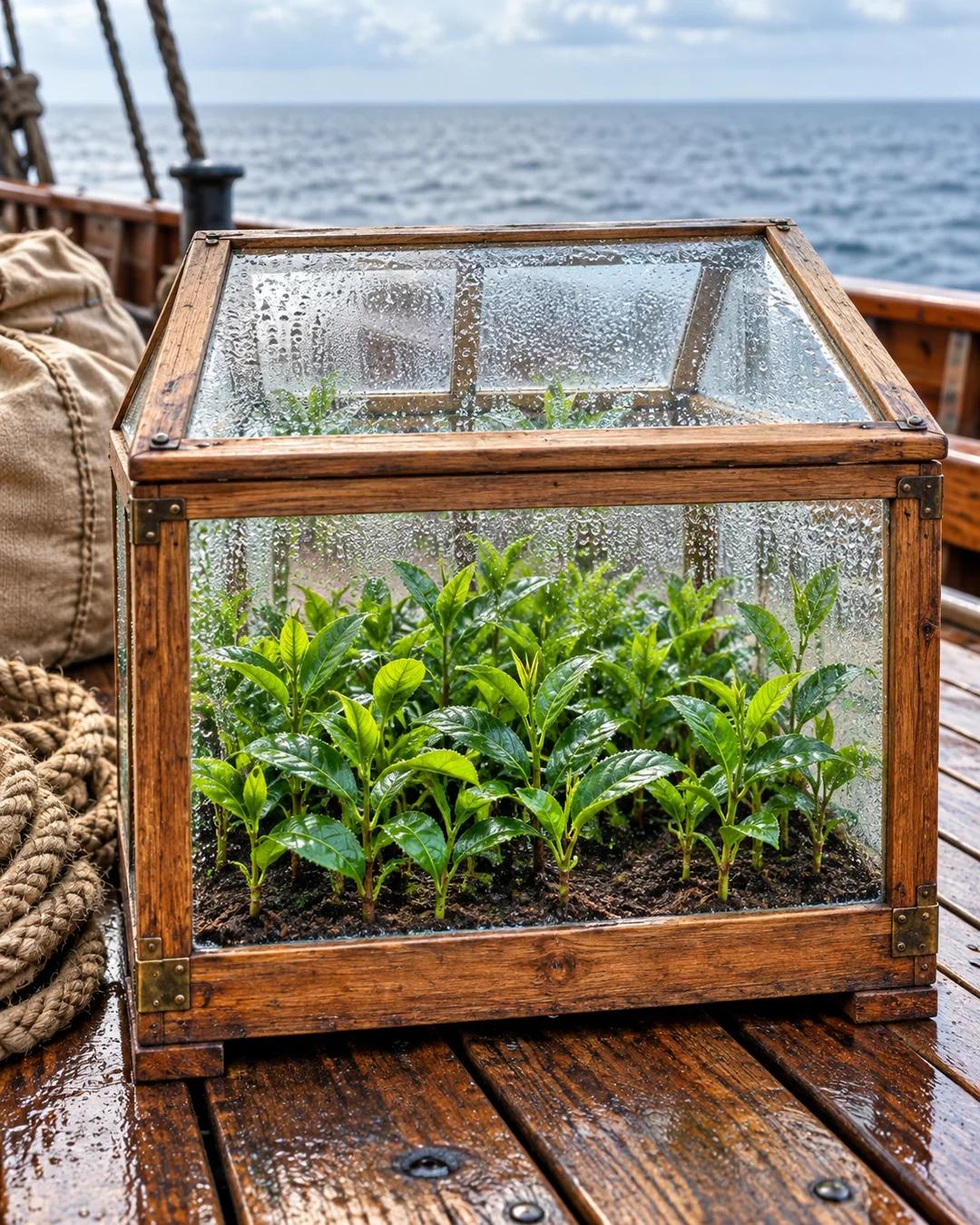
Fortune shipped plants in Wardian cases, sealed glass-topped boxes invented by the London physician Nathaniel Bagshaw Ward in the 1830s. The glass trapped moisture, which cycled inside the box and kept the soil damp without watering. Earlier plant transport by ship often failed because of salt spray and dry cabin air. Wardian cases also carried cinchona seedlings across the British Empire.
Why did he need experienced tea workers?
Tea bushes supply leaves, but turning those leaves into tea takes skilled processing. Green tea requires heating the leaves quickly to halt oxidation, while black tea requires withering, rolling, and controlled oxidation. Workers who had done this for years knew the timing by sight and smell. Their methods traveled to India along with the plants.
Why did the plants go to Darjeeling?
Darjeeling sits in the Himalayan foothills at about 2,000 meters, where cool temperatures and steady mist resemble the highland conditions of China's tea regions. The cool climate suited the Chinese tea bushes Fortune sent. Darjeeling teas are still made mostly from the Chinese variety of the plant. Assam teas, by contrast, come from a larger-leafed variety.
More from TED-Ed