Korva is a scroll of the internet’s best ideas.
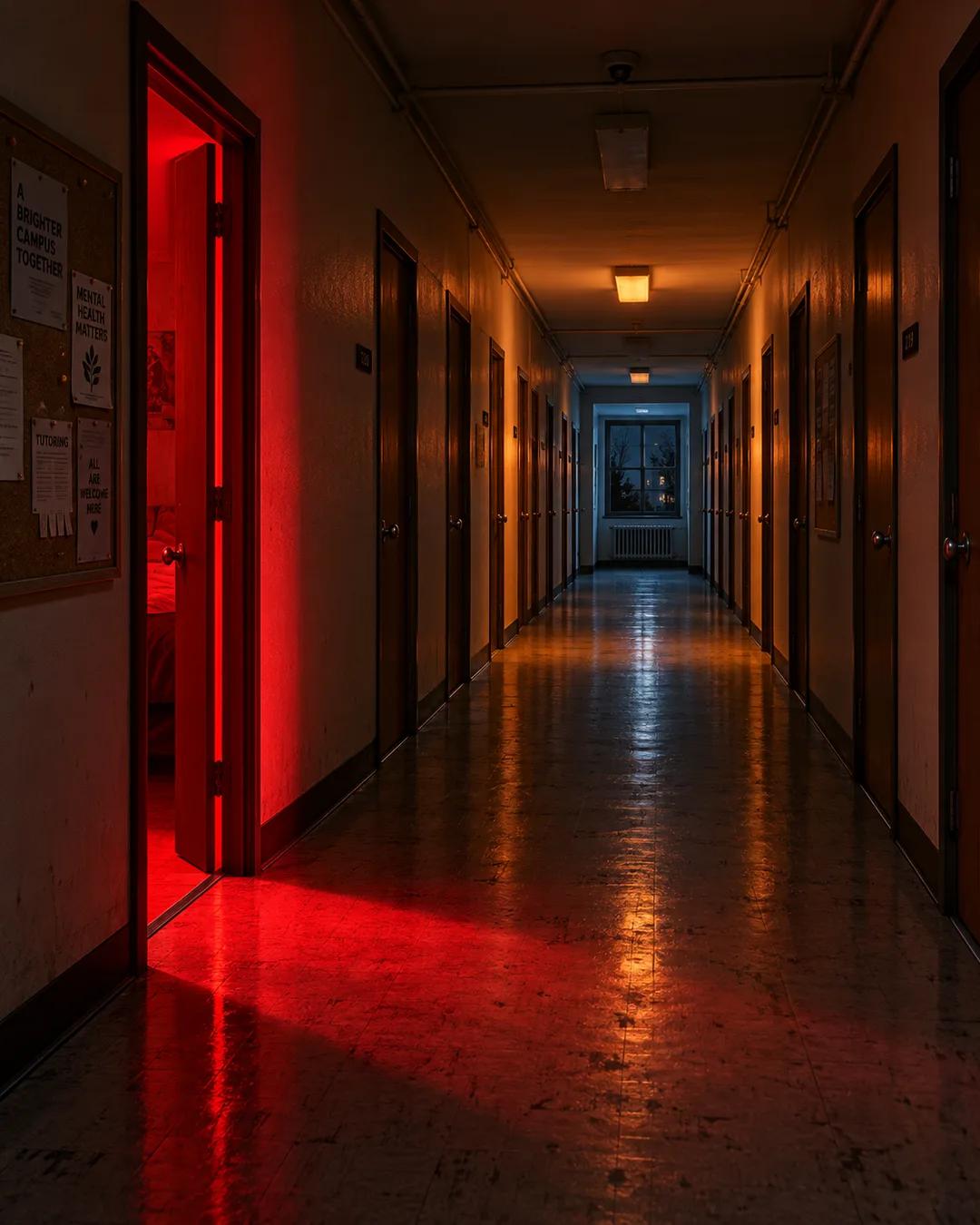
A campus murder sent students to horror
Interest in scary stories tends to jump after something frightening happens in real life, and psychologists caught it on one campus. They were studying which film participants would choose as a reward for taking part in a study. Two films were in town theaters: Truman Capote's In Cold Blood and a romantic comedy. After the murder of a young college student, students chose In Cold Blood far more often.
The pattern followed distance from the crime. Students who lived in the same dorm as the victim were more likely to choose the scary film than students in other dorms. Picture a heat map of the campus: the closer a dorm was to the victim's, the redder it got.
The researchers did not use the term, but the behavior is morbid curiosity, an interest in threats. Students who presumably felt an urge to learn about interpersonal violence found an easy way to do it by going to see a movie.
Why do threats grab attention so fast?
In 2001, psychologist Roy Baumeister and colleagues published a review titled Bad Is Stronger Than Good, finding that negative events and information usually outweigh positive ones in their effect on people. The amygdala, an almond-shaped brain structure, responds to threatening faces even when people do not consciously see them, according to a 1998 study led by Paul Whalen. Attention works the same way in everyday life, pulling toward danger first. Evolutionary psychologists link this bias to the cost of missing a predator compared with the cost of a false alarm.
How do researchers measure morbid curiosity?
Psychologist Coltan Scrivner and colleagues published a Morbid Curiosity Scale in 2021. The questionnaire covers four areas: interest in the minds of dangerous people, interest in violence, interest in paranormal danger, and interest in body violations such as gore. People score differently on each area. Scrivner developed the scale while at the University of Chicago.
More from Hidden Brain