Korva is a scroll of the internet’s best ideas.
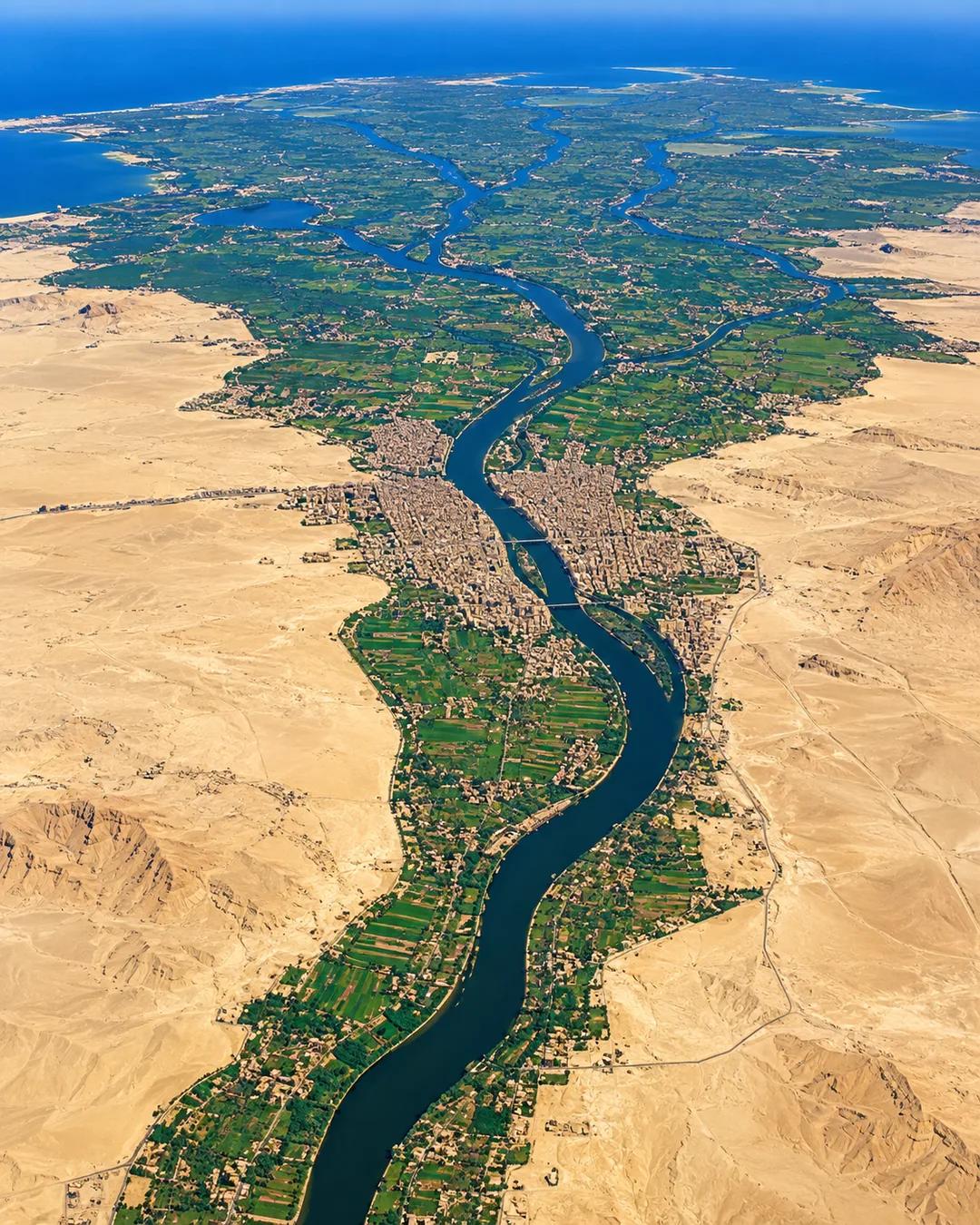
A capital at the Nile's fork
Memphis Returns Again
Memphis, in roughly the same place as Cairo today, was the capital the country returned to most often. The river gives ready access to the whole Nile Valley south of that point, and its branches lead to every part of the delta and out to the sea. Across 30 dynasties the capital moved as far south as Aswan, on Egypt's frontier, and as far toward the northeastern corner of the delta as Tanis, and after Alexander the Great it moved to Alexandria on the northwestern coast.
The Pull of the Delta
The delta pulled it north. In the Nile Valley, farmland runs only about three kilometers either side of the river over five or six hundred kilometers from Aswan to Cairo. North of Memphis the river fans out and the whole region is very fertile, so the delta is the most populous and the richest part of the country.
Eyes on the Levant
From the time of Ramesses II, or a little earlier, Egypt's eyes were on the Levant, which it controlled in what is now Palestine, Israel, Lebanon, and Syria, and on its enemies at the edge of that territory. By Alexander's time Egypt was part of his wider Mediterranean empire, which placed his capital at that end of the country. Capitals in the south were much less common, since there was little of interest to the south and being far from the delta meant being far from the action.
Why is the Nile delta so fertile?
Before the Aswan High Dam, the Nile's annual flood carried silt from the Ethiopian Highlands down to Egypt. The Blue Nile, which rises in those highlands, supplies most of that floodwater and silt. The river laid the silt over the delta, building the plain from its own sediment. The dark, rich soil it left is what Egyptians called the Black Land.
How did Egyptians think of their two halves?
Egyptians spoke of their country as the Two Lands, Upper Egypt in the valley and Lower Egypt in the delta. Kings took the title King of Upper and Lower Egypt. Their double crown joined the white crown of the south to the red crown of the north. Memphis sat near the border between the two.
Why did Egypt's frontier stop at Aswan?
At Aswan the Nile runs through the First Cataract, a stretch of granite rocks and rapids that blocks easy travel by boat. Beyond it lay Nubia, which Egypt at times controlled and at times fought. The island of Elephantine, at the cataract, served as a trading post and border station. Aswan's granite quarries also supplied stone for Egyptian monuments.
More from The Ancients