Korva is a scroll of the internet’s best ideas.
A crow herded dogs by calling

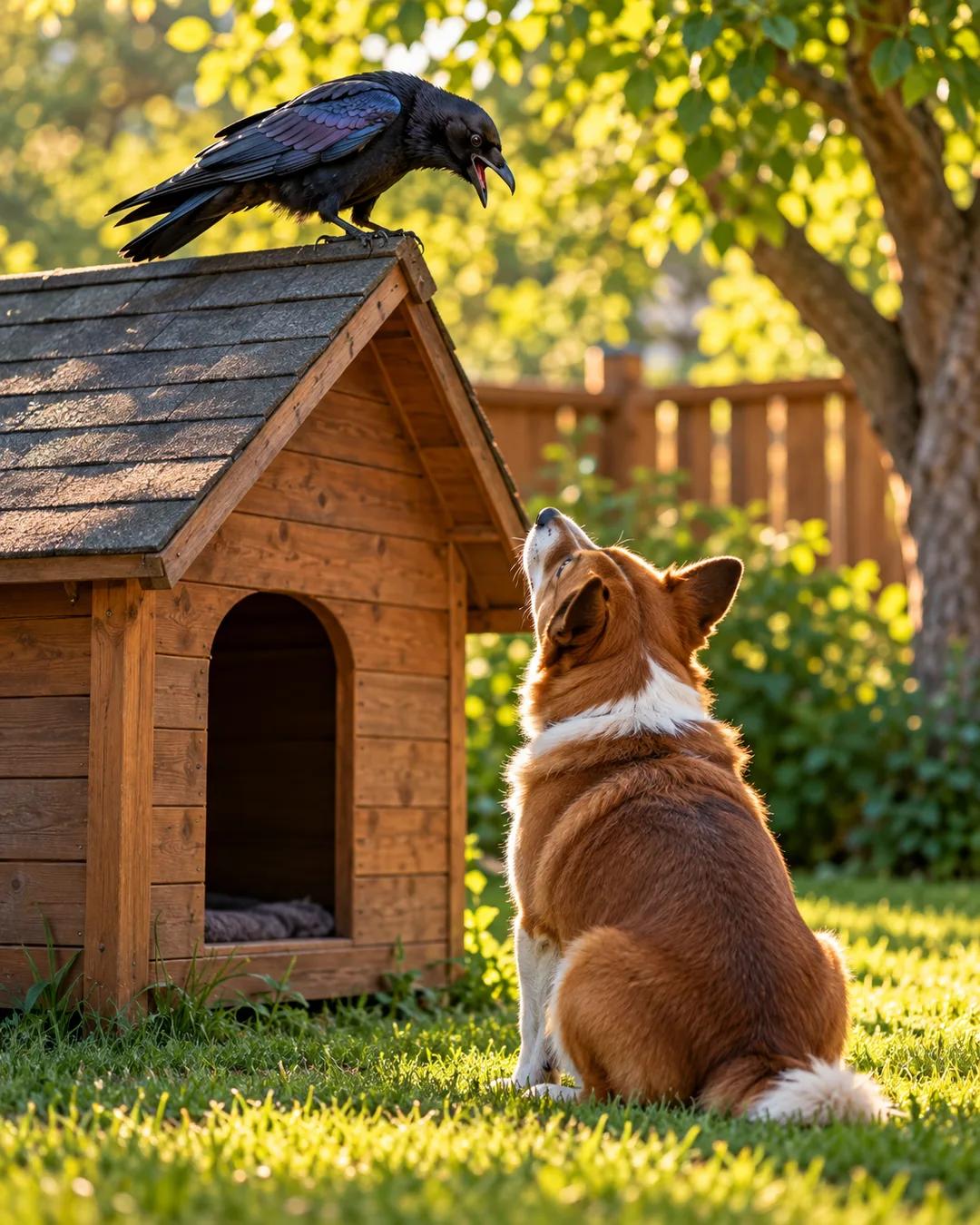
Kevin Smith woke one morning to his dog Vampire barking wildly in the backyard. Someone was calling the dog, "Here, boy. Come on, boy. Let's go." Kevin went out to confront whoever was messing with his dog, and up from behind the kennel popped a crow, repeating the same words.
That was only the start. For the next two weeks the crow rounded up dogs from around the neighborhood, brought them to the University of Montana campus, and held them at bay beneath its tree, calling to them the whole time.
When class let out and students crossed the grounds, the crow took off and the dogs chased it, sometimes knocking loose a sandwich or a bag of chips, or maybe just having a good time. The crow was obviously a former pet, and it had taken words learned from its keeper and put them to work in its own world.
How can a crow copy human words?
Crows belong to the group of birds that learn their vocalizations from others, along with parrots and songbirds. Birds produce sound with an organ called the syrinx, which sits where the windpipe splits and has two sides that can be controlled separately. Captive crows and ravens have been recorded imitating human speech, usually words they hear often from people they know. Wild crows rarely do it, which fits the idea that the bird in Missoula had spent time around people.
Do other corvids copy sounds too?
Many corvids are mimics. Eurasian jays imitate the calls of hawks, and some magpies copy the sounds of other birds, dogs, and car alarms. Ravens in captivity have learned to mimic a wide range of sounds, including human voices. Corvids that live around people hear a steady supply of new sounds to pick from.
Why would dogs follow a bird?
Dogs readily chase anything that flies low and quickly, and a bird that stays just out of reach keeps the chase going. Ravens and wolves show a similar relationship in the wild, with ravens following wolves to carcasses and wolves sometimes chasing the birds in play. Researchers who study wolves in Yellowstone National Park have described ravens teasing wolves by tugging at their tails.
More from TEDx Talks