Korva is a scroll of the internet’s best ideas.
A factory built as a wound
Building the factory
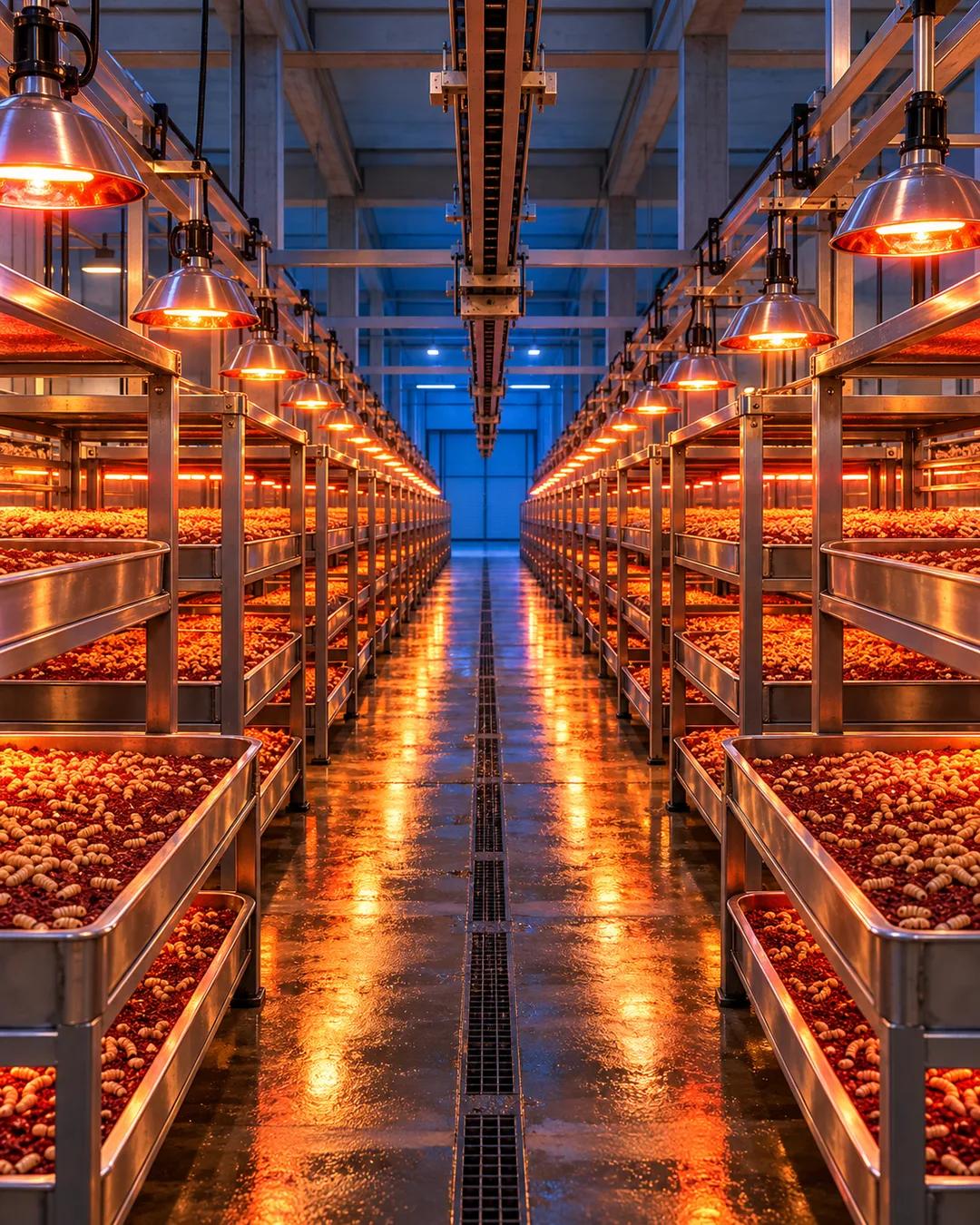
Construction began in the spring of 1962 at an abandoned Air Force base near Mission, Texas, after the small insectary at Kerrville fell more than ten times short of the flies the program needed. The Mission factory ran 24 hours a day, 365 days a year.
Raising the flies
Trays of meat, blood, and water, each heated to the exact temperature that stimulates screwworm growth, rode a monorail timed to the lifecycle of the fly. Eggs went onto the trays, hatched into larvae, and fed together on the bloody sludge as a seething mass that has to be seen and smelled to be believed.
Sterilizing and dropping
After several days the larvae wriggled out of the feed and dropped into a water-filled trough, which gently carried them to sawdust-filled trays where they pupated. The pupae were collected into canisters and loaded into large casks of highly radioactive cobalt-60. The sterilized pupae were then packed into cartons, driven in refrigerated trucks to distribution centers, hatched, loaded onto planes, and dropped by the millions. The factory was fully online by June, and the first flies went out in July.
Why must factory trays hold an exact temperature?
Insects are cold-blooded, so how fast they develop depends on the temperature around them. Warmer trays shorten each stage of the fly's life and cooler trays stretch it out. A monorail schedule built around the lifecycle only works if every stage finishes on time, which makes a fixed temperature essential. A wound on a warm-blooded animal keeps larvae warm in nature, and the factory copied that condition.
Why irradiate pupae instead of adult flies?
Pupae are compact, cannot fly, and can be handled by the thousand in canisters, which makes them far easier to treat than loose adults. Irradiating late in the pupal stage sterilizes the reproductive cells while the rest of the body is nearly fully developed. Cobalt-60 emits gamma rays and has a half-life of about 5.3 years, so a single source can serve a factory for years.
How do planes spread flies evenly over huge areas?
Pilots flew parallel lines across the target area, with the spacing and the number of flies per box chosen to deliver a set density per square mile. The flies were kept cool so they stayed calm until release. Navigators and later onboard guidance systems tracked the flight lines so that no strip received too few or too many flies.
More from Brian Potter