Korva is a scroll of the internet’s best ideas.

Cowboys hired just to inspect animals
How screwworms feed
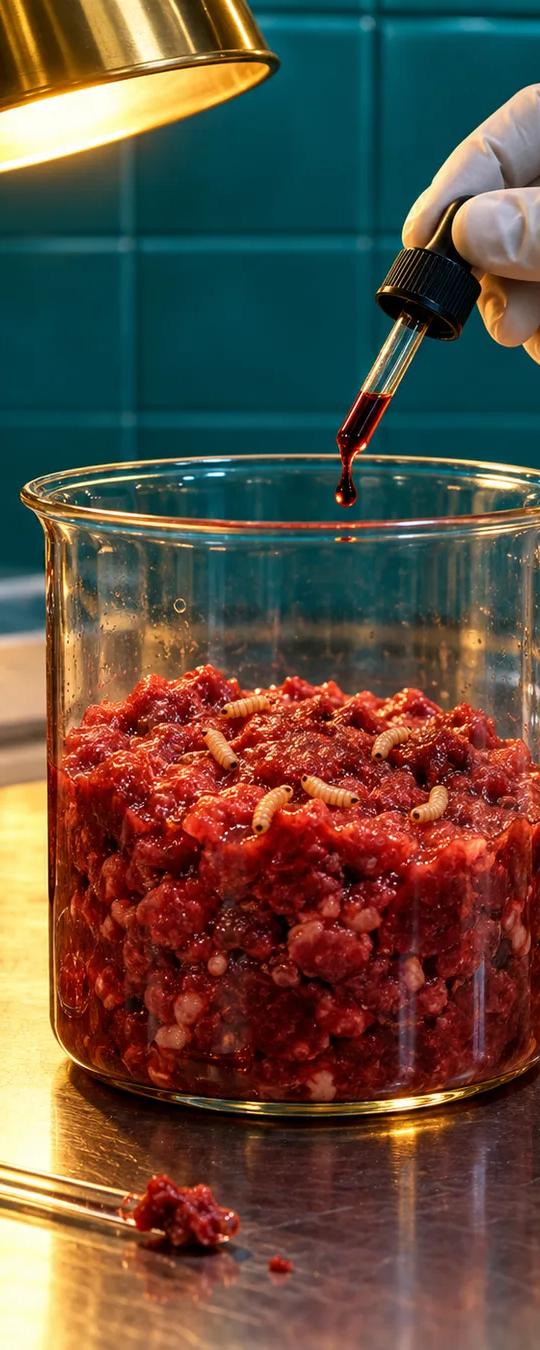
Most fly larvae feed on dead or decaying tissue. Screwworm larvae feed on living tissue. A fly lays eggs on a wound, the eggs hatch into white worms that can grow to two-thirds of an inch, and the worms burrow into the flesh, which worsens the wound and draws in more flies. After a few days of eating, the worms drop out as pupae and emerge as adult flies about a week later. Untreated, an infestation in an animal is typically fatal.
Daily inspection
Anyone who didn't check their animals at least every two days, or have someone do it, paid a heavy toll in damaged or dead livestock, and people hesitated to leave home for more than a day. Worms were treated with insect-killing chemicals or, occasionally, pulled out by hand, a task described as disgusting and sickening. Some ranchers covered wounds with tar to keep the flies off.
The toll on animals
Infestations still occurred by the millions, in cattle, sheep, goats, horses, and occasionally humans. A 1935 USDA survey found more than 1.2 million infections and 180,000 dead livestock in Texas alone, and the real totals were likely far higher. Some estimates suggested that in the 1930s and 1940s, 60% to 80% of white-tailed deer in Texas were killed by screwworm infections.
Why do screwworm wounds keep drawing more flies?
Female flies locate wounds by smell. Damaged tissue and the bacteria that grow in it give off odors that attract egg-laying females from a distance. The feeding worms enlarge the wound as they burrow, which increases the odor and brings in still more females, so one infestation can feed itself.
Why were wild deer hit so hard?
Wild animals could not be inspected or treated, so an infested deer had no chance of recovery. Newborn mammals are especially at risk because the umbilical stump is a fresh wound that attracts egg-laying females. Deer fawns are born in warm months, when screwworm flies are most active.
How can a tiny wound be enough for infestation?
A female screwworm lays her eggs at the edge of a wound rather than inside it, so a small scratch, a tick bite, or a fresh brand is enough. Newly hatched larvae begin feeding at once, and their feeding breaks down more tissue. Common sites of infestation included the navels of newborn calves and wounds from shearing, branding, and dehorning.
More from Brian Potter