Korva is a scroll of the internet’s best ideas.
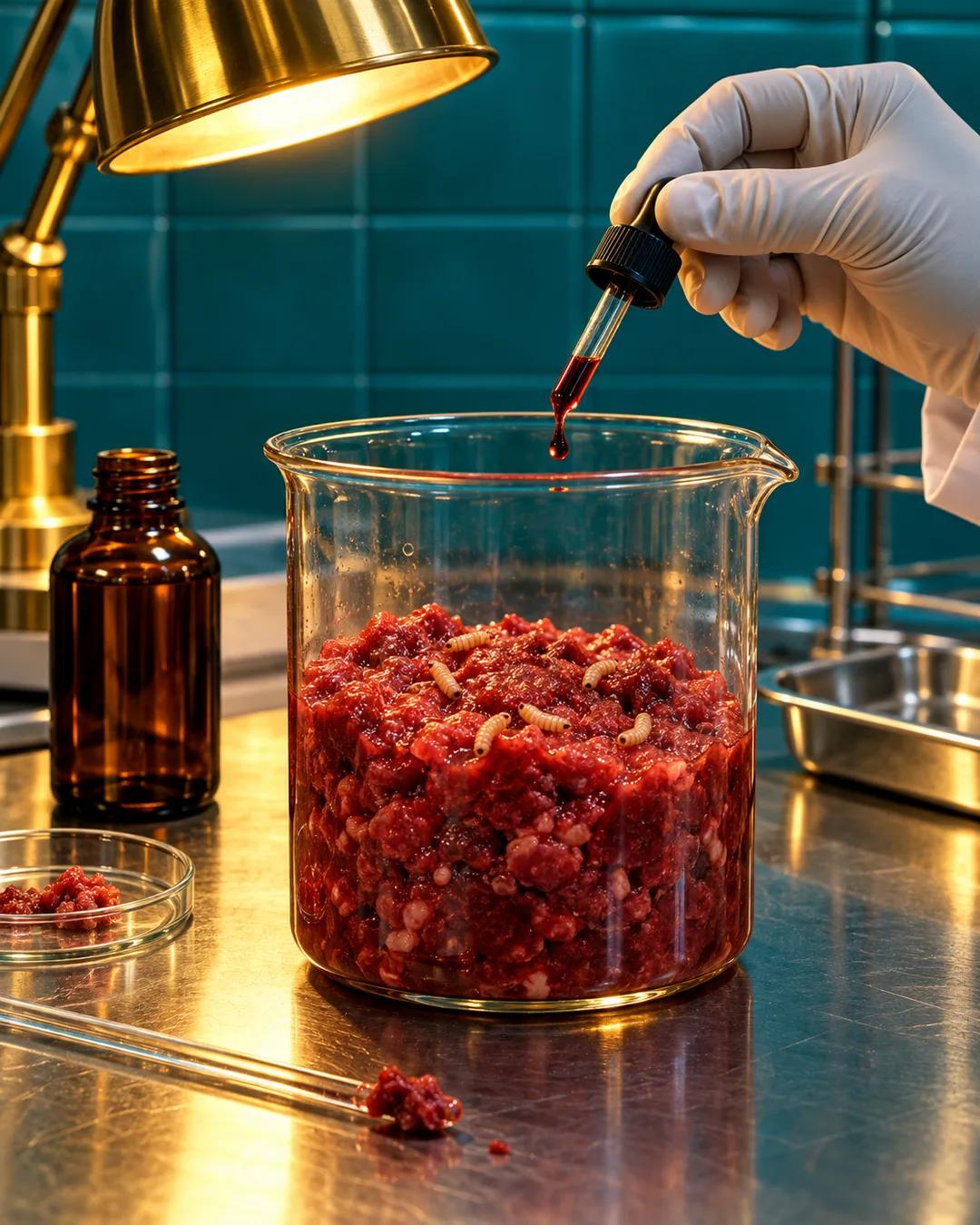
A hamburger recipe for screwworms
Bushland joined the USDA in 1935 and was assigned to study the effects of pesticides on screwworms. That needed a steady supply of fresh screwworms, and the only way to get them was to wound caged animals on purpose and let the flies infect them.
Desperate to grow screwworms without live animals, he worked for months and finally produced an artificial growth medium of hamburger, blood, water, and a little formaldehyde to delay putrefaction. The disgusting mixture made screwworms far easier to raise. Before long Bushland was harvesting them by the thousands, and the recipe became the basis for everything the lab did next.
Why was rearing flies without animals such a breakthrough?
Live animals vary in size, health, and how their wounds heal, so every batch of flies came out differently. An artificial medium can be mixed the same way every time and scaled up in trays. That consistency is what made a factory possible, because a factory needs the same output every week.
Why does the medium contain formaldehyde?
Meat and blood decay quickly, and the bacteria and fungi that cause it can foul the medium before the larvae finish feeding. Formaldehyde is a preservative that slows the growth of those microbes. Larvae of many fly species are adapted to protein-rich, moist, decomposing food, which is why a mixture of ground meat and blood suits them.
More from Brian Potter