Korva is a scroll of the internet’s best ideas.
A good decision can still lose

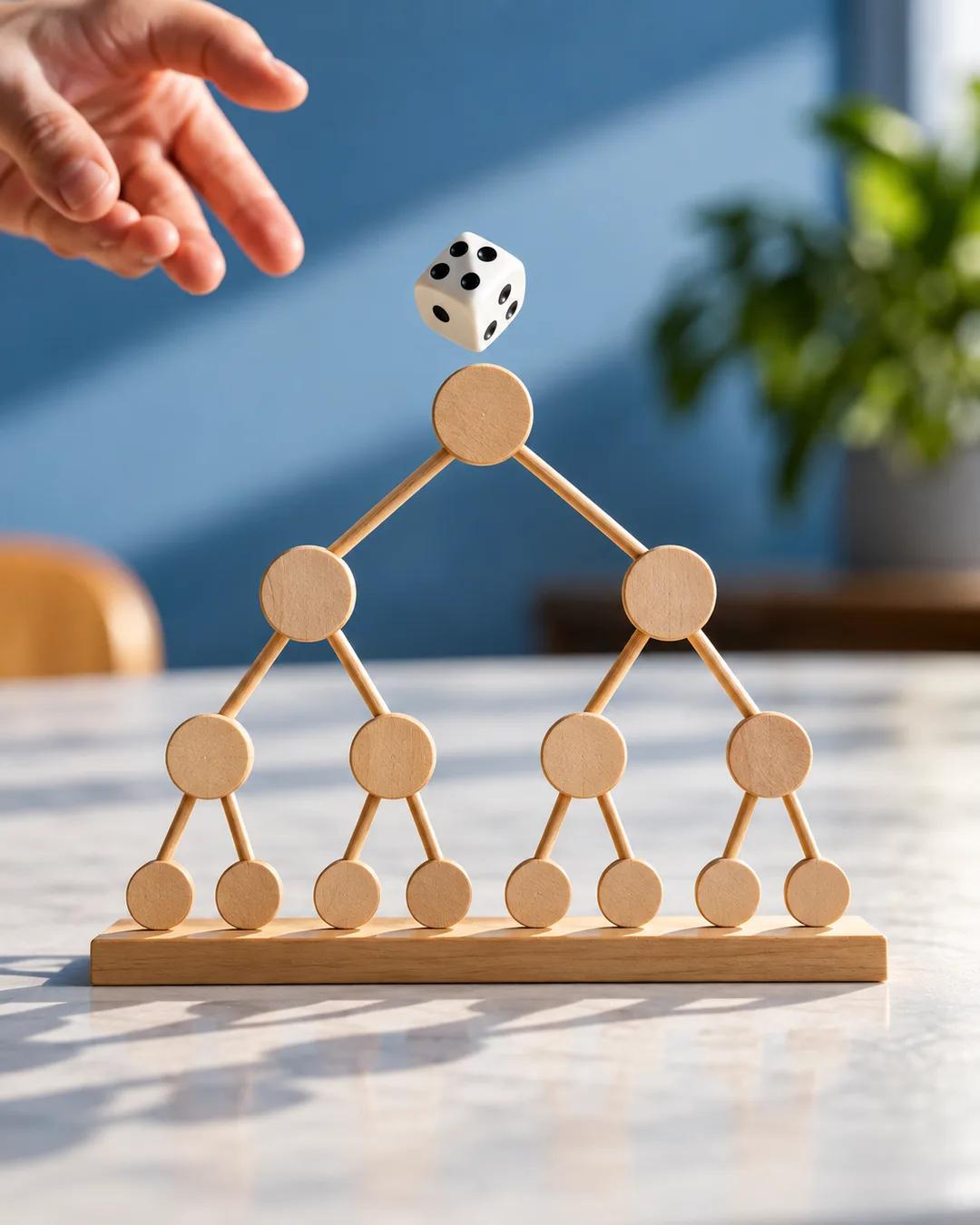
Decisions run on probabilities, and human brains are not wired to think that way. Even people trained in statistics make probabilistic errors all the time. A decision tree has choice nodes and probability nodes. Someone can make the right choice at every choice node, whether it is about treatment, side effects, or surgery, and still land on an unlucky branch.
An adverse outcome does not mean the wrong decision was made. It means the probabilities being weighed went against you at a critical point on the tree. Real decision trees turn out to be genuinely useful for this kind of choice.
A bad decision process that ends with a good outcome is worse, because the outcome reinforces the bad process, which then compounds in the wrong direction. Probability and statistics may be the one course every high school graduate should take in math and science.
Why are human brains bad at probability?
In a 1974 paper in Science, the psychologists Daniel Kahneman and Amos Tversky described mental shortcuts that people use to judge likelihood, such as judging by how easily examples come to mind. These shortcuts work well enough in everyday life and produce predictable errors in statistical questions. The errors showed up even in trained researchers, including in the way they judged sample sizes.
What is resulting in poker?
The former professional poker player Annie Duke uses the word resulting for judging a decision by its outcome. She describes it in her 2018 book Thinking in Bets. Poker players meet the problem constantly, because a well-played hand can lose to a lucky card on the final deal.
Where did decision trees come from?
Decision analysis was developed in the 1960s by Ronald Howard at Stanford, working with others, and Howard Raiffa at Harvard. They gave decision makers a way to lay out choices, probabilities, and payoffs on a diagram. Business schools, hospitals, and governments have used the method since.
More from The Knowledge Project Podcast