Korva is a scroll of the internet’s best ideas.
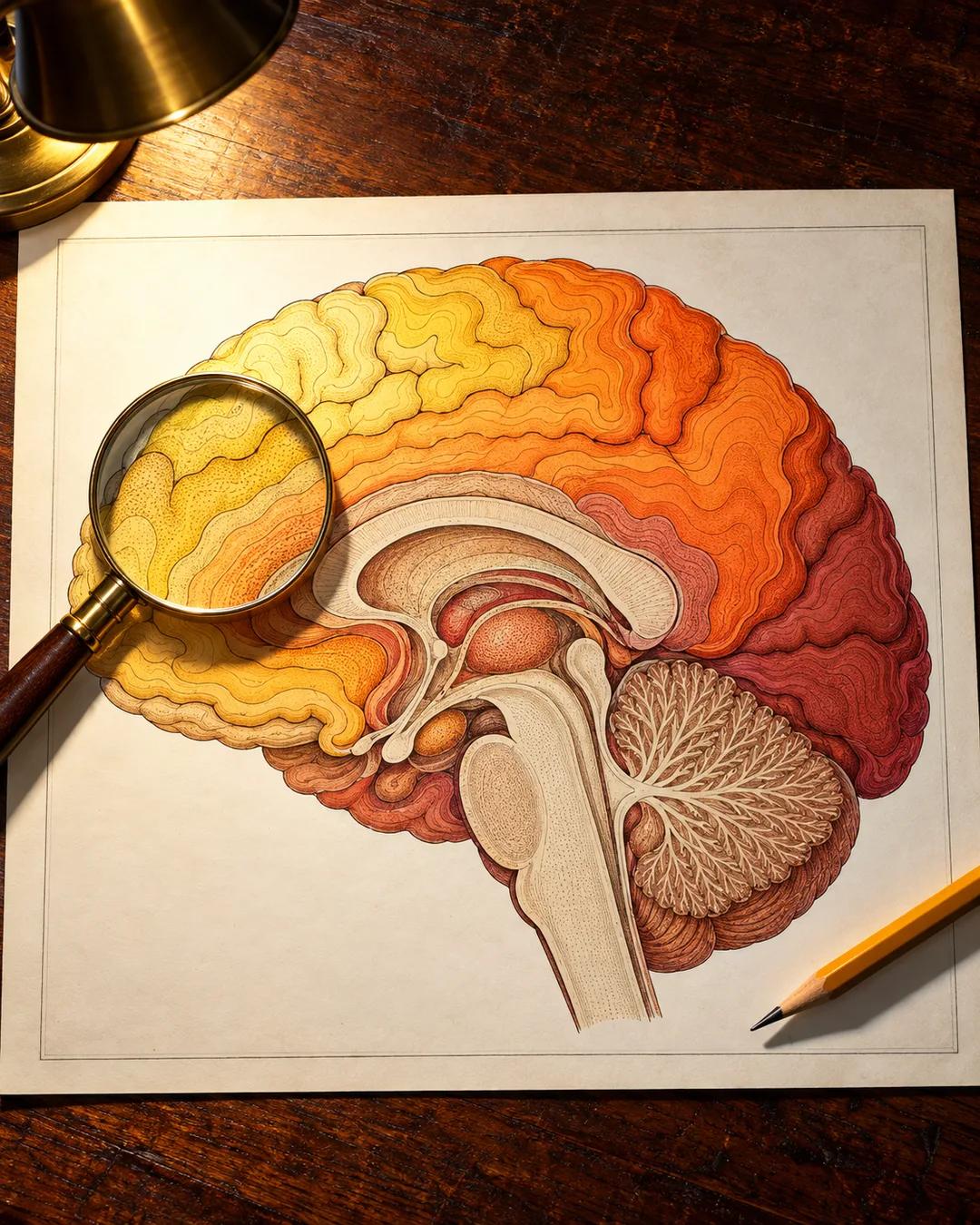
A map of the brain's mitochondria
The map
The map is an invitation to other scientists to explore the molecular energetic landscape that underlies brain structure, process, and function, including consciousness. Its authors framed it as a call for others to join them in creating a new field of study.
Different mitochondria
It fits a wider surprise. Studies have shown, to researchers' shock, that mitochondria differentiate: subpopulations vary from organ to organ, or even from cell to cell, and are responsible for different amounts of energy or kinds of biochemistry.
New tools
New tools have expanded what mitochondrial researchers can study. Mitotyping technologies profile and classify mitochondria by their function and activity, their underlying DNA sequence, and their gene expression. In 2018, Picard and his colleagues released the mitochondrial health index, a molecular measure of the organelles' capacity to transform energy, calculated by extracting them from a tissue sample and quantifying their contents. It lets researchers process thousands of samples, compared to dozens a few years before.
Why do mitochondria differ between cell types?
Cells have very different energy jobs, and their mitochondria are matched to them. Heart muscle cells pack in mitochondria that fill roughly a third of the cell's volume, because the heart never rests. A liver cell holds on the order of 1,000 to 2,000 of them, busy with chemistry far beyond energy production. Mature red blood cells have none at all.
Why might brain regions need different mitochondria?
Brain regions do different jobs, and their energy demands differ. A 2001 analysis by David Attwell and Simon Laughlin estimated that most of the energy in gray matter goes to signaling, meaning impulses along axons and transmission at synapses. Regions with dense synapses and heavy firing therefore need more power and a different mix of mitochondrial capacities. The map showed this variation in the human brain directly.
How do scientists pull mitochondria out of tissue?
The classic method is differential centrifugation. Tissue is ground up gently and spun in a centrifuge at increasing speeds. Heavier parts such as nuclei settle out first, and mitochondria settle at a higher speed, so they can be collected as a pellet. Albert Claude pioneered the approach in the 1940s, and it earned him a share of the 1974 Nobel Prize in Physiology or Medicine.
More from Rachel Nuwer