Korva is a scroll of the internet’s best ideas.
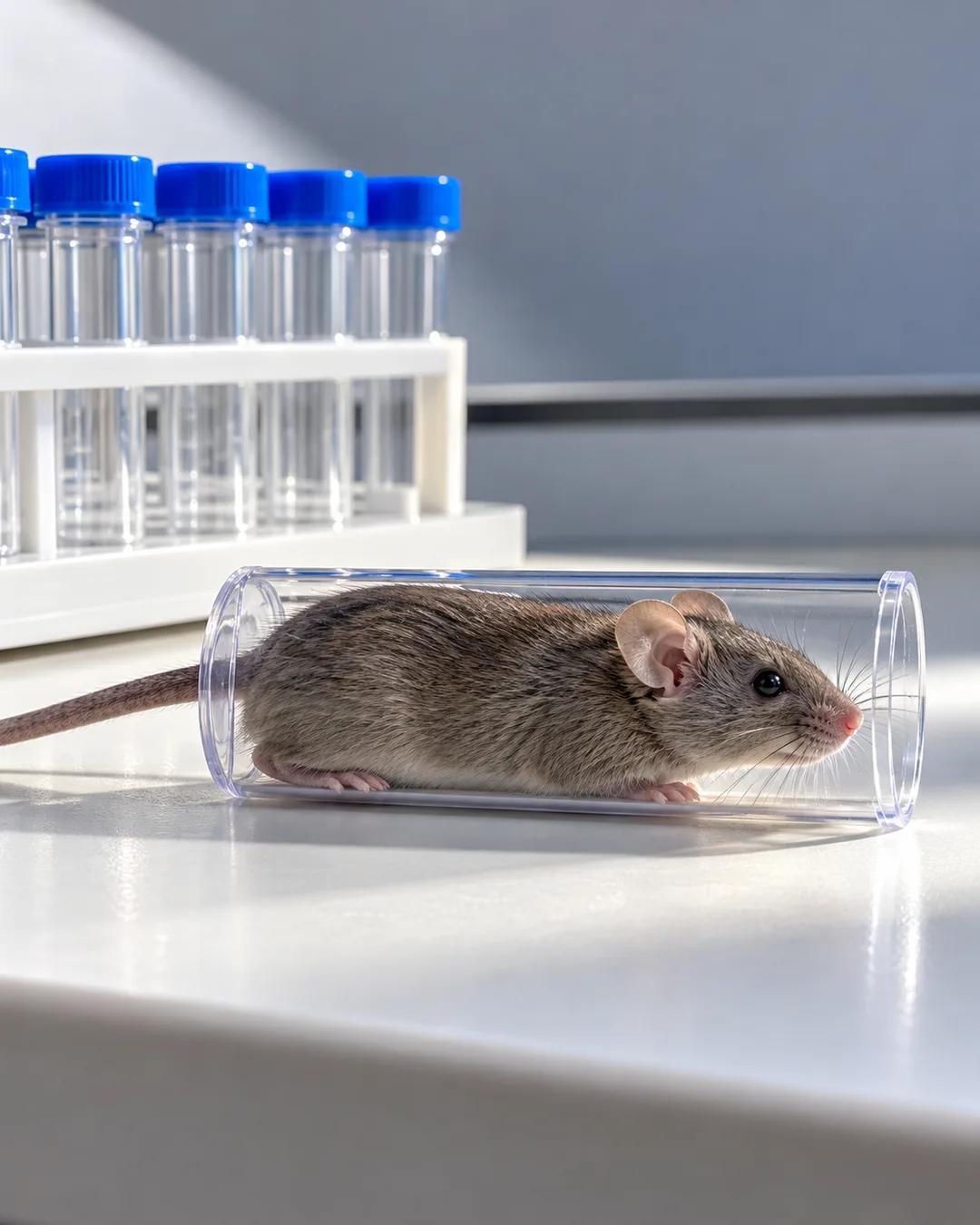
Change mitochondria, change stress response

The tube experiment
In a 2015 experiment, Martin Picard stressed mice by placing them in a tube where they could not move. Some of the mice had normal mitochondria, and others had diseased or otherwise defective ones. The animals' biology reacted very differently to the containment depending on the specific defects in their mitochondria, and the reactions produced different molecular signals.
Gene switching
A study from around the same time found that perturbing mitochondria changed their host cell's gene expression and growth, even when the organelles' ability to transform energy was unchanged. Mitochondria also create the small molecules cells use to switch genes on and off.
Those results brought to life the idea that mitochondria could function as a dynamic interface between the body and the outside world.
Why does confinement stress a mouse?
Mice are prey animals, and being unable to move is a signal of danger. Confinement activates the stress axis that links the brain's hypothalamus and pituitary gland to the adrenal glands. The adrenals release corticosterone, the main stress hormone in mice, which plays the role cortisol plays in people. Restraint in a tube is a standard laboratory stress model, and corticosterone levels rise within minutes of it.
How can mitochondria change which genes are active?
Mitochondria produce molecules that the cell's gene-control machinery uses as raw material. Acetyl-CoA, for example, is the source of the acetyl groups that enzymes attach to histones, the proteins DNA wraps around, and those tags loosen the DNA so genes can be read. A 2009 study by Kathryn Wellen and colleagues in the journal Science traced this link between metabolism and histone acetylation. Other mitochondrial products serve as fuel for enzymes that remove chemical marks from DNA and histones.
More from Rachel Nuwer