Korva is a scroll of the internet’s best ideas.
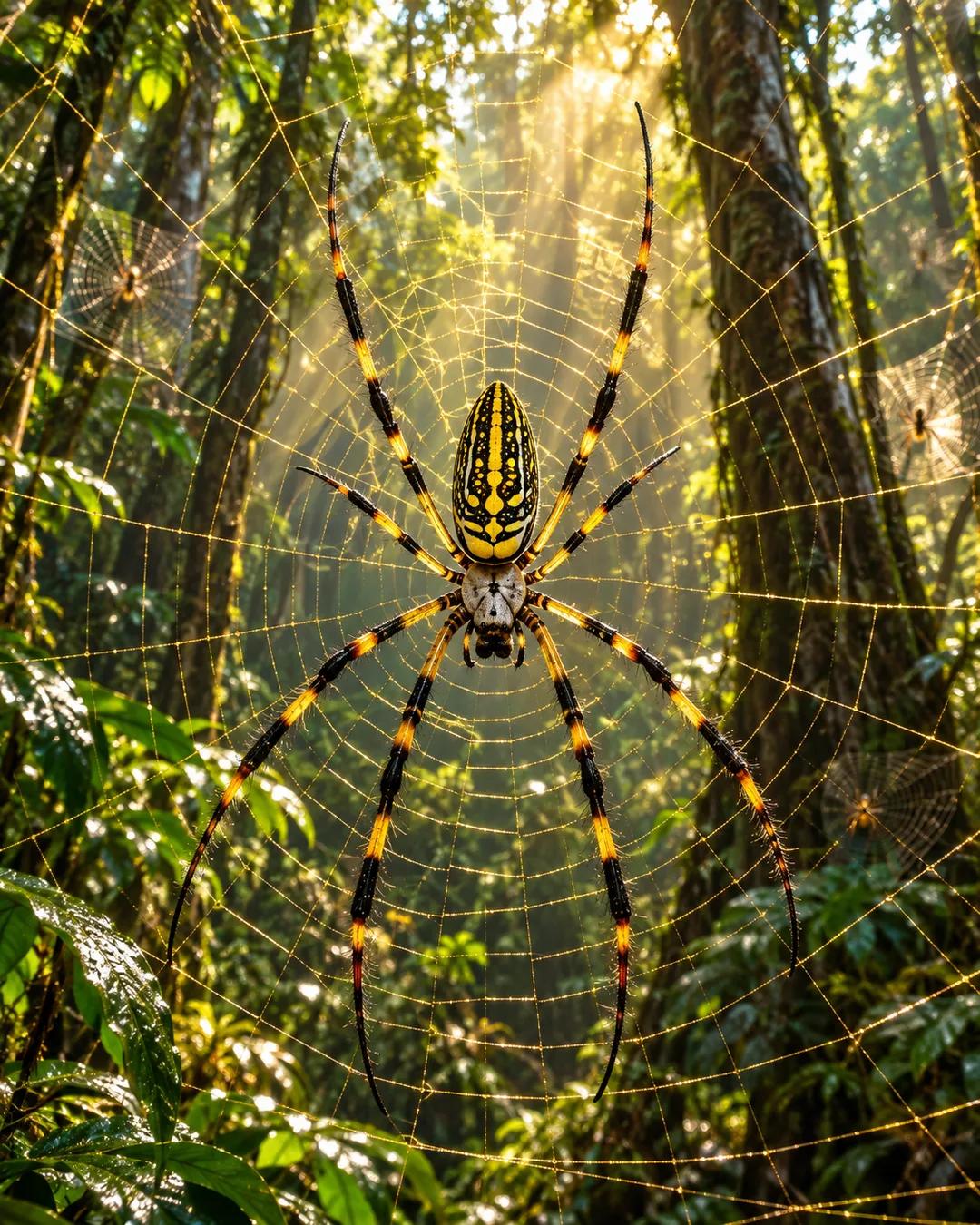
A million spiders for one cape
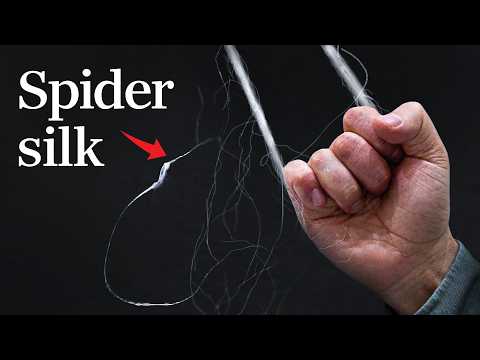
The golden cape
Simon Peers and Nicholas Godley led the years-long project. Malagasy workers collected the spiders in the jungle, extracted their silk, and painstakingly wove and embroidered it into a single golden cape.
Spider stockings of 1709
Three centuries earlier, in 1709, a Frenchman named Francois Xavier Bon collected hundreds of spider egg sacs, boiled them, combed them like wool, and spun them into thread. He made stockings that attracted attention at the royal court. The hard part was getting enough egg sacs to make anything sizable.
Why farming fails
Farming the spiders runs into a basic problem: spiders are cannibals, and they can't be kept in a tiny container. A farm with 10,000 of them takes a lot of real estate. Milking is hard, too. A really cooperative spider gives 300 yards of silk, 100 is much more typical, and some break the thread right away.
One supplier charges $700 for 100 milligrams of natural spider silk, which works out to roughly $7 million per kilogram, about 50 times the price of gold.
Why is the cape's silk naturally gold?
Golden orb weavers of the genus Nephila produce silk that is yellow on its own, and the color is generally attributed to pigments such as carotenoids in the thread. That is why the cape needed no dye. It was first shown at the American Museum of Natural History in New York in 2009 and later at the Victoria and Albert Museum in London in 2012.
What did the 1709 spider stockings lead to?
Bon's work was reviewed for the French Academy of Sciences by the naturalist Rene de Reaumur around 1710. Reaumur found that spider silk was weaker and less lustrous than silkworm silk, and that spiders kept together fought and ate one another. He concluded that raising spiders for silk was not practical. His report is the reason the 1709 stockings remained a curiosity.
Why are silkworms easy to farm and spiders not?
Silkworms are domesticated caterpillars, bred over thousands of years to be docile, to eat only mulberry leaves, and to live crowded together. The adult moths of the domesticated species have lost the ability to fly. Spiders are solitary predators that need live prey, and an orb weaver's silk is a thread spun on demand rather than a cocoon. A single silkworm cocoon unwinds into a continuous thread several hundred meters long.
More from Veritasium