Korva is a scroll of the internet’s best ideas.
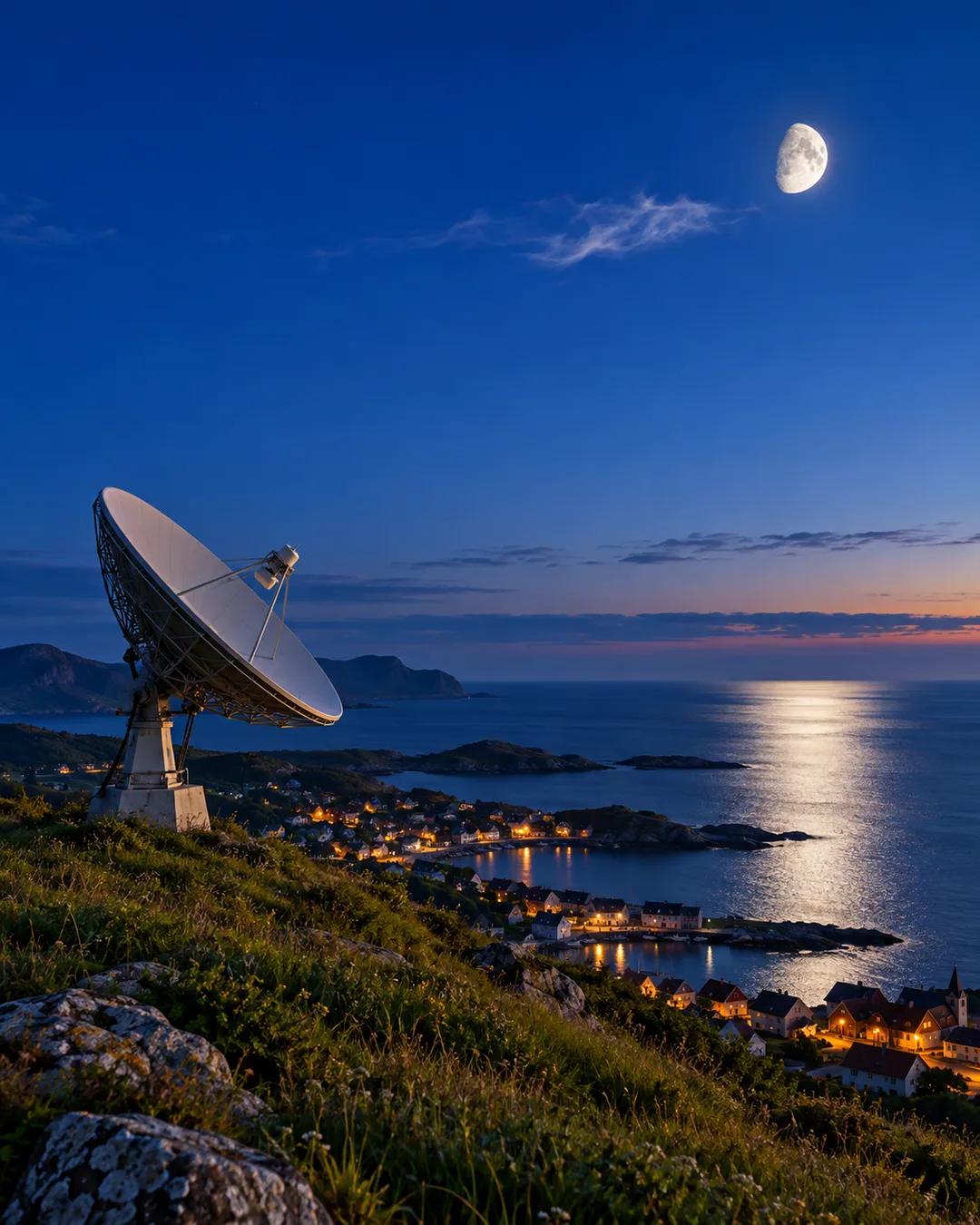
A Moon hovering overhead

A fixed Moon
Within 75,000 kilometers of Earth, the Moon is still no bigger in the sky than a small cloud, yet bright enough to light the night like twilight. Once it settles into that 24-hour orbit, it cycles through a full set of phases every day, and only half the planet can see it.
Tides and gravity
The tides seem to freeze in place beneath it. Half the world stays flooded, and the other half has its water returned to the sea.
Someone might wonder whether the Moon's gravity could lift a person off the ground. Earth's surface gravity is about six times stronger than the Moon's, so even with the Moon hovering right overhead, a person would stay on the ground.
The Moon stretches
The Moon itself is the one that deforms. Earth's gravity acts more strongly on the near side, which stretches toward Earth into something like an egg and triggers deep moonquakes as the lunar rock flexes and changes shape. The stretch is barely noticeable at first and grows to hundreds of kilometers within a matter of months.
Why does a 24-hour orbit sit so high?
Orbital period grows with distance from the planet. A satellite takes one full rotation of Earth to circle it at roughly 35,786 kilometers above the surface, over the equator. At that height it moves at the same rate as the ground beneath it, so it appears fixed in the sky. Arthur C. Clarke described this orbit as a place for communications relays in 1945.
Why does the Moon beat the Sun at tides?
The Sun pulls on Earth far harder than the Moon does, but tides come from the difference in pull across Earth. That difference shrinks with the cube of the distance, which favors the nearby Moon. When the two line up at new and full Moon, their effects add into larger spring tides. The Sun's tidal effect is about 46 percent of the Moon's.
Why would the Moon deform like an egg?
The same difference in pull that raises ocean tides stretches solid bodies, because the near side is pulled harder than the far side. Rock resists, but the stretch grows as the distance shrinks. Jupiter's moon Io shows the extreme: Jupiter's tides flex its surface by tens of meters, heating its interior and driving volcanic activity more intense than anywhere else in the solar system. Io has hundreds of active volcanoes.
Why would the phases cycle every day?
A phase depends on the angle between the Sun and the Moon as seen from the observer. A Moon fixed over one spot stays put in that spot's sky while Earth's rotation carries the Sun around once a day. The angle between them therefore sweeps through a full circle every 24 hours. The real Moon needs about 29.5 days to complete its cycle of phases.