Korva is a scroll of the internet’s best ideas.
A plan to blow up school

A Classroom Becomes the Story
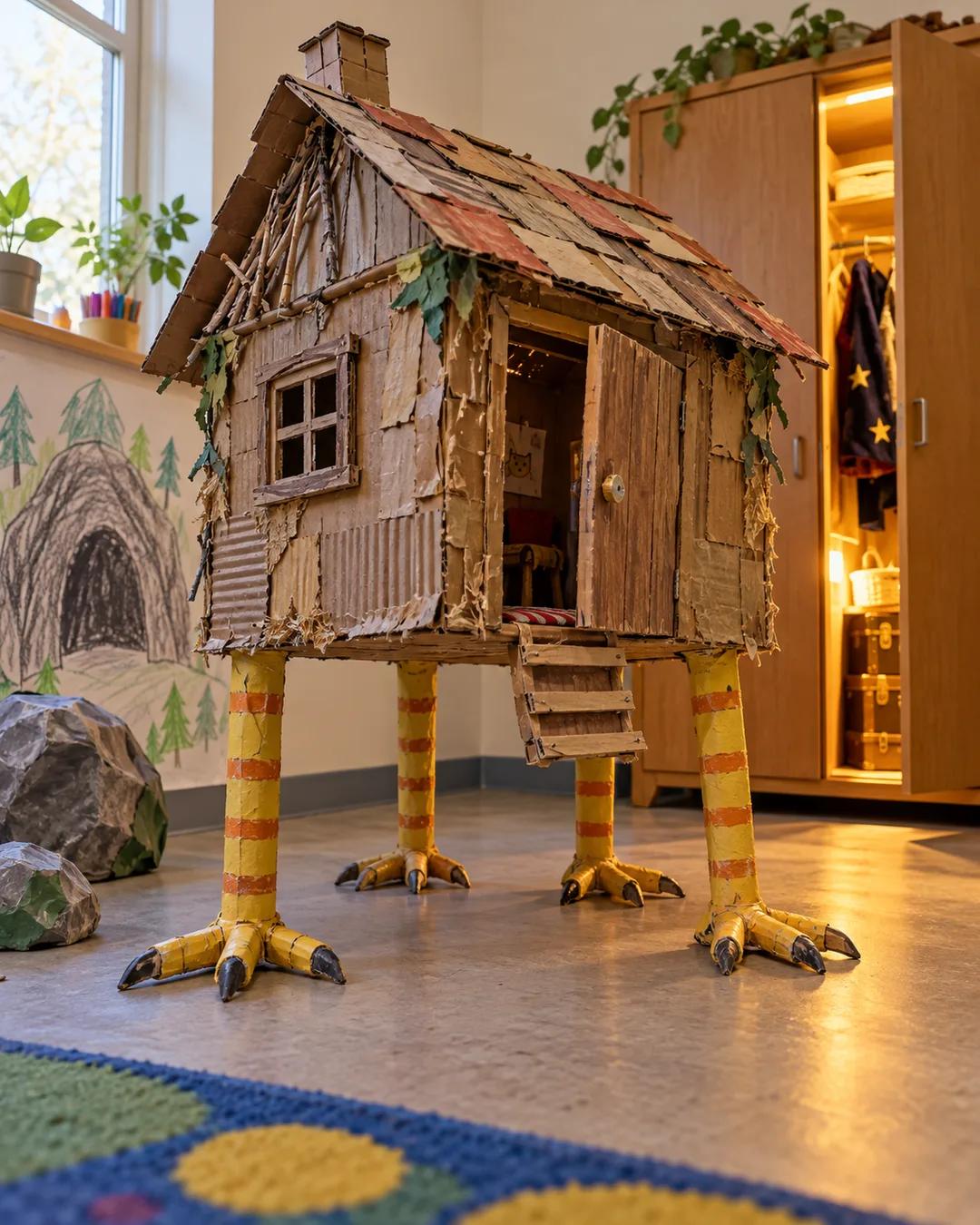
The teacher, Johanna, read aloud the first half of the Slavic folktale Baba Yaga, then stopped. The class wrote and directed its own resolution to the story's conflicts, and over a year the children built the set themselves: Baba Yaga's tower, caves for the magical creatures, a trap she used to capture everyone she could, and a hut on chicken legs. A wardrobe inside the hut became a portal from the everyday classroom into the world of the story.
Viola's Plan
Viola was often inattentive and disruptive. In a normal classroom, a plan to blow up the school would have gotten her excluded. Inside a play world the children are the experts, so they negotiated with her and asked whether she would consider blowing up some props instead. Viola agreed, calling it a good plan because everybody gets to make their own.
The following week she was inattentive and disruptive again, so Johanna spoke to her directly. Viola could not be part of the plan unless she committed to going through with it, because everyone depended on her to save the magical creatures, and her disruptive behavior might alert Baba Yaga.
The Countdown
Viola agreed. When her turn came, she first checked that everyone was protected, then threw the bomb into Baba Yaga's trap and led the whole class in a dramatic countdown to the explosion.
Why does pretending help children control themselves?
The Soviet psychologist Lev Vygotsky argued in the 1930s that a child at play behaves beyond their usual age, acting "a head taller than himself." A role comes with rules, and a child has to hold back impulses to stay true to the part. He saw that as practice for self-control in real life.
The Tools of the Mind curriculum, developed by Elena Bodrova and Deborah Leong, was built on his ideas about play.
Why is Baba Yaga both a helper and a villain?
In Russian folktales she often tests a hero, and the hero's manners decide what happens next. A polite visitor can receive advice or a magical gift, while a rude one is threatened with being eaten. The folklorist Vladimir Propp, in his 1928 book Morphology of the Folktale, grouped figures like her as donors who test the hero before helping.
Her hut stands on chicken legs and turns to face whoever approaches.
More from TED Talks Daily