Korva is a scroll of the internet’s best ideas.
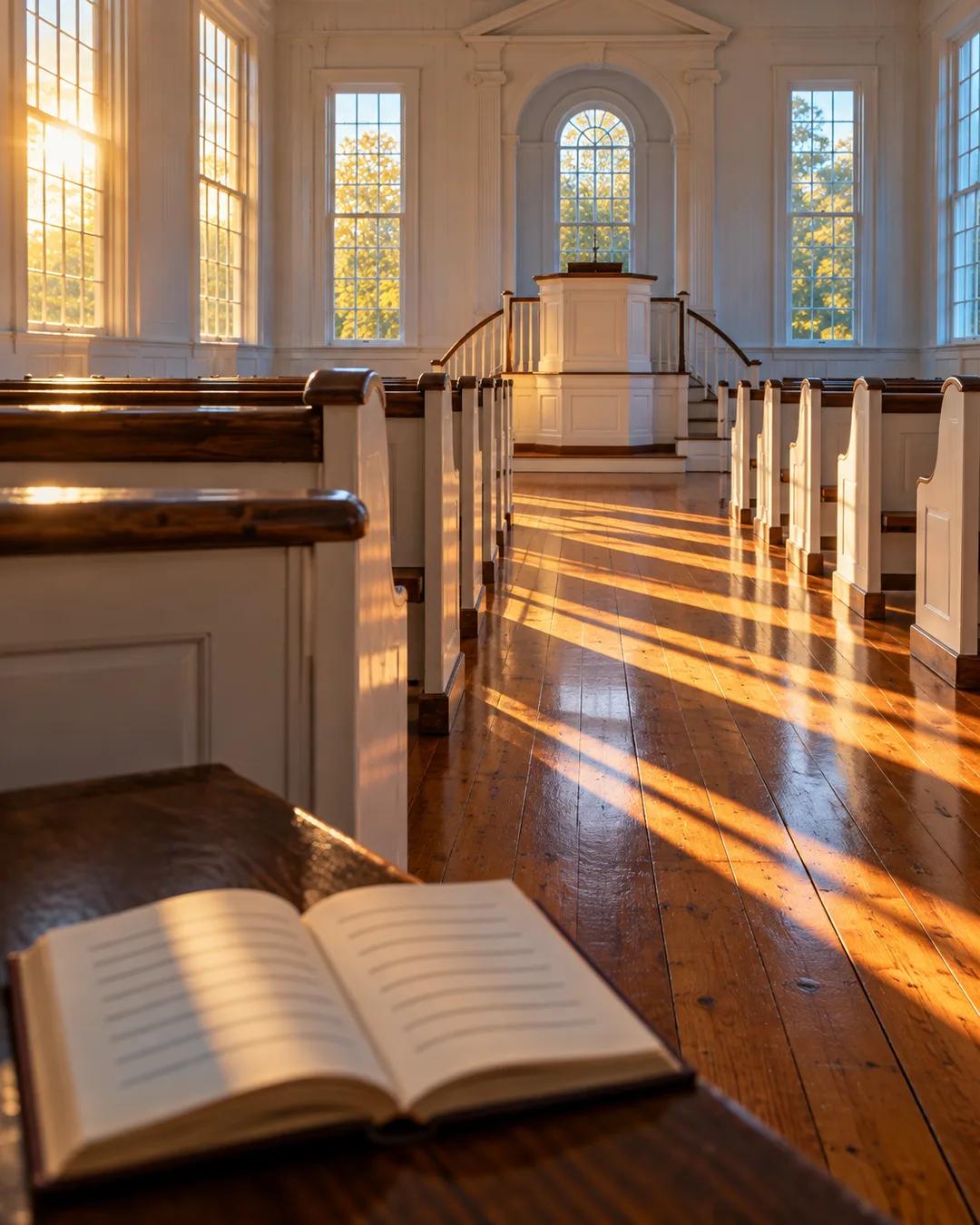
A prayer spoken through gritted teeth

A church coming apart
In the 1990s, Martin Copenhaver's church was coming apart over whether to become open and affirming, which meant deciding whether to allow gay marriage. Robert's Rules of Order wouldn't carry a fight like that, and he didn't want to import a strange outside process either. He went through the church's archives and found a practice from 250 years earlier called congregating.
He held four meetings about how to be together, with gay marriage off the agenda. After each person spoke, the entire congregation had to say May the Holy Spirit speak through us, a pause that invited curiosity and humility.
The outburst
At one session an elder stood and read three pages of notes against allowing gay marriage, loudly and against every rule. Someone else screamed that it was unconscionable, and the whole church froze. Copenhaver looked around and recited the line through gritted teeth, and it worked as de-escalation because the church had practiced it.
Rules for the vote
He banned absentee ballots, since voters had to be in the room to be altered by what they heard. He set no date for the vote and called it after the fourth session, when he judged the church ready. The one rule about the result was no celebrating, whichever way it went.
Before leaving that day, everyone was asked to shake hands with someone who held a different opinion, so nobody debriefed in the parking lot. The church passed open and affirming, and no one left.
Why do other church traditions use silence in meetings?
Quaker meetings for business have long run on silence and discernment instead of votes. Participants speak only when moved to, and no one answers right away, so each remark has time to settle. The group aims for what Quakers call the sense of the meeting, which the clerk reads back and the room tests before it is recorded. The practice dates to the seventeenth century, when the Religious Society of Friends took shape in England.
How did the open and affirming label begin?
The phrase comes from the United Church of Christ, a Protestant denomination in the United States. Its General Synod passed a resolution in 1985 encouraging congregations to adopt public statements of welcome for gay and lesbian people. Each congregation decides for itself, usually through a vote after a period of study and discussion. Congregations that adopt such a statement are listed by the denomination's open and affirming coalition.
Why was Robert's Rules a poor fit for this fight?
Henry Martyn Robert, a US Army engineer, published his manual of parliamentary procedure in 1876, adapting the rules of the US House of Representatives for ordinary clubs and societies. The rules are built around motions, seconds, time limits, and majority votes. They move a group toward a decision efficiently, and they give no space for people to explain what a question means to them.
More from The Curiosity Shop with Brené Brown and Adam Grant