Korva is a scroll of the internet’s best ideas.
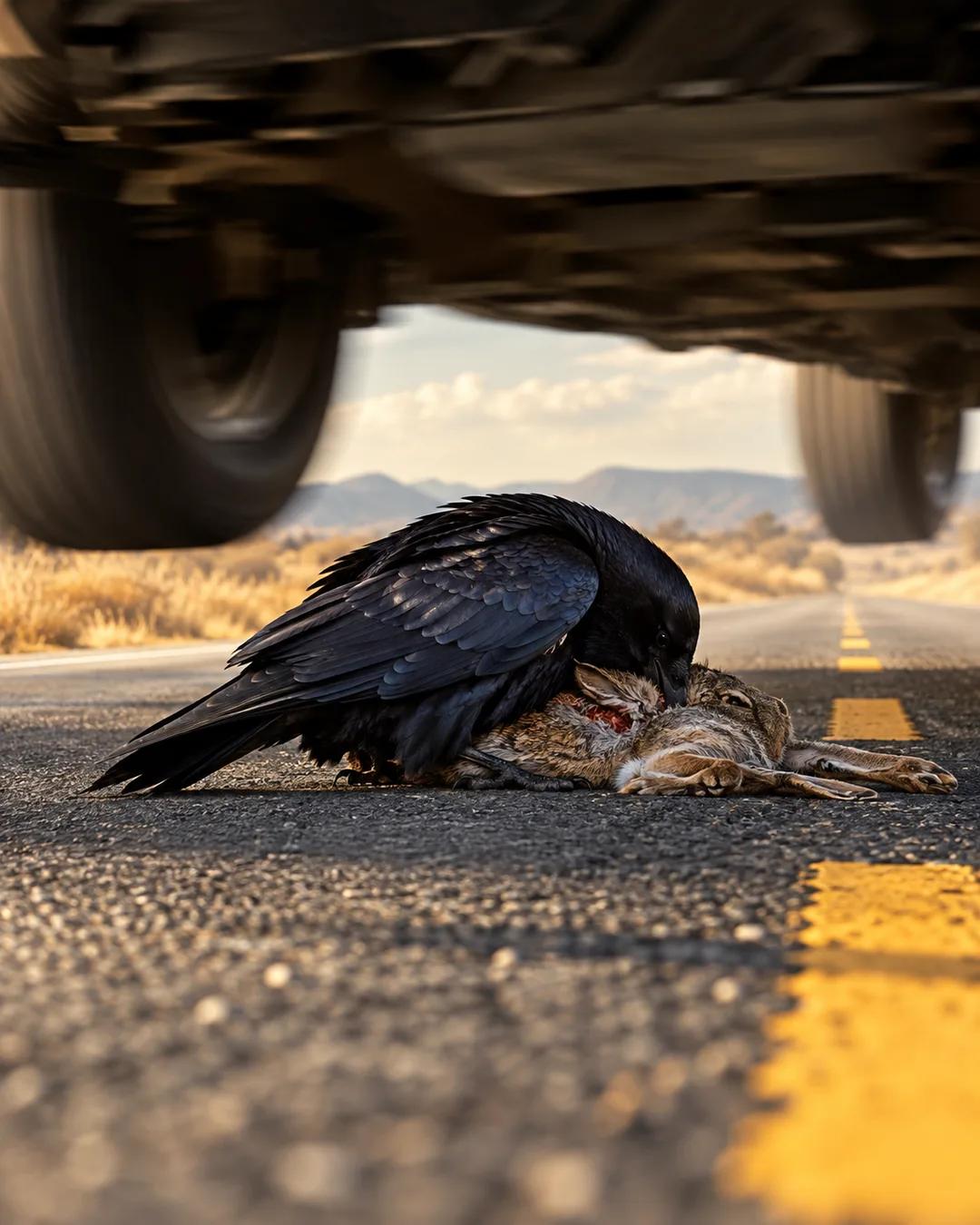
A raven ducks under speeding cars

The raven on the highway
A man driving down I-5 screamed as his car passed over a raven on the road. He and his passenger turned around expecting a dead bird. The raven had simply ducked low while the car went over, then stood up and went back to its jackrabbit. When the next car came by, it did the same thing.
Risks ravens take
These birds take calculated risks, and the road gave this raven exclusive use of a food item. They take risks around dangerous predators and potentially dangerous chemicals too. House crows in India have been seen picking up cigarettes, and people with pet crows have had cigarettes stolen from their pockets. In Juneau, Alaska, ravens pick up Raven's Brew coffee cups and try them out.
Trying everything
The common thread may be a general habit of trying everything in the environment, especially things they have seen people pick up. Sometimes that produces food and sometimes a dangerous response, and they quickly learn which is which.
How do birds judge how close a car can get?
Biologists measure this as flight initiation distance, the point at which an animal flees from an approaching threat. Anders Møller and other researchers have found that birds living in cities and along busy roads let people and vehicles come closer than their rural relatives do. Birds also adjust that distance by the speed of what is approaching. A bird that has seen many cars pass without harm learns where the margin of safety lies.
Why do some birds handle cigarettes?
Researchers have found that house sparrows and house finches in cities weave cigarette butts into their nests. A 2013 study by Constantino Macías Garcia's team at the National Autonomous University of Mexico found that nests with more butts had fewer parasites, probably because of the nicotine and other chemicals in them. The same study found that the butts could also harm the birds' own cells. Cigarette butts are one of the most common pieces of litter on city streets.
Why are ravens so willing to try new things?
Ravens are neophilic, meaning they are drawn to unfamiliar objects, especially when they are young. Bernd Heinrich ran experiments in which he presented ravens with new objects and found that juveniles approached them quickly. This curiosity helps them find new food sources as they travel across large areas. It also makes them quick to learn which novel things are safe.
More from TEDx Talks