Korva is a scroll of the internet’s best ideas.
A telecom monopoly since 1891

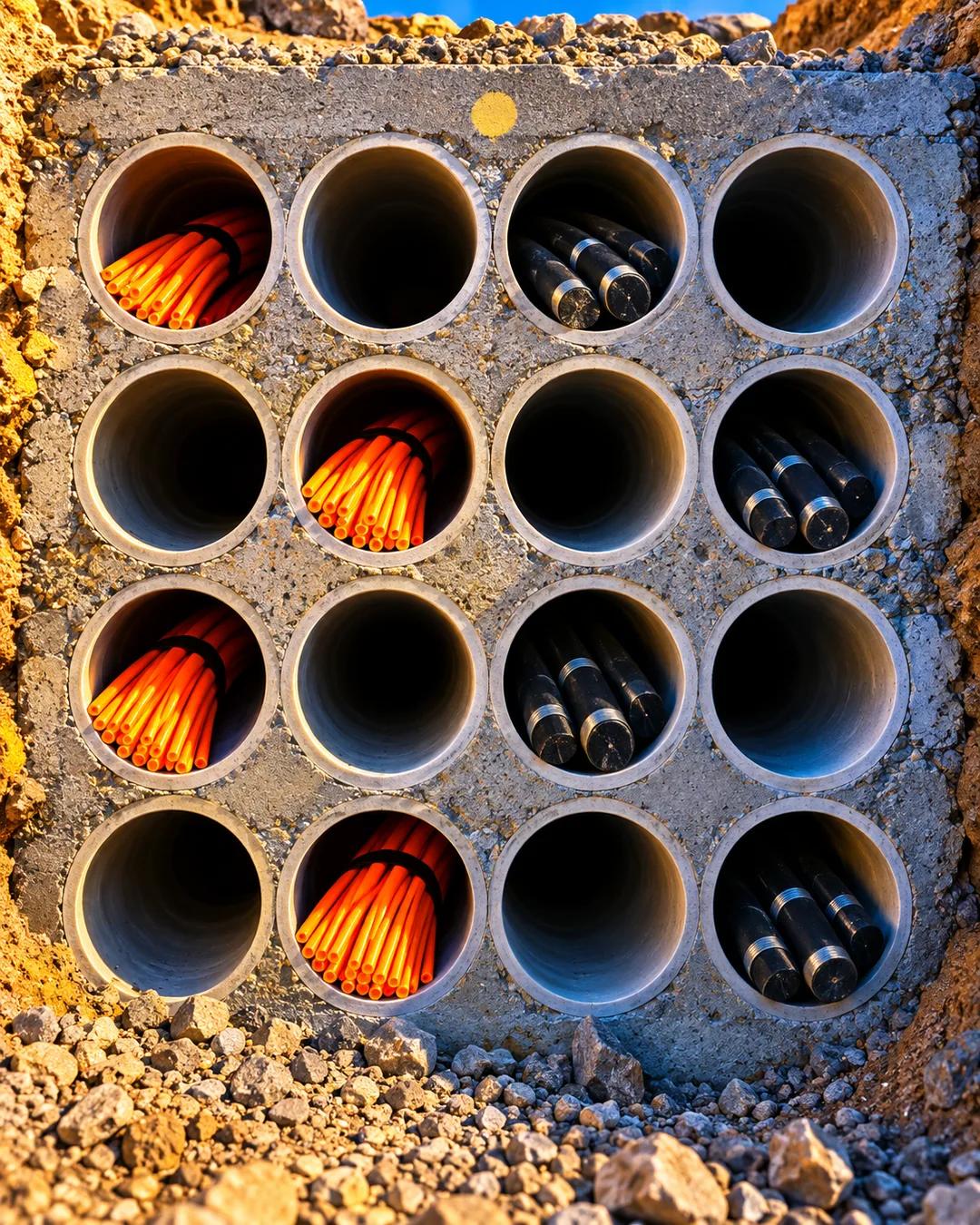
The name uses the more generic meaning of subway, an underground path, and has nothing to do with the famous trains. Anyone who wants to run telephone, cable, or fiber lines through Manhattan or the Bronx has to rent space inside those conduits rather than dig their own paths.
That makes telecommunications somewhat standardized, unlike the other utilities. Water, power, steam, gas, and sewer lines were each installed as the need arose, finding room among whatever was already there, and excavation photos show that just about everything in the ground is customized.
Why does a utility rent out conduits?
Digging a trench through Manhattan costs far more than the duct itself, and every extra trench disrupts traffic and the lines already buried below. A shared duct system lets many companies use one trench. The franchise holder earns rent from tenants, and the city avoids a patchwork of competing excavations. Regulators set the rates tenants pay for duct space.
How did early telephone wires end up underground?
In the 1880s, New York's streets were crowded with overhead wires from telephone, telegraph, and electric companies. The Great Blizzard of 1888 brought down a large number of them. The state passed laws requiring wires in the city to go underground, and the franchise system that followed gave companies a way to comply. Empire City Subway built its first ducts in those years.
Why do telecom lines need so little customization?
Cable and fiber are thin and flexible, so they bend around obstacles and fit into standard rectangular ducts. Water and steam pipes are rigid and large, and they must hold fixed slopes and pressures. A telecom duct bank can be laid in a predictable pattern, because its contents bend where the pipe cannot. The duct size is set by the cable and not by the surroundings.
More from Practical Engineering